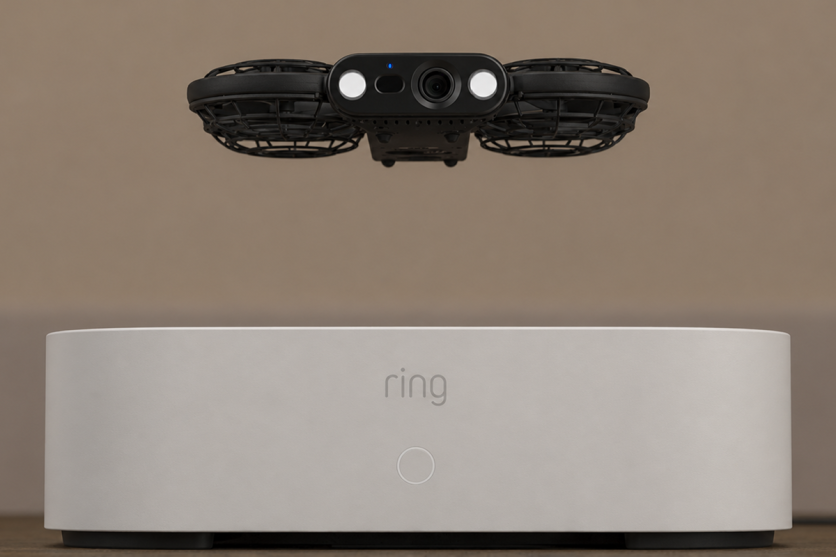
Amazon's Ring unveiled the Ring Drone Cam on 10 November, a $249.99 (about £187) indoor security camera that can fly to preset spots when a linked Ring device triggers an alert.
It relies on cloud processing to navigate and is designed to land if it loses its internet connection mid-flight.
Amazon is targeting 27 January 2027 for the start of US shipments, pending authorisation from the Federal Communications Commission.
The drone is currently unavailable to buy and Ring is taking email sign-ups for launch updates, with UK pricing and availability still to be announced.
When the Drone Loses Wi-Fi
The drone sends live video to Ring's servers, where a system called AI Pilot uses the feed to guide it. If the Wi-Fi signal drops or the home's internet service goes down, the drone can land on its own, interrupting the check it was sent to make.
Meet Ring Drone Cam 🚀Unlock a new way to take command of your home. Fly room to room for unobstructed aerial views. Use Live View to check in on different rooms or create custom patrol routes unique to your space, right from the Ring app.Learn more: https://t.co/4jqxa7NevQ https://t.co/RGyzyeBdhm
— Ring (@ring) November 10, 2026
Ring's launch materials leave several details open, including whether owners get an alert when a flight is interrupted.
They also leave open whether the drone can resume its route or return to the dock once the connection comes back.
How the Drone Patrols
During setup, owners carry the drone through the rooms they want it to cover. Ring says AI Pilot turns what the camera sees into a floor plan, suggests places to check and lets owners add their own viewpoints in the app.
If a linked door sensor is triggered, the drone can fly to a saved viewpoint so the owner can see what is happening through a live feed.
Owners can also start a flight on demand or schedule a patrol, with a compatible Ring Protect subscription required for scheduled flights and cloud video storage.
Ring rates the drone for up to eight minutes per charge, based on controlled tests with a new, fully charged battery. Actual flight time varies with conditions, use and battery age, and Ring estimates around eight minutes of charging for every minute in the air.
Ring lists single-floor operation and says multi-floor support is planned. The drone completed a roughly one-minute flight around a staged living room at the New York launch, where Ring's claim that it can climb stairs went undemonstrated and its response to unexpected obstacles went untested.
What the Flying Camera Records
The camera captures video at up to 1,920 by 1,920 pixels, and built-in LED spotlights switch on in low light. The drone has no microphone or speaker, and Ring says it records only in flight, with the charging dock covering the lens when it is parked.
Ring says footage will use its Throw Away the Key encryption system, which temporarily gives the company copies of encryption keys to run cloud features such as video search.
Ring's copies expire after 24 hours, although it can receive the keys again when a user accesses older footage.
The drone can bring a camera into rooms where residents and visitors may be accustomed to having more privacy.
Each saved viewpoint determines where the drone can go to check an alert, including when the person who set it up is away.


