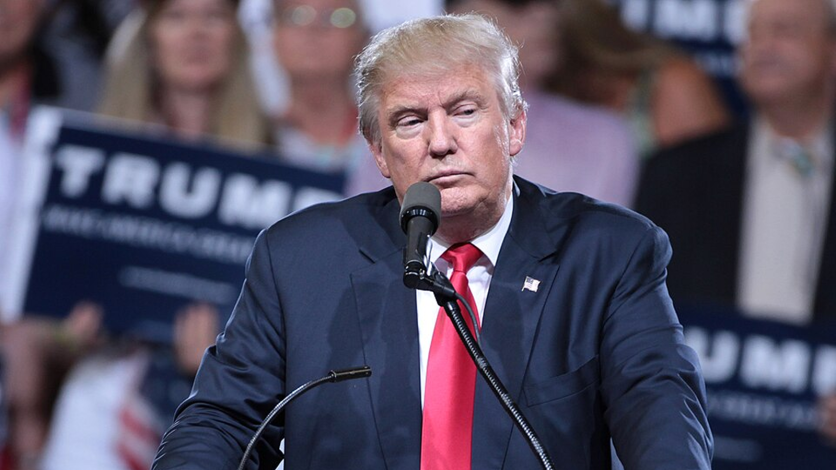
US President Donald Trump has again urged that the Atlantic Ocean be renamed the 'American Ocean,' despite previously saying Google chief executive Sundar Pichai had discouraged him from pursuing the idea on Google Maps.
Speaking at a political rally in Corinth, Mississippi, on 26 October 2026, Trump returned to the proposed name. His remarks followed an earlier account of Pichai's objections, although Trump also described the idea as a joke when discussing it in Florida on 23 October.
No formal Atlantic renaming directive or corresponding Google Maps announcement was identified in the sources reviewed for this article. A US naming decision would not, by itself, establish a universally accepted name.
What Did Trump Say About the Atlantic Ocean?
Trump raised the Atlantic while discussing previous geographical naming changes and suggesting that rivers and oceans could follow.
'So I'm thinking about the Atlantic Ocean, we call it the American Ocean. I think Europe will be thrilled,' he said, according to Roll Call Factba.se's transcript.
He also promised the audience that he would leave the Mississippi River's name unchanged. The passage did not set out an implementation process or timetable for changing the Atlantic's name.
The proposal follows actual US naming directives. The administration adopted 'Gulf of America' for federal use in 2025. Trump subsequently signed an order on 27 August 2026 directing that Lake Ontario be renamed 'Lake America' in US federal records. These changes did not establish universal international usage.
What Did Trump Say Pichai Told Him?
At a South Carolina rally on 21 October, Trump said he had contacted Pichai about the Atlantic proposal. A Reuters video transcript records him recounting the purported conversation.
🔥 LMFAO! Donald Trump reveals he called up Google CEO Sundar Pichai to ask about renaming the Atlantic Ocean to "American Ocean""He actually called me, and said, 'sir, this has to stop.' 😂 That would be a tough one."Lake America, Gulf of America, Strait of America, American Ocean! We could always just rename the ocean for USA maps 🤣
— Eric Daugherty (@EricLDaugh) October 23, 2026
'Oceans are different, sir,' Trump quoted Pichai as saying. Trump's account portrayed the Google executive as objecting because oceans extend across many countries.
'So I'll probably pass,' Trump then told the audience. He suggested retaining the Atlantic's existing name before floating 'American Ocean' for the Pacific instead. These remarks establish what Trump publicly said, rather than independently confirming Pichai's response.
Business Insider reported that Google did not immediately respond to its request for comment. When Trump repeated the Pichai story in Fort Myers, Florida, on 23 October, he also said he was 'only kidding'. That qualification matters when assessing whether the remarks represent a policy commitment.
Would Google Maps Really Change an Ocean's Name?
Google's handling of the Gulf provides a precedent for regional labels, rather than proof of how it would handle an ocean.
In a 10 February 2025 announcement, Google said it was updating Maps after the US Geographic Names Information System adopted 'Gulf of America'. Its announced approach displayed that name for US users, 'Gulf of Mexico' for users in Mexico, and both names elsewhere.
Google explained that the mobile app determines country location using operating-system information. On the web, it uses the selected search region or, where none is selected, device location. The announcement demonstrates that one feature can carry different labels depending on where Maps is accessed.
However, that policy does not establish what Google would do following any Atlantic directive. Trump's account of a private discussion is not a published Google decision.
How Much Power Does the US Have Over Ocean Names?
The US Board on Geographic Names maintains consistent geographical names across the federal government. It shares naming responsibilities with the interior secretary, while its Foreign Names Committee covers foreign geographical names, including oceans and seas.
That federal role should not be confused with authority to require worldwide adoption. A US decision would not, by itself, oblige other governments to use the same name.
For readers, three separate questions remain: whether the administration adopts a federal name, whether Google changes its labels, and whether other countries accept the terminology. Trump's rally remarks alone establish none of those outcomes.


