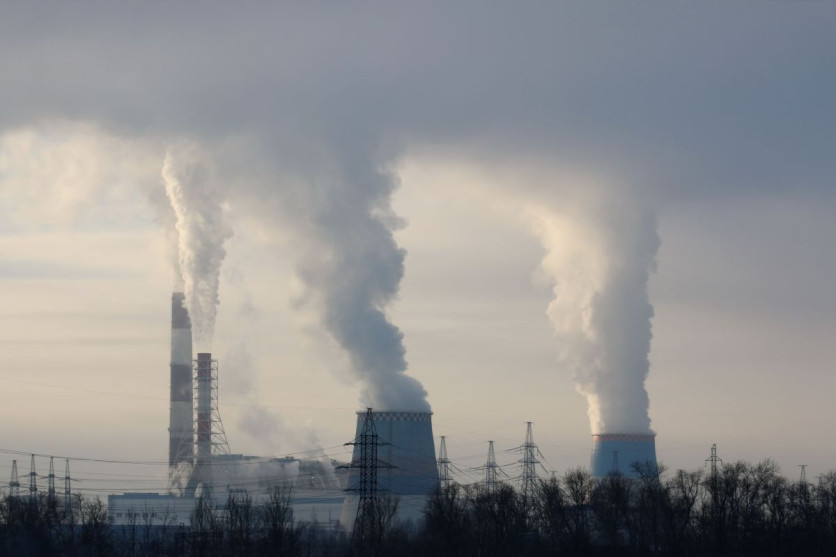
The United States is seeing a sharp increase in proposed gas-fired generating capacity as electricity demand rises, with AI data centres among the drivers of new power needs.
An October analysis by the Environment America Research & Policy Center and Frontier Group found that proposed additions of grid-connected natural gas capacity had reached 60.4 gigawatts by the end of 2030, up approximately 44% from the 41.8 gigawatts anticipated in December 2025.
The figures are based on federal energy filings, not completed construction, but they show how quickly developers' plans are changing.
The shift comes as technology companies race to build facilities packed with processors needed to train and run AI systems. These sites require large, dependable electricity supplies, and utilities are planning additional generation to meet demand.
Gas plants can provide power when required, but burning natural gas releases pollutants that contribute to ground-level ozone and particle pollution. The concern is that a short-term effort to supply electricity could commit the country to decades of fossil fuel use, while communities near power facilities face additional air-quality pressures.
The latest figures also reveal a widening gap between planned gas and wind capacity, raising questions about whether cleaner sources will expand quickly enough to keep pace with the data centre industry.
US Gas Power Plans Rise as AI Data Centre Demand Grows
The Environment America analysis draws on data from the US Energy Information Administration (EIA). It found that planned grid-connected gas capacity had nearly tripled from the 20.4 gigawatts anticipated in January 2023. The projects are spread across 32 states and Washington, DC, although the largest concentration is in Texas.
Texas accounts for about 20 gigawatts, or 33.2% of the proposed additions. Louisiana, Pennsylvania, Oklahoma and Mississippi follow, with the five states together representing about 61% of the planned total.
There is a clear demand-side explanation for the expansion. The EIA reported in March that US electricity demand grew by an average of 1.7% annually between 2020 and 2025, compared with just 0.1% a year from 2005 to 2019.
It identified data centres as a key driver of the recent increase, alongside expanding industrial electricity use. In a higher-demand scenario, the EIA modelled an increase in fossil-fuel generation, including gas-fired power, over the near term.
The planned capacity figures do not guarantee that every project will receive approval, secure financing or begin operating. Nor do they measure the amount of electricity these plants will ultimately generate. The 44% increase represents a change in the development pipeline, rather than a measured rise in current US gas-fired power production.
Gas Plants Raise Air Pollution Concerns as Wind Plans Fall
While gas projects are expanding, the same analysis found that planned additions of wind power had fallen by 33.9% since December 2025. Solar remains the largest anticipated source of new grid-connected generating capacity, although its planned additions have not kept pace with the expansion of proposed gas capacity.
Environment America warns that the changing project pipeline could make it harder to reduce the electricity sector's reliance on fossil fuels.
The environmental effects extend beyond greenhouse gases. Burning natural gas releases nitrogen oxides, which contribute to ground-level ozone, commonly associated with smog, and can aggravate respiratory problems. Methane leaks during extraction and transport can add to the fuel's climate impact.
The scale of any future damage will depend on which projects are built, how often they operate and the pollution controls they use.
A separate Reuters investigation published in July highlighted the challenges posed by gas turbines installed to power xAI's Colossus 2 data centre project in the Memphis area. Reuters identified 59 natural gas turbines installed without federal clean-air permits, according to correspondence between regulators and company representatives.
The company and Mississippi regulators argued that temporary turbines were exempt from permitting requirements, while environmental groups challenged that position in court. The dispute highlights the regulatory questions that can arise when AI data centres use dedicated, off-grid gas generation instead of relying entirely on grid-supplied electricity.
Research by Yuelin Han and colleagues has estimated that air pollution associated with US data centres could contribute to roughly 600,000 asthma symptom cases and 1,300 premature deaths in 2028 under a high-growth scenario.
These are modelled estimates, not confirmed future outcomes, and they depend on assumptions about data centre expansion, emissions and the health effects of air pollution. The figures cover pollution associated with data centre electricity use and should not be attributed to proposed gas plants alone.
One important limitation remains: the EIA's grid-connected project data exclude gas plants built to supply data centres directly. The additional capacity cannot be quantified from the grid-connected figures alone.
For policymakers and electricity providers, the challenge is not simply finding enough power. It is deciding how to meet growing demand without creating avoidable pollution or committing consumers to infrastructure that may operate for decades.
The balance between gas, renewables, storage and more flexible data centre electricity use will help determine the environmental cost of the AI expansion.


