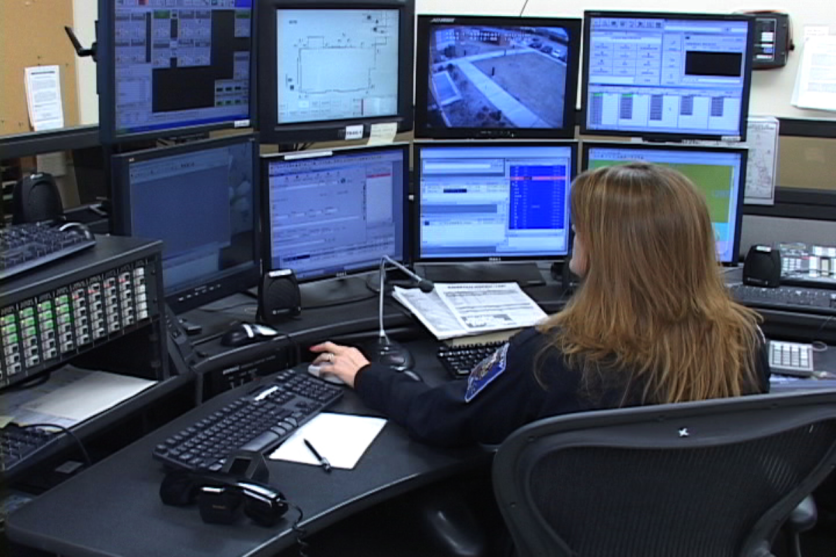
A Canadian police force is using artificial intelligence to help select people who will answer 911 emergency calls. But experts have warned about the risks of AI errors, raising questions about whether automated assessments could overlook qualified applicants.
On 8 October 2026, Ontario's Halton Regional Police Service announced it was adopting GovWorx, an AI platform developed by an American company.
The technology uses simulated emergencies to assess prospective operators and support their training. Police say it could reduce candidate evaluation time by 50 per cent.
The concern is whether a capable applicant could be overlooked because an AI assessment fails to recognise their potential.
AI Could Help Police Choose Who Gets Hired
Halton police receive approximately 1,400 applications for emergency communications roles each year. Finding suitable candidates is challenging. The job demands clear communication, sound judgement and the ability to remain calm during emergencies.
Training is equally demanding. Recruits complete five weeks of instruction followed by 360 hours of supervised work before qualifying as call takers, according to the police service. Those progressing to dispatch duties undergo further training.
Communications bureau manager Brian Dodd told The Canadian Press that the overall process can take close to a year.
Dodd also told CityNews that GovWorx helps identify suitable candidates through aptitude testing. The force hopes to avoid spending months training recruits who ultimately cannot meet the job's requirements.
The platform creates simulated emergency calls to test communication, decision-making and crisis-management skills. Scenarios can include fire alarms, explosions and other background noise.
Police say the technology also provides performance scores and feedback to help trainees improve before handling real emergencies.
But What Happens When AI Gets an Assessment Wrong?
A realistic simulation can reveal how someone responds under pressure.
However, doing well during testing does not necessarily mean an applicant will perform equally well in a real emergency. Someone who struggles with an unfamiliar scenario might improve substantially with training.
Another applicant could perform well in simulations but find real emergencies more difficult. These are potential limitations of simulated assessments, not documented failures of GovWorx.
CBC News reported concerns from legal expert Ryan Fritsch about relying on AI in policing and justice-related decisions. He warned that AI can misinterpret cultural or linguistic cues and produce inaccurate information.
People working under pressure may also place too much confidence in automated outputs. His warnings do not establish that Halton's recruitment system has made such mistakes.
Canada's Public Service Commission identifies comparable risks in its guidance for federal hiring managers.
AI assessments can be difficult to explain and may produce unfair decisions when their criteria are unclear. Federal hiring officials must validate AI outputs and remain accountable for recruitment decisions. The guidance does not directly govern Halton police.
Who Checks Whether the AI Has Made a Mistake?
Halton police say GovWorx will make recruitment faster and more data-driven.
Although the force has indicated that people remain involved, its public statements do not fully explain how AI assessments influence final hiring decisions.
Several questions remain.
Could an applicant be rejected primarily because of an AI-generated assessment? How do human recruiters check the results? Can candidates challenge an assessment they believe is wrong?
The available reporting also does not establish how accurately GovWorx predicts successful training outcomes at Halton or whether its assessments perform consistently across different applicant groups.
This does not prove the system is biased or unreliable. Its performance in these areas has not been independently verified in the reporting reviewed.
Ontario introduced new employment rules on 1 January 2026. Covered employers must disclose AI use when screening, assessing or selecting applicants for publicly advertised positions. Exemptions include employers with fewer than 25 employees and certain public bodies.
Whether these requirements apply to Halton police has not been established. Disclosure alone does not guarantee fair or accurate assessments.
AI Is Already Helping Manage Police Calls
GovWorx is not Halton police's first AI system. In 2025, the force introduced SARA, an automated assistant designed to handle certain non-emergency enquiries and direct callers towards appropriate services.
According to The Canadian Press, SARA had answered 95,367 calls in 2026 by early October. Police also credited the technology with reducing 911 waiting times by almost two seconds per call.
Police have stressed that emergency 911 calls continue to be answered by people. GovWorx is intended to support the recruitment and training of those operators, not replace them.
The distinction matters. But the recruitment question remains unresolved.
Applicants need confidence that AI assessments are accurate and subject to meaningful human oversight. Faster recruitment may benefit police services, but it should not come at the expense of giving capable candidates a fair assessment.


