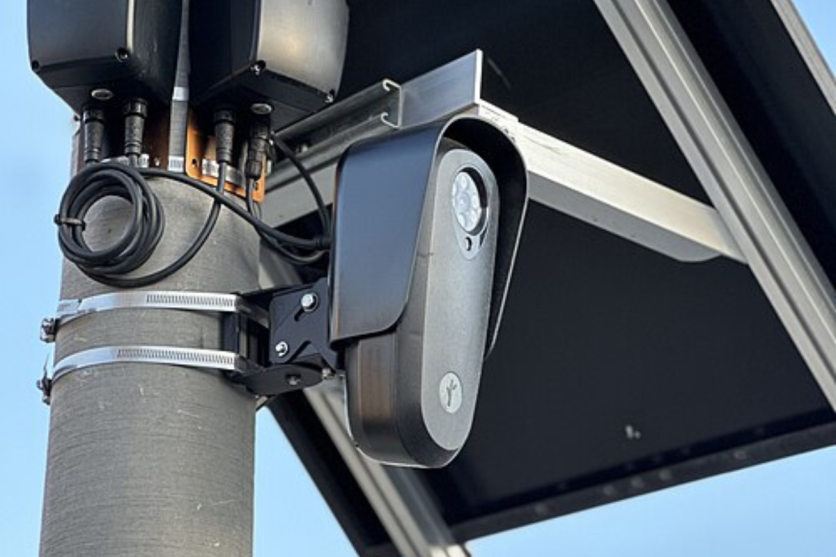
An Illinois college tried to remove six AI-powered surveillance cameras over fears for immigrant students' safety, but Flock Safety refused its request, according to the college president. Elgin Community College asked the company to remove the cameras in October 2025. It later offered to pay the remaining contract fees, but the equipment stayed in place.
Unable to secure their removal, college staff began covering the cameras with black rubbish bags. The dispute continued until April 2026, when the contract expired and Flock removed the equipment, according to college president Peggy Heinrich.
The case raises questions about how much control institutions have over surveillance equipment installed on their property, particularly when they want to end monitoring before a contract expires.
College Offered to Pay, but Flock Refused to Remove Cameras
Elgin Community College installed six Flock Safety cameras in April 2025 to improve security at its campus west of Chicago.
The company's automated number plate recognition technology uses artificial intelligence to record vehicle registration plates and details such as make, model, dents and bumper stickers. The information can help investigators locate stolen vehicles and missing people.
However, Heinrich became concerned after reports emerged that federal immigration authorities had accessed Flock camera data elsewhere in Illinois.
According to a WBEZ Chicago investigation published on 9 October 2026, Heinrich said Flock rejected the college's October 2025 cancellation request within a day, arguing that it had not breached their agreement.
Officials contacted the company again in December, offering to pay the remaining five months of fees if the cameras were removed. Heinrich said they received no response.
Staff Covered Cameras With Rubbish Bags
College employees then covered the cameras with black rubbish bags and cable ties to prevent them from recording passing vehicles.
However, the coverings repeatedly disappeared.
Heinrich told WBEZ that workers arriving in an unmarked vehicle removed them during servicing visits. She believed the workers were connected to Flock, although their identities were not independently confirmed.
College staff replaced the coverings, only to find them removed again. Administrators were left repeatedly trying to block surveillance equipment they no longer wanted operating on campus.
According to Heinrich, the situation continued until April 2026, when the contract expired and Flock removed all six cameras.
Immigration Enforcement Fears Drove the Decision
The college's concerns intensified after US Immigration and Customs Enforcement (ICE) detained a student in a campus car park in September 2025.
More than half of Elgin Community College's students identify as Latino.
Heinrich told WBEZ that some students feared attending classes and that enrolment had declined. No evidence establishes that the cameras contributed to the decline.
Public records examined by WBEZ and surveillance researcher Torin Monahan showed that Flock camera data from Joliet Junior College, the University of Illinois Chicago, and the University of Illinois Urbana-Champaign had been searched in connection with immigration enforcement.
In some cases, federal immigration authorities directly accessed the colleges' data.
However, Elgin's own audit found no evidence that federal immigration agents had accessed its camera data. No connection has been established between the college's cameras and the student's detention.
In its explanation of federal data-sharing policies, Flock says sharing with federal agencies is disabled by default and requires explicit authorisation from local customers. The company says it does not independently share customer data with ICE.
Flock did not respond to WBEZ's request for comment about the Elgin dispute.
Flock's Surveillance Network Faces Growing Scrutiny
Elgin's experience comes amid wider concerns about Flock Safety's surveillance network and who can access the vehicle data it collects.
According to Reuters, Flock operated approximately 120,000 AI-powered cameras across 49 US states as of October 2026. Its customers included more than 4,800 law enforcement agencies and nearly 1,000 businesses.
A Reuters/Ipsos poll found that 47% of Americans opposed Flock cameras in their communities, while 38% supported them.
Some local authorities are reconsidering their agreements.
Midland, Texas, voted on 13 October 2026 to terminate its Flock contract following privacy concerns. The decision authorised a 60-day termination notice, with the city's 73 cameras slated for removal.
Supporters say automated number plate recognition can assist criminal investigations and help recover stolen vehicles. Critics warn that extensive data collection and information-sharing arrangements can create privacy risks without adequate oversight.
Who Controls Surveillance Cameras Once They're Installed?
Elgin Community College's experience raises a contractual question beyond the technology itself: who decides when privately owned surveillance equipment must be removed?
Although the cameras stood on college property, Flock retained ownership of the hardware. According to Heinrich, administrators could not secure early removal even after offering to pay the remaining contract fees.
The dispute does not establish that Flock breached its agreement or acted unlawfully. The full contract and its early termination provisions have not been independently verified.
For Elgin, the cameras eventually came down, but only after months of requests and attempts to stop them recording.
The case highlights why institutions considering similar systems should examine how surveillance data is collected and shared, as well as their contractual rights to deactivate or remove equipment before an agreement expires.


