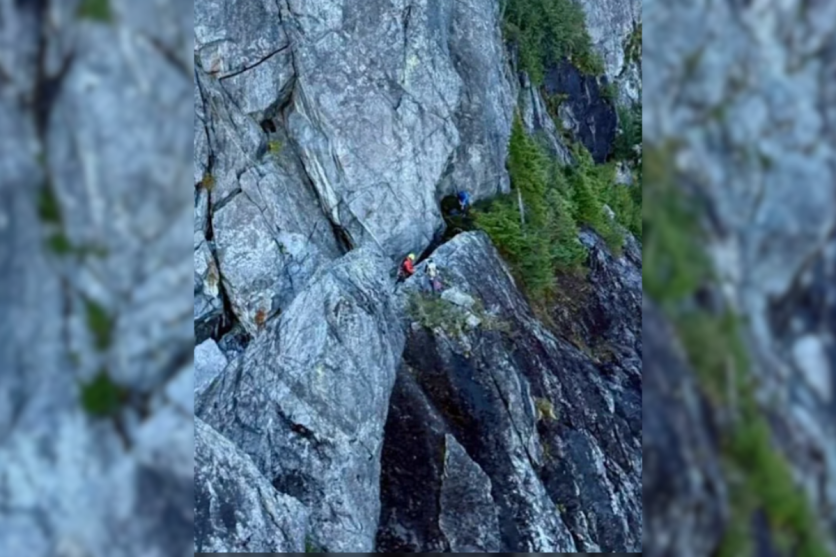
A 16-year-old hiker had to be hoisted to safety from Crown Mountain in British Columbia after becoming stranded in steep technical terrain during a solo trip he had planned with the help of artificial intelligence.
The teenager set out from Grouse Mountain at around 8:00 a.m. on Sunday, 4 October, hoping to reach Crown Mountain. North Shore Rescue said he had used AI to help plan the route. CTV News later reported, citing rescue search manager Paul Markey, that the teenager had asked Anthropic's Claude to plan the trip.
The outing ended with the teenager stranded at the base of the final headwall of Widowmaker Arete, a technical climbing route. Markey said a fall from his position could have caused significant injury or death.
Teen Strayed From Hiking Route Into Technical Terrain
According to Markey's account to CTV News, Claude directed the teenager down Crown Pass and up through Crater Slabs and Crown Couloir before its instructions led him off the trail route. North Shore Rescue separately said it remained unclear exactly how or where he became far removed from the standard Crown Mountain route.
He eventually became stranded at the base of Widowmaker Arete's final headwall. Markey said the terrain was beyond the teenager's outdoor climbing experience and that a fall could have resulted in significant injury or potentially death.
Rescuers received the call at around 3:30 p.m. and contacted the teenager to establish his location. Because he was close to a vertical wall, the helicopter could not safely place rescuers directly beside him.
Two rescue technicians were lowered onto the mountain above his position. The team established an anchor before one rescuer was belayed down to the teenager, added protection and moved him to a suitable extraction point. The teenager was extracted by about 6:30 p.m.
Teen Had Indoor Climbing Experience
The teenager was not completely inexperienced with climbing. Markey told CTV News that he had considerable experience with high-difficulty indoor climbing and was well equipped for hiking and some of the terrain he encountered.
However, Markey said it was the teenager's first experience climbing outdoors. He was also travelling alone.
North Shore News reported that he had brought hiking boots, a headlamp, a phone battery pack and a windproof jacket. Markey also praised him for staying in place once he realised he was in trouble.
Markey said the teenager was frightened but grateful after the rescue. He urged hikers and mountaineers to question AI-generated information, research routes independently and supplement that research with proper training and navigation.
Mount Shasta Hikers Also Relied on AI
The Crown Mountain rescue followed another incident in California involving hikers who relied heavily on an AI chatbot for backcountry planning.
At the end of August, three novice hikers from Roseville became stranded on Mount Shasta after using Google's Gemini for information about their route and what they should pack. The group had planned an eight-hour ascent but did not reach the summit until around 7:00 p.m., seven hours after the recommended noon turnaround time.
They began descending in darkness and eventually wandered off the Clear Creek Route into Mud Creek Canyon. One of the hikers fell and injured his knee, leaving the group stranded overnight with little to no shelter and limited supplies. US Forest Service climbing rangers reached them the following morning, and the hikers and rescuers later returned to the trailhead safely.
The Siskiyou County Sheriff's Office described the group's heavy reliance on Gemini as a 'critical misstep'. The agency said Gemini had advised them to bring far less food and water than the group required once their planned eight-hour ascent became a multi-day ordeal.
Officials urged hikers not to rely solely on AI for trip planning and recommended contacting the local US Forest Service Mount Shasta Ranger Station for accurate information.
Rescuers Warn Against Blind Trust in AI
Neither incident establishes that artificial intelligence alone caused the hikers to become stranded. Route-finding decisions, preparation, experience, conditions and human judgement can all affect safety in the mountains.
The incidents do, however, highlight the potential risks of treating a general-purpose AI chatbot as a substitute for established backcountry information, training and navigation tools.
After the Crown Mountain rescue, Markey recommended established mapping and navigation services including Gaia GPS, CalTopo and AllTrails. His broader warning was that hikers should question AI-generated information rather than simply follow it.
The teenager made it off Crown Mountain safely. His encounter with Widowmaker adds to warnings from rescue officials that AI-generated route advice should be independently checked before hikers rely on it in the backcountry.


