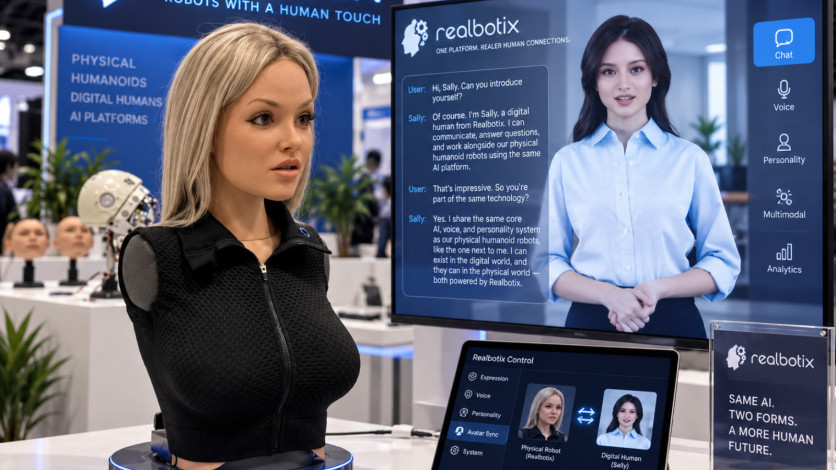
A New York school district paused its nearly $60,000 (approximately £45,000) AI robot programme on 24 July 2026 following backlash over student privacy and the manufacturer's corporate links to a sex doll business.
Salamanca City Central School District had planned to introduce a lifelike humanoid robot named 'Sally' into high school classrooms that autumn.
The $57,590 (approximately £43,200) project was intended to teach students about artificial intelligence, robotics and programming. Instead, it drew criticism from parents and teachers concerned about student safety, educational value and the manufacturer's ties to the adult entertainment industry.
State education officials also questioned the robot's classroom role and privacy safeguards. The controversy later prompted a journalist to test Sally's digital teaching assistant, including its responses to bullying and academic difficulties.
How Did a $57,590 Robot Get Approved?
The Salamanca school board approved the purchase in June 2026.
According to New York Focus, the agreement included a humanoid robot and an AI teaching assistant accessible through students' laptops.
Developed by Realbotix, Sally was designed to remain seated while moving its upper body and displaying facial expressions. Its silicone skin and long brown hair were intended to create a lifelike appearance.
Superintendent Mark Beehler defended the investment, saying students could use Sally to explore programming, understand robotics and troubleshoot technical problems. The district initially planned to introduce the technology in high school AI and robotics courses.
Beehler stressed that the project would not replace teachers. 'Teaching is a human-to-human process,' he told the Associated Press.
Manufacturer's Sex Doll Connections Spark Backlash
Opposition intensified as parents and educators questioned Realbotix's corporate links to businesses producing adult-oriented robotic products.
According to the Associated Press, Realbotix LLC and Intima LLC are sister companies.
Intima holds an ownership stake in RealDoll, a manufacturer known for producing lifelike sex dolls and adult-oriented robotic products. The corporate relationship drew criticism, although it did not establish that Sally contained technology developed for adult products.
Realbotix rejected suggestions that Sally was a repurposed sex doll.
The company described it as a newly manufactured educational unit without modified adult-product hardware. It also said the businesses maintained separate management, employees, facilities and product development operations.
Melinda Person, president of New York State United Teachers, criticised the association. 'A robot built by a company associated with sex dolls has no business in our classrooms,' she said. State Education Commissioner Betty Rosa separately questioned the robot's classroom role and privacy protections.
On 24 July, the district paused the programme while it worked on enhanced student data privacy agreements and continued discussions with the community.
Reporter Tests Sally's Digital Teaching Assistant
The proposed technology also faced scrutiny over how it would respond when students discussed sensitive personal experiences.
In a New York Focus report published on 28 July, education reporter Melissa Manno described interviewing Sally's digital avatar. She asked about homework, failing classes, bullying and whether boys or girls were better at maths.
When Manno posed as a bullied student, the assistant acknowledged her distress and discouraged retaliation. It recommended speaking to a trusted adult rather than seeking revenge.
Sally also explained how it could help students understand difficult concepts, develop study strategies and receive feedback.
Manno reported delays caused by internet connection problems during the interview. The test offered examples of the assistant's responses but was not a comprehensive assessment of its classroom safety or reliability.
Could Sally Have Accessed Student Information?
Student privacy became a central concern because Sally's digital assistant was designed to retrieve information from previous learning conversations.
Under the proposed programme, students could upload photographs of homework, request assignment help and receive translations in more than 100 languages. Unique identification codes would allow the classroom robot to retrieve previous conversations and provide personalised assistance.
District officials said Sally would operate on a closed system without access to the public internet. They also said it would not record classroom conversations or transmit personally identifiable student information to Realbotix.
The company separately stated that student-linked information would remain encrypted and under district control. These were assurances from the district and manufacturer, not findings from an independent security assessment.
State officials continued to question the safeguards.
Realbotix chief executive Andrew Kiguel welcomed further scrutiny and said the company wanted the programme to meet the school's safety and approval requirements.
What Happens to the $60,000 Robot Now?
The district's July announcement placed the programme on hold rather than permanently cancelling it.
In a report published on 28 September, NPR said Salamanca had paid Realbotix nearly $58,000 for Sally. The reporting did not establish whether a refund had been arranged or when the programme might resume.
The dispute highlights the challenges schools face when adopting expensive AI technology. Beyond the purchase price, officials must consider student privacy, educational value and the role of human teachers.
Sally was intended to give students practical experience with emerging technology. Instead, the paused project has become a test of how schools balance innovation with community trust and student protection.


