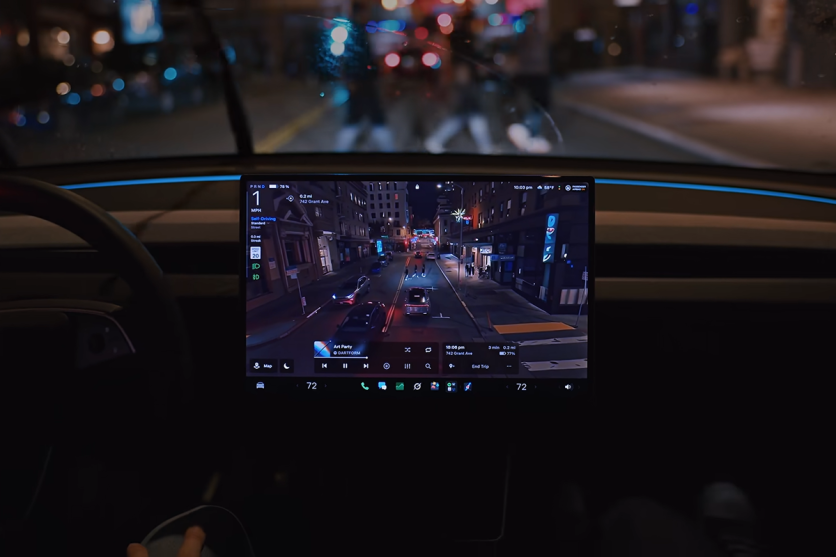
Elon Musk has showcased Tesla's latest artificial intelligence (AI) driving technology, featuring realistic graphics that some fans have described as 'better than GTA 6'.
The electric vehicle manufacturer began rolling out its Full Self-Driving (FSD) V15 software on 21 November 2026, introducing a feature called Tesla Reality View. Beyond the video game-style graphics, Tesla claims the software delivers '25x better handling of safety critical cases'.
However, the company has yet to demonstrate through publicly available V15-specific crash data that this improvement translates into a corresponding reduction in accidents. Tesla's latest update remains a supervised driving assistance system rather than fully autonomous technology. Motorists must remain attentive and ready to take control of their vehicles.
What Is Tesla Reality View?
Tesla's previous driving visualisation used relatively simple digital representations of surrounding vehicles, pedestrians and road markings.
Reality View replaces these graphics with a more realistic, AI-generated representation of the vehicle and its surroundings.
Elon Musk reveals new Tesla self-driving technology with real-time video game visuals: 'Better than GTA 6' https://t.co/cvOWgrRCel https://t.co/8LpOpeD4PM
— New York Post (@nypost) November 23, 2026
Buildings, pedestrians and nearby traffic appear from an elevated perspective, resembling the third-person view familiar to Grand Theft Auto players. The display also helps motorists understand the vehicle's intended movements and navigation decisions.
Musk explained that the technology generates AI video in real time without relying on a conventional gaming engine. According to the Tesla chief executive, it uses just half of one AI4 TRIP accelerator, a component of the vehicle's onboard computing system.
Is Tesla FSD V15 Actually Safer?
Tesla claims V15 improves the detection of road signs, small animals, debris, potholes and standing water. The company also reports improvements in speed management around school zones and during adverse weather conditions.
Tesla's detailed release notes attribute the 25-fold improvement to its critical intervention rate following an upgrade to its AI vision system. This metric concerns situations requiring safety-critical intervention rather than the overall frequency of road accidents.
The announcement does not provide sufficient detail about testing conditions, mileage or measurement criteria to independently assess the claim. Fewer critical interventions do not necessarily translate into a proportionate reduction in collisions.
There is also an unanswered question about whether the more realistic display helps motorists supervise the system or risks distracting them. Independent assessments would help establish how the interface affects driver attention.
Tesla's Driving Technology Faces Regulatory Scrutiny
The update arrives amid continuing regulatory scrutiny of Tesla's driving assistance technology in the United States.
On 2 July 2026, the National Highway Traffic Safety Administration (NHTSA) requested additional information from Tesla regarding FSD performance under reduced visibility conditions.
Regulators are examining whether the system recognises when glare, fog or airborne dust compromises its capabilities. They also want to determine whether drivers receive adequate warnings to intervene when necessary.
This is absolutely INSANETesla FSD V15 Reality View in a busy downtown setting https://t.co/n4DWxumS7p
— Nic Cruz Patane (@niccruzpatane) November 22, 2026
The agency's July information request identified nine crashes under investigation at the time. However, the investigation predates V15 and does not establish that the latest software or Reality View is defective.
Tesla confirms that FSD requires active driver supervision and does not make its vehicles fully autonomous. Feature availability also depends on hardware, software, geographical location and applicable regulatory approvals.
Impressive Graphics Are No Substitute for Road Safety
Reality View could help motorists better understand their vehicles' driving decisions, while V15's claimed improvements could address everyday road hazards.
Whether those benefits translate into safer journeys remains a question for real-world performance data and independent testing.
Unlike GTA 6, mistakes on real roads carry real consequences. Tesla's ultimate test is not the realism of its graphics but the reliability of its driving technology.


