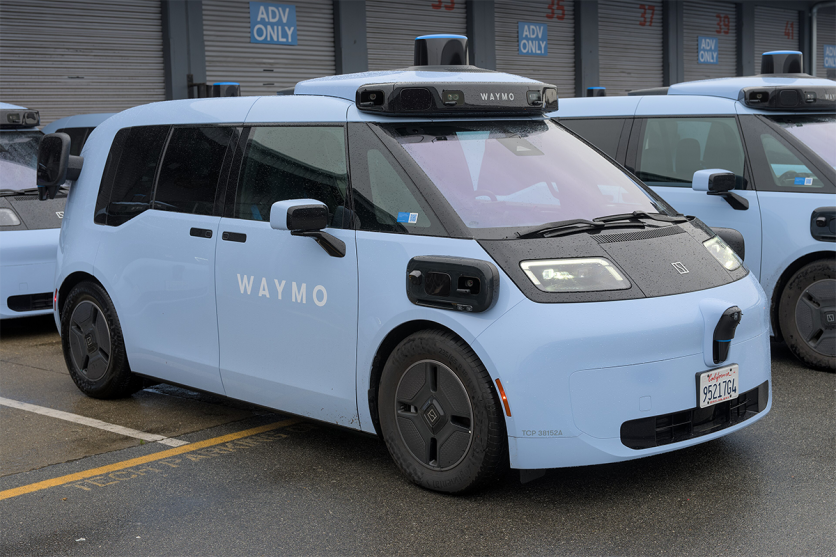
Waymo has been ordered to keep its driverless vehicles off California freeways after several robotaxis entered restricted roadworks areas, raising concerns about how the company's autonomous technology responds to unexpected changes on busy roads.
The California Department of Motor Vehicles (DMV) issued the restriction on November 11, describing the company's driverless freeway operations as an 'imminent hazard to public safety'.
The order followed two incidents in the San Francisco Bay Area involving construction closures and a California Highway Patrol (CHP) traffic operation.
Following the restriction, Waymo temporarily suspended commercial freeway rides across all US markets where it offers the service.
However, the company said it would continue freeway testing with trained autonomous specialists behind the wheel. Its robotaxis remain available for passenger trips on ordinary streets.
Two Incidents Prompt Regulatory Action
Video shows a Waymo in San Francisco on I-280 speeding past traffic as the California Highway Patrol performs a traffic break. The Waymo is seen trying to go around the CHP patrol cars, even at one point turning its blinker on. For more information, https://t.co/PuIThxj4vj pic.twitter.com/n8jy5iE2iU
— ABC7 News (@abc7newsbayarea) November 11, 2026
The incidents took place on consecutive days in early November.
On November 5, three Waymo vehicles entered an active construction closure on US Route 101 near Burlingame, south of San Francisco. The following day, another vehicle attempted to pass California Highway Patrol cars conducting a traffic break on Interstate 280 in San Francisco.
The DMV's concerns extend beyond whether a vehicle can follow a route under normal conditions. Construction work can change road layouts with little notice, while police officers and emergency crews may need vehicles to respond to temporary instructions that are not part of their usual journeys.
Waymo said the recent encounters did not result in injuries or collisions. However, the incidents renewed concerns raised earlier in 2026, when its vehicles also entered freeway areas closed for construction.
The company had previously suspended freeway operations in May following similar incidents. It began gradually restoring freeway routes on July 29 after introducing software updates designed to improve how its vehicles detect and respond to construction zones.
The November incidents occurred despite those earlier corrective measures.
Waymo Suspends Commercial Freeway Rides Across US Markets
Although the DMV's order applies to California, Waymo has taken a wider step. The company temporarily restricted commercial freeway rides in all markets where it offers the service, including the San Francisco Bay Area, Los Angeles, Phoenix, Miami and Austin.
The suspension does not affect Waymo's entire ride-hailing network. Its robotaxis continue to operate on surface streets, where the company says its service handles more than 500,000 trips each week.
A company spokesperson said safety remained central to its operations and that Waymo was evaluating its vehicles' performance during recent freeway construction encounters. The company also confirmed that trained autonomous specialists would continue freeway testing.
Freeway access is an important part of Waymo's expansion plans. It can shorten journeys between different parts of a city, particularly in the Bay Area, where many passengers travel between San Francisco and communities further south. Without freeway access, some journeys may take longer or become less convenient.
No Date Set for a Return
California's restriction prohibits Waymo from operating or testing its driverless vehicles on state freeways. The order will remain in place until the company demonstrates that it has taken effective corrective action to address the deficiencies identified by regulators.
The DMV is seeking evidence that Waymo's vehicles can properly detect and respond to construction zones, emergency vehicles, and other changing road conditions before allowing driverless freeway operations to resume.
Waymo has not announced when it expects to restart commercial freeway rides. It is working with California regulators and officials in other states to evaluate its systems and address the concerns.
The scrutiny comes as autonomous vehicle companies compete to expand driverless services across major US cities. For Waymo, the immediate challenge is not simply restoring freeway access. It is demonstrating that its vehicles can respond safely to unpredictable situations that human drivers encounter every day.


