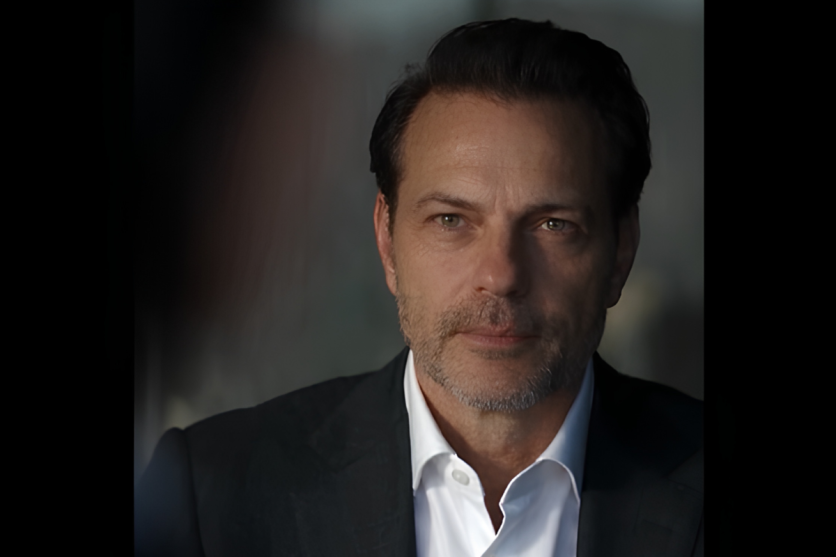
An Israeli actor has found a way to star in a television series without being filmed in front of a camera, after allowing an artificial intelligence (AI) company to recreate his likeness.
Aki Avni, known to American audiences for his appearance in 24, is now starring in Inevitable, a vertical drama produced by Los Angeles-based startup Shortical. However, it is not Avni himself who appears on the big screen, but an AI-generated version of him.
The series follows a fictionalised Avni who licensed his likeness to a movie studio, only to discover that his AI stunt double has taken on a life of its own and framed him for a crime he did not commit.
Despite its fictional premise sounding like a soon-to-be hit of a Hollywood thriller, the series draws attention to a real arrangement between Avni and Shortical, where his digital likeness takes the place of his on-set performance.
AI Is The New Format For Short-Form Storytelling
Inevitable is part of the growing microdrama industry, which produces short episodes designed primarily for mobile viewing.
These videos often last around two to three minutes, where the productions rely on fast-paced storylines, dramatic twists, and cliffhanger endings to keep audiences watching, clicking, and scrolling.
Based on Omdia's 2025 report, the United Kingdom has 8.2 million monthly active microdrama viewers, making it the largest market in Europe.
Shortical, a streaming platform launched in January 2025, initially built its catalogue around live-action romances and relationship dramas, such as Accidentally Married My Boss and Carrying My Boss's Baby.
The platform has since expanded its use of AI-generated video, moving away from productions that require physical sets, real actors, and large filming crews.
According to Shortical Chief Executive Guy Shimoni, synthetic productions allow 'smaller teams to create elaborate fictional worlds,' which can feature creatures, such as dragons and werewolves, without the expensive production costs associated with live-action filmmaking.
Actors Are Paying The Price Of Having A Digital Double
Avni described the emerging medium as a new form of artistic expression and welcomed the chance to be among its early participants.
The agreement between Avni and Shortical may be an early example of a business model that the platform hopes to expand beyond established actors.
The company has introduced a 'License Your Face' portal on its official website, encouraging individuals and aspiring performers to submit their social media accounts for potential likeness-licensing opportunities.
Alongside the portal, Shortical has partnered with Payouts.com to develop a system for distributing payments to participants. Under this arrangement, individuals can earn money by allowing companies to reproduce their digital likenesses, however, compensation can vary.
In China, where microdramas have become the new wave of entertainment format, performers have reportedly received between $15 and $700 in exchange for the rights to their digital likenesses.
Meanwhile, Jennifer Cooper, founder of the consultancy Vertical Drama Love, has raised concerns about the industry's increasing reliance on synthetic performers.
She argues that the production of AI-generated shows is not necessarily driven by audience demand, but by investors looking to reduce production costs and increase profit margins, potentially at the expense of employment opportunities for human actors.
'A lot of us have either lost work to AI or can see that it's devastated this industry from something that was a rare thing in the world, that was in growth, and providing work, particularly for young people,' she said.
Microdramas have offered opportunities for newcomers and aspiring actors to gain on-camera experience and earn from acting. Yet as more productions turn to AI doubles, those entry-level opportunities could become harder to find.
Avni's arrangement proved that performers can still earn from their likenesses, but it also raises a bigger question on what can and will happen when having a recognisable face becomes more valuable to a production than the art of acting.


