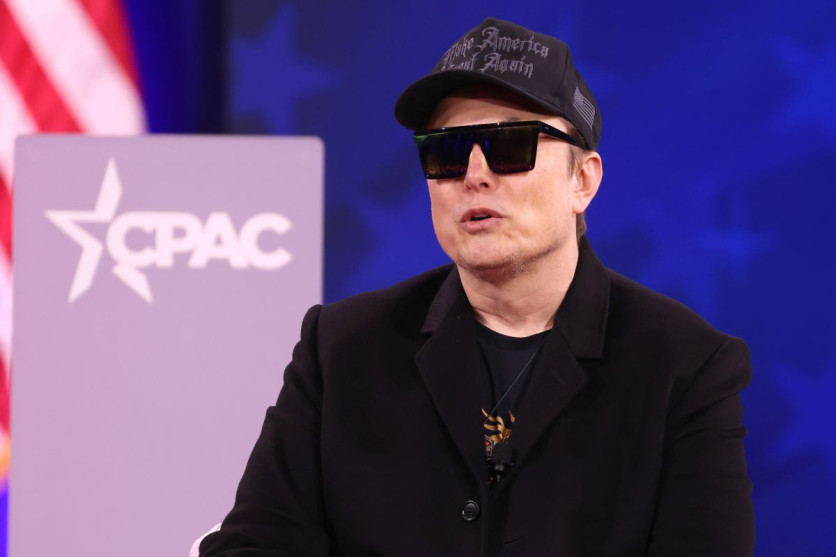
Elon Musk's Starlink is moving beyond its existing satellite-to-phone strategy, with SpaceX now discussing a terrestrial component that could turn the service into a more direct competitor to traditional mobile operators.
SpaceX is now laying out plans for a terrestrial component for Starlink Mobile, potentially putting it in more direct competition with AT&T, Verizon and T-Mobile. AT&T CEO John Stankey, however, argues that the technical and economic realities make Starlink's ambitions much harder to achieve than they may appear.
The disagreement matters because Starlink already has a substantial connectivity business. SpaceX reported 12 million Starlink subscribers at the end of June 2026, although that figure refers to service lines rather than individual people.
Meanwhile, the company has acquired additional wireless spectrum and plans to use both satellites and ground infrastructure for its next phase of mobile expansion.
For AT&T, the question is not whether smartphones can connect through satellites. Its own partnership with AST SpaceMobile is designed to provide satellite connectivity to customers in areas beyond conventional coverage.
The bigger question is whether Starlink's combination of satellites and proposed ground infrastructure can provide enough capacity and reliability to compete with conventional mobile networks at scale.
Starlink Mobile Sets Its Sights on AT&T and Other US Carriers
SpaceX has been unusually direct about its mobile ambitions. Starlink has traditionally worked with mobile network operators, including T-Mobile in the US, to extend coverage beyond terrestrial networks. Its newer strategy goes further by using spectrum acquired from EchoStar to develop a terrestrial service of its own.
SpaceX has said the next-generation Starlink Direct to Cell system is being designed for a major increase in capacity. The company says its new satellites could provide around 20 times the throughput capability of its first-generation satellites, while the overall system could see capacity increase by more than 100 times.
Musk has also claimed that Starlink's future terrestrial cellular network could eventually offer better connectivity and higher bandwidth than existing cellular providers. SpaceX president Gwynne Shotwell has said the company intends to build the terrestrial element rather than relying entirely on satellites.
If that build-out goes ahead, it could change Starlink's role in the market. Rather than operating mainly through partnerships with existing carriers, SpaceX would have a terrestrial component of its own with which to pursue mobile customers directly.
There is already evidence of the scale SpaceX is pursuing. Its June filing showed connectivity revenue reached $4.3 billion (£3.25 billion) in the second quarter.
Why AT&T Questions Starlink's Ability To Match Cellular Networks
Stankey's criticism centres largely on capacity, cost and the infrastructure needed to make Starlink a full-scale mobile competitor. He has argued that building enough small cellular stations to provide the capacity of a conventional network could require an investment comparable to constructing a traditional macro network.
He also pointed to the difficulty of providing reliable coverage in buildings and other locations where satellite signals may not be sufficient on their own.
The underlying technical challenge is the much greater distance between a satellite and a smartphone compared with a conventional cellular tower.
Analysts cited by Reuters have highlighted the resulting signal-loss disadvantage, although Starlink's system is specifically designed to overcome some of those limitations through specialised antennas, spectrum and network engineering.
That does not make Starlink Mobile irrelevant. It could be particularly useful in remote areas, during emergencies and in places where building conventional infrastructure is difficult. AT&T is also working with Amazon Leo to extend connectivity for business customers.
AT&T is simultaneously investing heavily in fibre. The company announced a multi-year agreement worth more than $3 billion (£2.27 billion) with Corning on September 29, saying average AT&T Fiber households now consume more than 1 terabyte of data each month. It expects that figure to rise as streaming, cloud services and AI increase data usage.
The emerging contest, therefore, may not be as simple as Starlink versus AT&T. Satellite technology can extend coverage where towers struggle, while terrestrial networks retain major advantages in high-capacity areas.
Starlink is attempting to close that gap with new satellites, spectrum and proposed ground infrastructure, but AT&T's argument is that competing with an established mobile network requires far more than putting cellular equipment in orbit.


