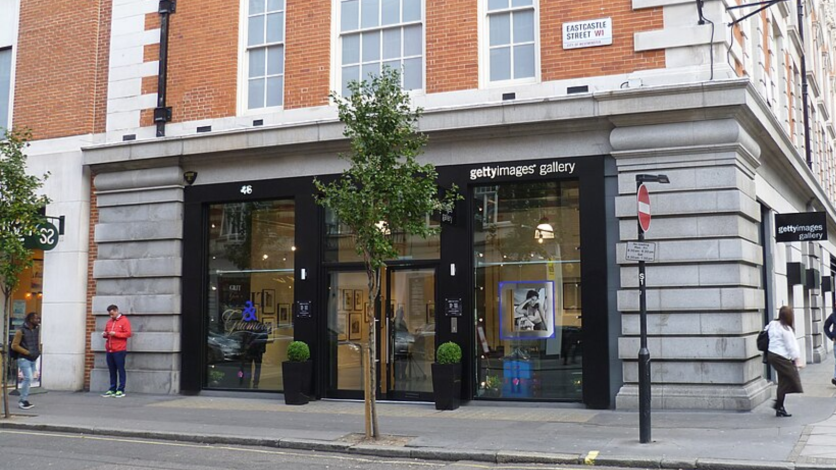
Getty Images has filed for Chapter 11 bankruptcy in Delaware, leaving shareholders facing the loss of their entire investment under a restructuring plan that would take the photography giant private.
The 21 October 2026 filing comes as AI-generated imagery reshapes the industry, although mounting debt, costly investor lawsuits and a failed Shutterstock merger have also contributed to the company's financial troubles.
Under the proposed plan, existing shares would be cancelled without compensation. Affiliates of the Getty family and Koch Equity Development would take ownership of the reorganised business, while Getty continues operating during bankruptcy proceedings.
The filing marks a major financial turning point for one of the world's largest visual content providers, whose photographs appear across news reports, advertising campaigns and international events.
Getty Images Shareholders Face Losing Their Entire Investment
Getty Images entered into a restructuring agreement on 12 October, outlining plans to eliminate existing equity interests. Shareholders would receive nothing for their holdings if the bankruptcy court approves the plan.
Affiliates of the Getty family and Koch Equity Development have committed approximately $533 million through a package that includes bankruptcy financing, a new equity investment and the conversion of existing debt into equity.
The investors would own the reorganised company, subject to possible dilution under a management incentive plan. According to Reuters, creditors holding approximately 90% of Getty's debt support the restructuring.
Shareholders are preparing to challenge the proposed outcome. Reuters reported on 22 October that they intend to seek a court-appointed committee to represent their interests during the bankruptcy proceedings.
Investor Lawsuits Added Millions to Getty Images' Financial Troubles
Getty's financial difficulties extend beyond growing competition from artificial intelligence.
At a bankruptcy hearing on 22 October, company lawyer Brian Schartz said investor disputes had resulted in approximately $200 million (£149.2 million) in legal judgements. Getty could also face up to $275 million (approximately £205.2 million) in additional liabilities linked to those cases.
The litigation centres on warrants that investors alleged entitled them to purchase Getty shares for $11.50 (approximately £8.60), each.
Getty blocked investors from exercising those warrants when its share price briefly reached $32 (approximately £24), arguing that approval from US securities regulators was still pending.
According to Reuters, Getty paid $110 million (£82.1 million) to two investors in April after losing a federal court case and an appeal. Another lawsuit resulted in an approximately $92 million (£68.6 million) judgement, which remains unpaid.
Schartz said the company had also spent $35 million (approximately £26.1 million) defending investor claims over four years.
Getty Images Had $1.46 Billion in Debt Despite Nearly $1 Billion in Revenue
Getty entered bankruptcy with approximately $1.46 billion (£1.09 billion) in debt, despite generating substantial revenue.
Reuters reported that the company recorded $978 million (approximately £729.7 million) in revenue over the preceding 12 months. Yet it had just $20 million (£14.9 million) in cash when it filed for bankruptcy.
The figures highlight the gap between Getty's sales and the cash available to meet its financial obligations. Its failed $3.7 billion (approximately £2.76 billion) merger with Shutterstock added another setback.
Getty abandoned the agreement in July 2026 after Britain's Competition and Markets Authority (CMA) conditionally cleared the merger in May, requiring Shutterstock to sell its editorial photography business.
The regulator concluded that the merger could weaken competition in editorial content supplied to UK media organisations, potentially reducing choice and increasing prices. Getty ultimately decided not to proceed under those conditions.
How AI Is Changing Getty Images' Photography Business
Getty's bankruptcy comes as generative AI changes how businesses create and purchase visual content.
AI tools can generate advertising images, illustrations and other commercial visuals without requiring businesses to license existing photographs. This creates additional competition for traditional stock-image providers.
Companies such as Adobe and Canva have expanded their AI-powered creative services. Getty itself has introduced generative AI offerings as the market evolves.
During its Getty–Shutterstock investigation, the CMA recognised the growing competitive influence of AI-generated content in the wider stock-content market.
However, the regulator distinguished that market from editorial photography, where it identified competition concerns about the proposed merger.
AI's expansion provides important context for Getty's challenges, but available evidence does not establish that the technology directly caused its bankruptcy. Instead, Getty cited investor litigation, substantial debt and the abandoned Shutterstock merger among the reasons for its restructuring.
What Happens to Getty Images After Bankruptcy?
Getty Images says it intends to continue operating normally throughout the Chapter 11 proceedings.
The company does not anticipate disruption to employees, photographers, contributors, customers or commercial partners.
An affiliate of Koch Equity Development has arranged up to $143 million (approximately £106.7 million) in bankruptcy financing to support operations during the restructuring process. Getty expects to complete the process before the end of 2026, subject to court approval and other requirements.
For customers and contributors, photography services are expected to continue without significant disruption. For shareholders, however, the consequences could be far more serious. If the restructuring is approved, Getty would emerge as a privately owned business, while existing shareholders would lose their entire investment.


