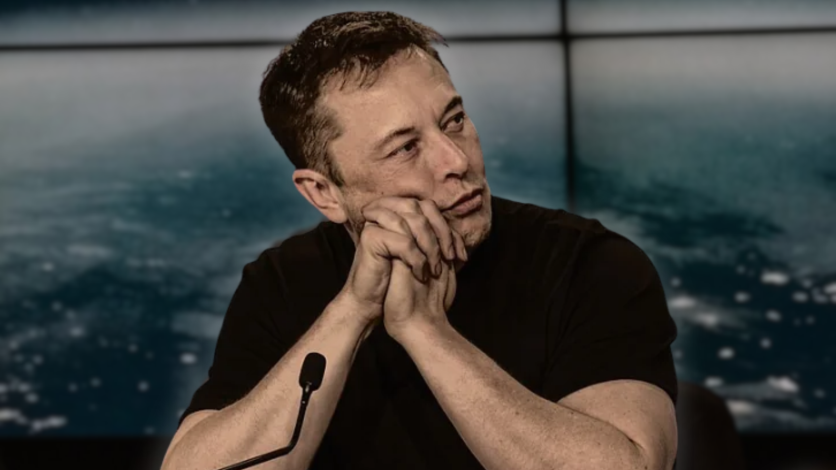
Elon Musk says his company boards already know whom he wants to take over if something happens to him. Yet more than three years after revealing those private recommendations, the billionaire has not publicly named his preferred successors.
The question has become more pressing as Tesla and SpaceX explore a potential merger involving businesses worth a combined $3.5 trillion (approximately £2.6 trillion).
On 20 October 2026, Musk confirmed that both companies had formed independent special committees to examine a possible merger. No agreement has been reached, raising fresh questions about who could eventually lead the businesses without him.
Musk Says His Boards Already Know Who Should Take Over
Musk discussed his succession arrangements during The Wall Street Journal's CEO Council interview in May 2023.
'There are particular individuals identified,' he said, explaining that he had already informed company boards whom he would recommend if he unexpectedly became unable to lead.
However, Musk acknowledged that directors would make the final decision. They could accept his recommendations or choose someone else.
He did not publicly identify those individuals. That leaves investors without publicly confirmed successors for businesses spanning electric vehicles, rockets, artificial intelligence, satellite communications and robotics.
Identifying potential replacements also does not necessarily mean the companies have fully developed succession plans ready to implement.
A $3.5 Trillion Merger Raises the Stakes
The succession question has gained fresh importance following developments involving Tesla and SpaceX.
On 20 October, Musk confirmed that both companies had established independent special committees to explore a merger. He called the idea 'a good idea' but warned that no agreement was guaranteed.
According to Reuters, their combined market value was approximately $3.5 trillion (roughly £2.625 trillion). At that valuation, a merger would create America's fifth-largest publicly traded company.
The figure represents their combined market capitalisation, not an agreed transaction price.
A combination could bring Tesla's electric vehicles, autonomous driving technology and robotics operations closer to SpaceX's rockets, satellite networks and artificial intelligence business. However, it could also complicate future leadership arrangements.
Musk has recused himself from the special committees' discussions because of his interests in both companies. Nevertheless, he retains significant influence over the proposed transaction.
On 22 October, Reuters reported that SpaceX had disclosed that any merger would require approval from its special committee, board of directors and Musk as controlling shareholder. Other corporate and shareholder approvals could also be necessary.
SpaceX Has Already Warned Investors About Losing Musk
SpaceX has previously acknowledged the risks of depending heavily on its chief executive. Ahead of its June 2026 stock market debut, the company warned prospective investors that losing Musk through death, disability or other circumstances could significantly disrupt its management.
Its prospectus identified him as central to the company's growth, innovation and operational success.
In September, CNN examined that dependence and the uncertainty surrounding SpaceX's future leadership. Technology analyst Dan Ives told CNN that investors were betting on Musk as much as the companies themselves.
The warning highlights a central concern: identifying a potential successor does not guarantee a smooth leadership transition.
Could Gwynne Shotwell or Another Executive Replace Him?
Both companies have experienced executives who could be considered for future leadership roles. However, none has been publicly confirmed as Musk's preferred successor.
At SpaceX, president and chief operating officer Gwynne Shotwell has extensive experience managing the company's business operations and expansion.
Tesla also has established executives with significant operational experience. Tom Zhu, the company's senior vice-president for Asia-Pacific and global vehicle manufacturing, has held major responsibilities across its automotive operations.
Former Tesla chief technology officer JB Straubel, who remains a board member, also has extensive knowledge of the company's technology and history.
Their experience makes them relevant to discussions about potential leadership transitions. However, there is no public confirmation that Musk has recommended Shotwell, Zhu or Straubel to their respective boards.
Whether any of them would eventually be chosen remains unknown.
Why Musk Opposes Automatic Control for His Children
Musk has also questioned whether his children should automatically inherit control of his companies.
During his 2023 interview, he argued that handing business interests to children without considering their abilities or willingness to manage them would be a mistake. He distinguished between appointing executives to run his businesses and determining who should eventually exercise voting control over his shares.
Musk discussed the possibility of establishing an educational institution that could control much of his voting power. He described the idea as partly developed, but whether that particular arrangement has been implemented remains publicly unconfirmed.
That distinction could become increasingly important if Tesla and SpaceX merge. Reuters reported that Musk owns nearly 20% of Tesla and retains voting control at SpaceX. A merger could reshape the ownership and governance structure of both businesses.
For now, Musk's preferred successors remain unidentified publicly. His boards may know whom he wants, but that does not guarantee those individuals will eventually take charge.
With companies worth a combined $3.5 trillion (roughly £2.625 trillion) considering a merger, the question extends beyond who could replace Elon Musk. It is whether a combined business could operate successfully without the person most closely associated with its ambitions.


