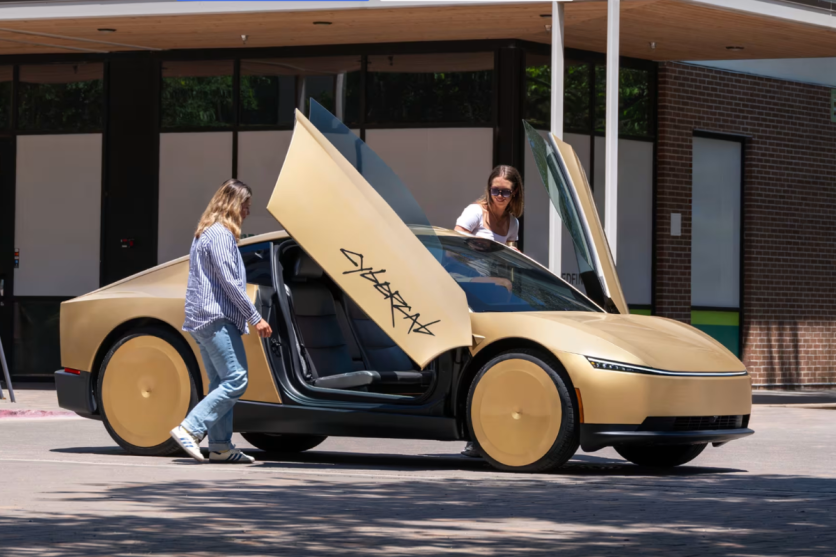
A video of a man repeatedly blocking and harassing a Tesla robotaxi recently went viral. The 20-second video showed the man blocking the same robotaxi thrice. Although the stunt did not result in any injuries, the behaviour has raised concerns of safety for the individual as well as the autonomous vehicle.
The video shared on X by finance commentator Jesse Cohen (@JesseCohenInv) gained over 1.6 million views and thousands of comments and retweets.
'Things like this are going to be a big issue going forward with Tesla robotaxis,' Cohen wrote. 'Any attention-seeking lunatic can continue to do this with zero accountability and delay peoples' rides and cause accidents.'
Things like this are going to be a big issue going forward with Tesla $TSLA robotaxis.
— Jesse Cohen (@JesseCohenInv) September 8, 2026
Any attention seeking lunatic can continue to do this with zero accountability and delay peoples’ rides and cause accidents. pic.twitter.com/rURKu72O4u
The X post was made on 8 September 2026 and called out anyone who may attempt to harass Tesla's robotaxis. In a follow-up post, he criticised someone who deliberately attempted a similar action, seemingly motivated by anti-Elon Musk sentiment, arguing that such actions are not only an inconvenience but also a hazard to others.
Other X users soon joined the discussion, with some assigning ulterior political motives to those who block or harass Tesla. A few even conflated partisan support with such behaviour, showing the charged nature of the subject.
The Culture War Subtext of the Automotive Vehicle Safety Debate
Cohen's frustration was echoed by others, including Ryan Blake, who mocked the notion of grown adults confronting driverless cars because of the culture war. The thread eventually became the flashpoint of robotaxi safety, a topic that has flared up all throughout 2026 as companies, like Tesla and Waymo, have tried to expand their services across different cities.
It's worth mentioning that while the tweet was about dangerous public behaviour and automated vehicles, it also carried the subtext of the culture war and Elon Musk. So far, Musk has not commented or retweeted the post, preferring to focus on the Robotaxi review from tourists visiting Texas.
It's worth mentioning that this isn't the first time that such Tesla robotaxis and public behaviour have become newsworthy. There have been videos of people blocking, taunting and 'chicken-testing' driverless cars for years across Austin, San Francisco and other countries. This has sparked controversies about Tesla robotaxi harassment, even when there are no injuries or damages.
What Do The Actual Injury Numbers Actually Look Like?
Separating outrage from the data requires looking at what automated car companies have reported. NHTSA's Standing General Order requires companies operating automated vehicle systems to release information meeting certain thresholds.
In the case of Tesla Robotaxis in Austin, Tesla incident data covers July 2025 to March 2026, and there were a total of 17 incidents, all of them involving the 2026 Model Y.
The report also states that the automated driving system was active as well as human safety features. Of those incidents, 13 involved property damage, 2 with no reported injuries, 1 with a minor injury without hospitalisation, and 1 had a minor injury that required hospitalisation.
Additionally, an independent analysis of NHTSA filings found that 10 of 17 documented incidents were caused by other drivers, either rear-ending, sideswiping or otherwise crashing into a robotaxi. The remaining 7 cases were attributed to errors in the Tesla system.
Broader industry data also suggests bystander-caused disruptions, such as blocking and harassment, remain more common as video and social media content rather than as documented injury events in the record.


