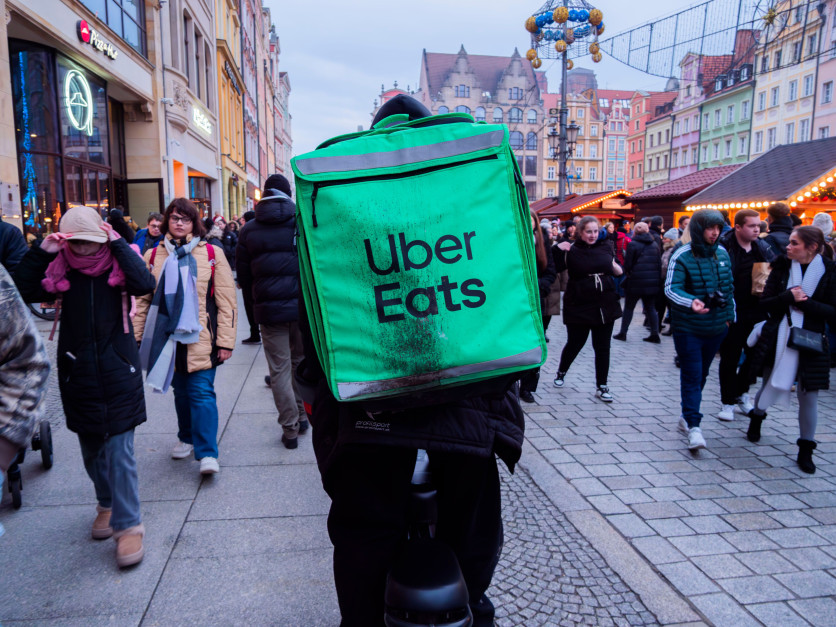
Migrant delivery workers in France are reportedly using multiple phones to reject low-paying Uber Eats orders in a bid to push delivery offers to €15 (£12.56) or more, according to a viral claim circulating on X.
The claim originated in an Arabic-language post by X user Tamim, which was subsequently reposted by Breaking911. Its translated caption describes couriers collectively refusing and cancelling poorly paid orders, allegedly forcing the platform's algorithm to raise delivery offers until they reach a more attractive amount.
The post frames the tactic as a form of collective action against falling pay. However, the claim that coordinated rejections cause Uber Eats to increase offers to €15 (£12.56) or more has not been independently verified.
How Couriers Are Reportedly Challenging Uber Eats
Tamim's post describes delivery workers using multiple phones to coordinate their decisions about which orders to accept. According to the translated caption, couriers reject or cancel offers they consider too low, waiting for the app to display a higher amount.
WATCH: Migrant Uber Eats delivery workers in France are using multiple phones to reject low-paying orders, forcing the app’s algorithm to raise delivery offers to €15 or more. pic.twitter.com/tELWoKidiz
— Breaking911 (@Breaking911) October 25, 2026
The post suggests that this strategy can push delivery offers to €15 (£12.56) or more.
Breaking911 subsequently shared the claim, helping it reach a wider audience. Neither the repost nor the original caption, however, establishes how frequently the tactic is used, how many couriers are involved or whether the reported increases were directly caused by collective refusals.
The distinction matters because a higher offer appearing after an order is rejected would not, on its own, prove that the rejection caused the increase. The available evidence does not establish whether the reported outcome is repeatable or whether other factors affect the amount displayed.
What Uber Says About Rejecting Orders
Uber's French legal documentation states that couriers can choose when and where to use the Uber Eats app and may accept or reject delivery requests. It also explains that delivery requests are sent to available couriers with the aim of minimising waiting times for customers in the same geographical area.
The documentation does not confirm that rejecting an order automatically causes its payment to rise, nor does it validate the reported €15 (£12.56) threshold.
This leaves a key question unanswered: does the tactic described in the viral post influence the platform's pricing system, or are the reported higher offers the result of other factors? The original post alone cannot establish the answer.
Migrant Workers and Delivery Pay
The claim also draws attention to wider concerns about earnings and working conditions in app-based delivery work. Migrants have featured in reporting on France's food-delivery sector, including a 2019 New York Times investigation into migrant workers and delivery platforms.
More recently, French delivery-platform pay has remained a subject of debate. Le Monde reported in July 2026 that an agreement between delivery platforms and courier organisations would raise the guaranteed minimum hourly rate for delivery work from €11.75 (£9.86) to €19 (£15.94) gross from 1 September 2026.
That hourly guarantee is a different measure from the individual delivery offers discussed in the viral post. It should not be interpreted as evidence that every order pays €19 (£15.94) or that the multiple-phone tactic is responsible for higher offers.
Can Workers Influence the Algorithm?
The viral claim raises broader questions about how delivery platforms determine the amounts offered to couriers and how much control workers can exercise over those decisions.
If couriers can coordinate their refusals and consistently receive more attractive offers as a result, the tactic could illustrate one way workers attempt to improve their bargaining position within an app-based system. But that conclusion depends on evidence that is not yet available.
For now, the reported use of multiple phones and the claim that coordinated refusals push Uber Eats offers to €15 (£12.56) or more should be treated as allegations made in a social media post, not as a verified way to increase courier pay.
Independent confirmation from couriers, additional footage or a response from Uber Eats would help establish what happened and whether the tactic actually influenced the offers.


