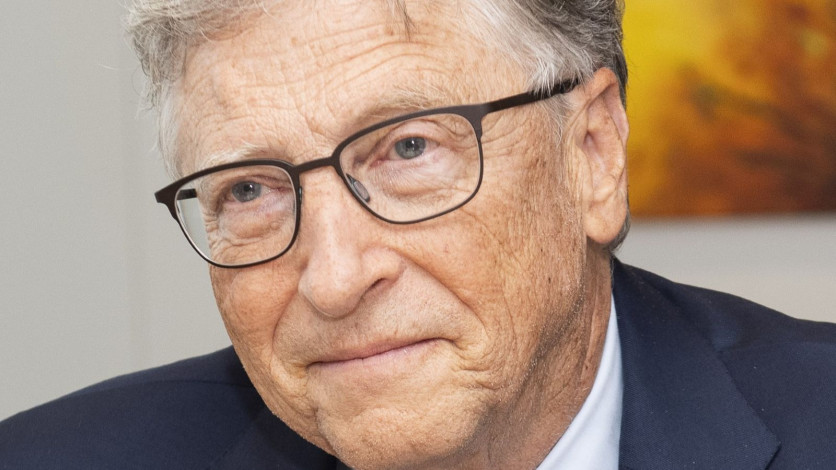
Bill Gates has praised Elon Musk's business achievements despite describing a mixed personal relationship with the technology entrepreneur.
Speaking in an interview ahead of the February 2025 publication of his memoir, Source Code, the Microsoft co-founder discussed their disagreements over investments, philanthropy and politics. Gates said he remained willing to work with Musk, despite their differences.
His comments offered a glimpse into how two of the technology industry's most prominent figures can disagree over business decisions while recognising each other's contributions.
Tesla's influence on the electric vehicle industry and SpaceX's work in commercial spaceflight were among the achievements Gates praised. Their disagreements have occasionally become public, including over Gates' investment position against Tesla.
Bill Gates Praises Elon Musk's Tesla and SpaceX Achievements
In the interview with The Independent, Gates described the relationship in personal terms, saying: 'He's been nice to me at times, and mean to me at times.'
He added: 'I will try and work with him because he's brilliant, he's rich, he's influential.'
The comments reflected Gates' stated willingness to maintain a working relationship despite their differences. He did not suggest that professional achievements excused their personal tensions.
Gates was particularly complimentary about Tesla's effect on the car industry. 'I'm in awe of the great work he did at SpaceX and Tesla,' he told The Independent. 'The fact that Tesla kind of forced the car industry to do great EVs is a gigantic contribution.'
Tesla became a prominent player in the electric vehicle market as established manufacturers expanded their own electric vehicle ranges. The company's role in the industry is distinct from the question of whether its shares represent an attractive investment at any particular price.
SpaceX has developed reusable rocket technology and established a substantial commercial launch business. The company has influenced commercial spaceflight, although the wider sector also includes government agencies and other private companies.
Gates also expressed reservations about the political direction taken by some technology executives. In the same interview, he said he was surprised by the support prominent Silicon Valley figures had shown for Donald Trump.
'I'm a little surprised at the variety of political views coming out of Silicon Valley,' Gates said, discussing the political donations and support offered by technology leaders.
His remarks illustrated that recognising a business achievement does not necessarily imply agreement with the person responsible on political or social questions.
How the Tesla Short-Selling Dispute Created Tension Between Them
One prominent example of the tension emerged in 2022, when Musk confronted Gates over a short position against Tesla shares. Short-selling involves borrowing shares and selling them in the expectation that their price will fall, allowing the investor to buy them back at a lower price.
Musk objected to Gates holding a bearish position against Tesla, a company he regarded as an important contributor to the transition towards electric vehicles. In messages later made public, Musk questioned whether Gates' climate philanthropy was consistent with the investment.
The disagreement became widely reported after biographer Walter Isaacson included details of the encounter in his 2023 book, Elon Musk. Contemporary reporting by Business Insider and other outlets documented the dispute.
Gates recalled the reaction in comments to Isaacson: 'Once he heard I'd shorted the stock, he was super mean to me, but he's super mean to so many people, so you can't take it too personally.'
The financial position itself requires context. Gates' investment reflected an assessment of Tesla shares, rather than necessarily indicating opposition to electric vehicles.
An investor can support a technology while believing a particular company's stock price may decline. Musk, by contrast, viewed the bet as inconsistent with Gates' public advocacy on climate change.
Their differences have extended beyond corporate investments. In February 2025, Gates criticised Musk's involvement in the US government's restructuring efforts, particularly changes affecting the US Agency for International Development (USAID).
Gates argued that the agency's health and humanitarian programmes provided services that could not easily be replaced by private philanthropy. In a separate interview published in May 2025, the Financial Times reported Gates' concerns about the effects of cuts to overseas aid and Musk's role in the changes.
The disagreements illustrate how their contrasting approaches to wealth and public influence can put them at odds, even when their interests overlap in technology and scientific progress.
Gates' willingness to acknowledge Musk's achievements should not be mistaken for an endorsement of his decisions. His remarks distinguish professional accomplishments from personal relationships and political disagreements, leaving open the possibility of cooperation without suggesting that the underlying tensions have disappeared.


