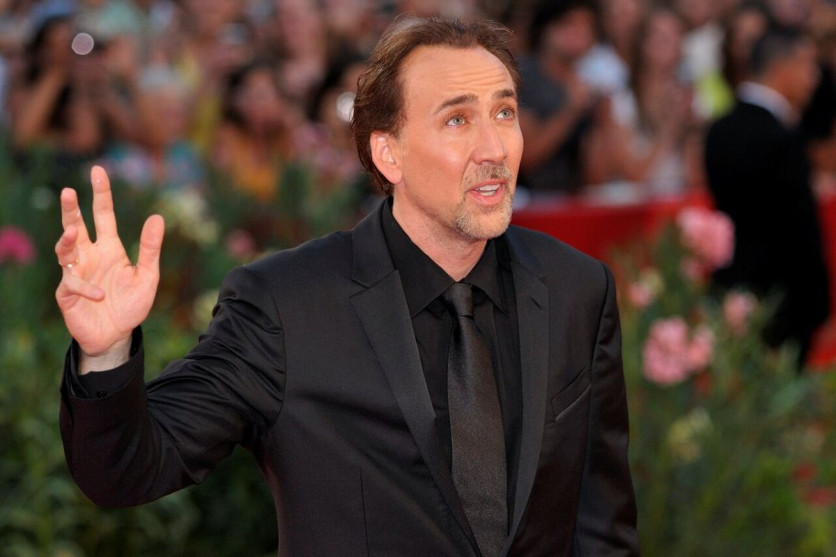
Nicolas Cage has said he refused to sign an artificial intelligence waiver he was asked to agree to for Amazon's superhero series Spider-Noir, warning that his opposition to the technology could affect his future work with the studio.
Speaking at New York Comic Con, the Oscar-winning actor said he would not grant the requested permission for AI use on the production. His remarks put the dispute over AI and creative control into a personal context, with one of Hollywood's most recognisable performers openly challenging a major streaming platform.
The disagreement also comes as Amazon expands its involvement in artificial intelligence through a multibillion-dollar partnership with OpenAI. Cage referred to that relationship when explaining his position, although the precise terms of the waiver he rejected have not been disclosed.
His remarks raise questions about how performers are being asked to approve AI use in film and television, particularly when contracts may determine how their work can be altered or reused.
Nicolas Cage Rejects Amazon AI Waiver for Spider-Noir
During the New York Comic Con panel, Cage directly connected his decision to Amazon's investment in OpenAI, the company behind ChatGPT.
'Amazon is a very AI-friendly company, to the tune of $50 billion invested in OpenAI,' he told the audience, according to Variety (approximately £37 billion). 'I am not an AI-friendly actor, so it's like, connect those dots! I'm not a member of their club.'
The audience responded with applause as he explained his position, before Cage acknowledged the potential professional consequences.
'I'm probably not going to be working with that studio again, but that's OK,' he said.
Neither the precise wording of the document nor the specific AI applications it would have permitted has been publicly established in the coverage of Cage's comments.
It would therefore be premature to conclude that Amazon intended to generate a digital replacement for his acting, train a model on his likeness or make any particular alteration to his performance.
Amazon had not immediately responded to the Los Angeles Times when it reported Cage's allegations on 10 October. The available information also does not establish whether other performers involved in the production were presented with similar terms.
Amazon and OpenAI announced their strategic partnership on 27 February 2026. Amazon said it would invest $50 billion (approximately £37 billion), beginning with an initial $15 billion (approximately £11 billion), followed by a further $35 billion (approximately £26 billion) when certain conditions are met.
The partnership also covers cloud infrastructure, AI development and customised models for Amazon's customer-facing applications. The investment explains the corporate relationship Cage referenced, but does not by itself establish how AI was intended to be used on Spider-Noir.
Nicolas Cage's Long-Running Opposition To AI in Hollywood
Cage's latest comments follow years of concern about technology changing performances without an actor having meaningful control over the result. At the 2025 Saturn Awards, he warned that even limited AI interference could threaten artistic integrity.
'That is a dead end if an actor lets one AI robot manipulate his or her performance even a little bit, an inch will eventually become a mile, and all integrity, purity and truth of art will be replaced by financial interests only,' he said.
'We can't let that happen.'
His concern is not limited to hypothetical future uses. Cage previously questioned how his appearance was digitally altered for his brief appearance as Superman in The Flash (2023). The scene referenced Superman Lives, the abandoned film project directed by Tim Burton in which Cage had been cast as the superhero.
Speaking to Yahoo Entertainment, Cage said he did not believe the cameo had been created using AI, while noting that computer-generated imagery had been used to de-age him. He nevertheless expressed frustration about the finished result being outside his control.
'AI is a nightmare to me. It's inhumane. You can't get more inhumane than artificial intelligence,' he said, before clarifying that he did not think AI had been used in that particular scene.
The distinction matters because conventional CGI and generative AI are not interchangeable technologies.
Digital visual effects can alter an existing filmed performance, while generative systems can also create new images, voices or performances from supplied material. Cage's account of The Flash should not be treated as evidence that AI was used in its production.
The dispute over Spider-Noir comes amid continuing negotiations across Hollywood over consent, compensation and the use of digital replicas. SAG-AFTRA's TV and theatrical agreement includes protections requiring informed consent for the creation and use of performers' digital replicas, with compensation required in most cases.
The rules vary according to the applicable agreement and the intended use.
Meanwhile, Spider-Noir will not return for a second season on Prime Video. The series received 11 Emmy nominations and won five awards, according to Variety, but its cancellation does not establish any connection between the production decision and Cage's refusal to sign the waiver.
For now, the central unanswered question is what Amazon wanted the document to authorise. Until its terms become public, Cage's account establishes his refusal and his concerns, but not the full scope of the proposed AI use.


