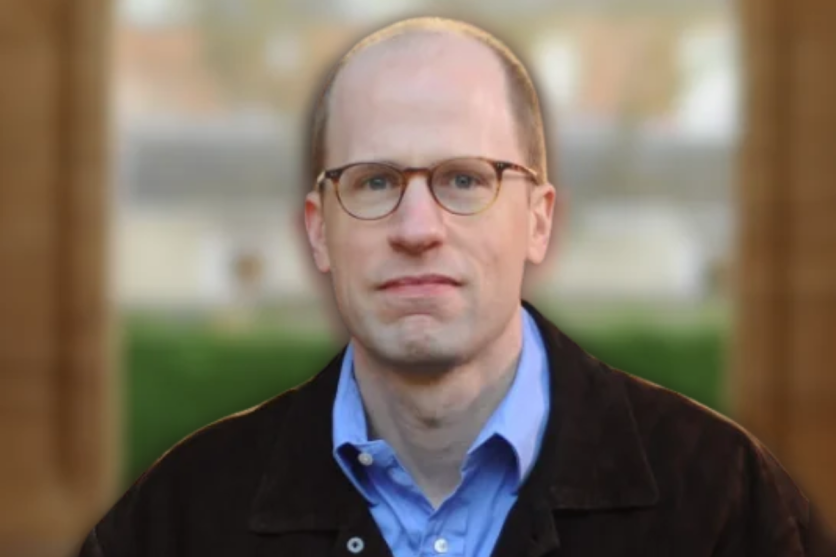
Swedish philosopher Nick Bostrom believes artificial intelligence (AI) could extend human life expectancy to around 1,400 years if it helps scientists overcome biological ageing. Speaking on the a16z podcast in November 2026, the former Oxford University professor explored the potential medical benefits of superintelligence and the risks of developing it.
The figure is a theoretical estimate, not a medical prediction. Bostrom suggests it might even be conservative if advanced AI could also reduce deaths from accidents and infectious diseases.
The philosopher, whose 2014 book Superintelligence helped bring AI safety concerns into mainstream discussion, also questioned the potential human cost of delaying the technology.
How AI Could Help Humans Live for 1,400 Years
Bostrom's estimate assumes that medicine could overcome biological ageing and maintain mortality rates comparable to those of healthy young adults.
In his 2026 working paper, Optimal Timing for Superintelligence, Bostrom uses an annual mortality rate of approximately 0.07% for his longevity calculation. If that rate remained constant throughout life, the theoretical remaining life expectancy would be around 1,429 years.
That would not make humans immortal. Nor does the figure represent a maximum lifespan. Accidents, infections and other potentially fatal events could still cut lives short.
Bostrom argues that superintelligence, a hypothetical form of AI that surpasses human intellectual abilities, could accelerate biomedical research. It might help scientists develop treatments targeting the biological processes behind ageing.
What Bostrom's 97% AI Extinction Risk Threshold Means
Bostrom's working paper also examines how the potential benefits of radical life extension might influence decisions about AI development.
His simplified model compares an assumed remaining life expectancy of 40 years without superintelligence with 1,400 years following its successful deployment. It assumes that catastrophic failure would result in everyone's immediate death.
Under these assumptions, the expected remaining lifespan of people alive today would increase if the probability of extinction were below approximately 97.1%.
The figure is a mathematical threshold, not an estimate of the actual extinction risk posed by AI or a recommended safety standard. The model focuses on existing people rather than potential future generations.
Why Bostrom Believes Delaying AI Could Cost Lives
Bostrom argues that delaying superintelligence could postpone medical breakthroughs. Further safety research might reduce the dangers of advanced AI, but people would continue to die from conditions that future treatments might address.
For elderly patients and those with life-threatening illnesses, medical discoveries arriving decades later might come too late.
Under several modelling scenarios, Bostrom suggests that a pause lasting months or a few years before full deployment could be preferable to decades of delay. The timing depends partly on how effectively additional safety research reduces catastrophic risks.
Can AI Really Stop Biological Ageing?
Frenchwoman Jeanne Louise Calment holds the record for the longest verified human lifespan. She died on 4 August 1997, aged 122 years and 164 days.
A 2024 study published in Nature Aging concluded that radical human life extension was unlikely this century unless scientists could substantially slow biological ageing.
In 2023, researchers used machine learning to identify three compounds that selectively eliminated senescent cells in laboratory experiments. These cells are associated with ageing and various diseases.
The study demonstrated AI's potential in drug discovery but did not establish that the compounds could extend human lifespans. Whether superintelligence can overcome biological ageing remains unanswered, as does humanity's ability to develop it safely.


