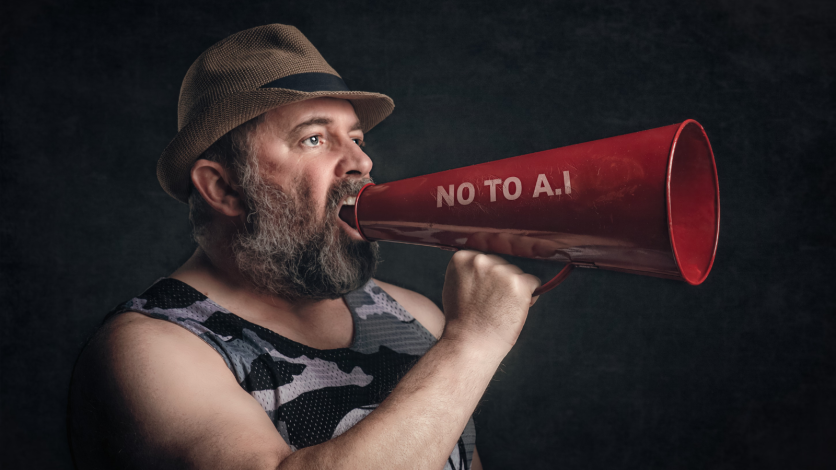
The University of Kentucky has formally granted research administrator David Durman a religious exemption from personally using artificial intelligence in his job, ruling that he can carry out his duties without relying on the technology.
Durman, who supports academics with grant applications, argues that handing his thinking and decision-making to AI conflicts with his humanist beliefs about moral responsibility and human flourishing.
The university approves his request in September, at a time when AI use is not compulsory in his role. Colleagues and university leaders have encouraged employees to try the tools, but Durman seeks the accommodation in case that encouragement becomes a requirement.
His approval allows him to work without personally using AI for his tasks. It does not remove every obligation involving tools or platforms that may use the technology elsewhere in the university.
Durman Connects His Objection to Moral Responsibility
Durman describes humanism as a commitment to human well-being and flourishing. For him, thinking through his work, making decisions and paying attention to others are part of becoming a responsible person.
In an interview with Religion News Service, he says, 'offloading that labor, regardless of whether it's taxing or not, is undercutting my ability to be a moral actor'. His objection concerns the thinking involved in doing the work, rather than simply whether an AI tool can produce an acceptable result.
The American Humanist Association helps him prepare his request under Title VII, the US law covering religious discrimination at work. Although his beliefs do not involve a god, that does not automatically exclude them from protection.
US Equal Employment Opportunity Commission guidance says religious beliefs can include nontheistic moral or ethical convictions held with the strength of traditional religious views. It also distinguishes protected beliefs from personal preferences and social, political or economic philosophies. Strong opposition to AI alone does not establish a right to an exemption.
The Exemption Leaves Shared-Work Obligations in Place
The approval's wording draws a practical line between Durman's own tasks and activities involving colleagues. In a letter dated 25 September, quoted by the news service, a university official writes: 'David is excused from personal use of AI to complete his tasks'.
The same letter says he may still be expected to participate in meetings or submit materials through sites involving AI. His exemption therefore does not mean he can avoid every shared activity in which the technology plays a part.
Durman says he can support researchers without using AI and that doing so will not affect his co-workers. He tells The Chronicle of Higher Education that the application takes about a month and describes the process as straightforward.
The University Assesses the Arrangement Against His Duties
University spokesperson Jay Blanton says requests for religious accommodations are reviewed individually, taking account of an employee's sincerely held beliefs, essential responsibilities and the circumstances. In Durman's case, the university determines that the adjustment allows him to continue performing the essential functions of his position.
That explanation ties the approval to his particular job. It does not establish that every employee with an objection to AI would receive the same arrangement, or that the university agrees with his assessment of the technology.
Durman says he is not trying to tell other people what to do. He hopes his experience encourages people with concerns to seek a resolution that works for them.
The university says accommodations may be reviewed as technology and job responsibilities evolve. Changes to the work could therefore bring another assessment of whether the arrangement remains reasonable and workable.


