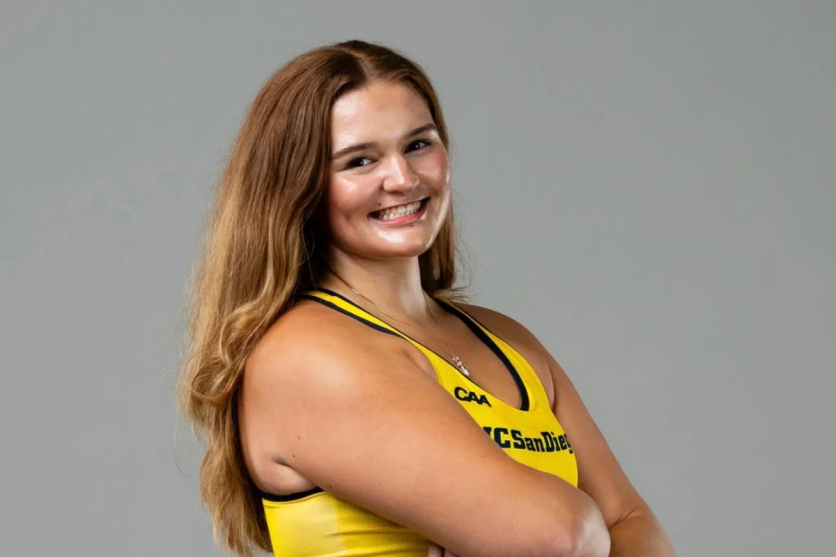
An interview-style video featuring female college rowers attracted more than 500,000 views, but the attention quickly shifted towards the athletes' bodies and uniforms. Reese Leahy, one of the rowers featured, said she subsequently received explicit messages from strangers. Her response on TikTok has since attracted millions of views.
Leahy, a junior on the University of California, San Diego's rowing team, spoke out after a video featuring her and her teammates attracted sexualised comments. Her response had reached 3.5 million views and counting when USA Today published its report on 19 November.
Viral Rowing Video Draws Sexualised Comments
The original video featured Leahy and several of her teammates in an interview-style segment filmed on media day. The athletes had participated in the video to introduce their sport, but the comments quickly moved away from rowing and towards their appearances and uniforms.
According to Leahy, the university rowing team's video attracted more than 500,000 views before it was taken down.
'We posted a video about our sport and men turned it into a conversation about our bodies,' Leahy said. 'The attention was not on rowing. The comments quickly turned to conversations about our bodies, how the uniforms fit (and) making sexual remarks.'
The unwanted attention extended beyond the public comments section. Leahy said she and several teammates received a significant influx of direct messages after the video spread. She described the messages sent to her as particularly disturbing.
'My DMs have been disgusting,' she said. 'Strangers making explicit remarks to me over direct message, asking me to send nude photos and sending unsolicited nude photos of themselves.'
The incident highlights how a video intended to introduce viewers to a sport can attract attention that has little to do with the athletes' abilities or achievements. For Leahy, the problem was not simply that strangers were commenting on the video, but that the discussion had become focused on her and her teammates' bodies rather than their work as athletes.
Athlete's TikTok Response Reaches Millions
Leahy took to her own TikTok account to challenge the behaviour and explain why the reaction to the original video was unacceptable. Her response had reached 3.5 million views and counting when USA Today reported on the incident.
'We're athletes. We train. We spend hours in the gym, and I really wish the conversation would be more focused on that,' Leahy said.
She also addressed the distinction between appreciating female athletes and objectifying them, making it clear that wearing a sporting uniform should not be treated as an invitation for sexualised attention.
'There is a huge difference between appreciating women and objectifying them ... wearing a uniform is not an invitation. We're athletes. Treat us like athletes.'
Her response attracted messages of support from viewers. One commenter wrote: 'I love that this generation of women aren't going to be silent!!'
In a second post, Leahy thanked those who had supported her, describing the response as an 'overwhelming amount of love and support'.
'So many of you have been so kind and encouraging,' she added.
Leahy also acknowledged that she did not know the solution to the problem, but believed that starting a conversation could help. She said the response had shown her how many people had been waiting for these discussions to happen.
Expert Warns of Toxic Pushback Against Women's Sports
The incident has also raised broader questions about the treatment of female athletes as women's sport attracts growing attention.
Jess Rauchberg, a lecturer in media and communication at the University of Leeds, described the situation as a 'perfect storm'.
'We are really having this renaissance moment for women's sports that's simultaneously accompanied by this really toxically masculine pushback,' Rauchberg said.
She argued that female athletes wear uniforms to perform and succeed as a team, not to invite sexual attention.
'Female athletes are not "asking for it". We have these uniforms so we can do our job and be a successful athletic team,' she said.
Rauchberg added that the reaction to the video reflected a wider cultural tension surrounding women in sport.
'Whoever is responding to the video and engaging in trolling or misogyny, it shows that the idea of women in sports instils a fear and a panic in our larger culture,' she said.
Rauchberg also highlighted the desire among supporters for female athletes to be recognised for their work rather than viewed as objects.
'They want a world where women athletes get to participate the same way that that male athletes do, because they see this woman not as an object or as a sexual being, but as a professional who's training,' she explained.
For Leahy, the message is that female athletes deserve to be recognised for their training and sporting achievements, rather than judged or objectified because of what they wear. Her response has taken that message well beyond her rowing team, turning an incident of online harassment into a much wider conversation about women in sport.


