Every day, millions of people walk down public streets assuming a shred of anonymity. But last week, that casual comfort shattered online when a single piece of wearable technology captured an unsuspecting pedestrian's face.
Now, a viral social media clip viewed over sixty million times has exposed a chilling new trend, leaving privacy advocates scrambling to figure out how easily everyday life can be packaged into non-consensual digital entertainment.
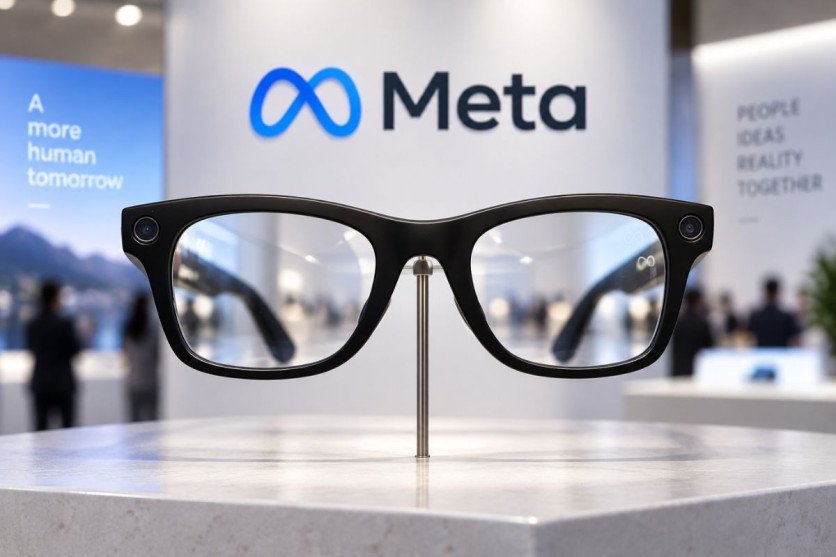
Meta's AI-integrated smart glasses are already being misused for harmful ends. Dubbed 'pervert glasses' by critics and commentators because of their discreet ability to film people in public, the new frames have been linked to harassment, bullying and privacy concerns.
These same specs are now fuelling a dark new trend called joybait. Meta says its AI glasses have a white capture LED that blinks when photos or videos are being captured, and that the camera is disabled if the LED is covered or tampered with.
How 'Joybait' Turns Kindness Into Content
While ragebait thrives on anger and outrage to capture attention, joybait operates on the opposite emotional spectrum by using apparently heartwarming or wholesome moments to encourage viewers to engage and share. The format can involve staged interactions or genuine encounters that are presented as feel-good entertainment.
A widely shared video posted by public prank content creator Levese illustrates how this method plays out in practice. Initially uncovered by journalist James Vincent, the footage captures Levese spotting author Travis Schick browsing a Walmart store alongside his partner.
this is just awful - individualised surveillance culture posing as feelgood content: using facial rec to identify a stranger, pretend to read a book they wrote, and record the interaction without notice using meta glasses. op should retire from life https://t.co/vtVMIMXw65
— James Vincent (@jjvincent) September 16, 2026
Instead of walking straight up to Schick, Levese secretly takes a photo of his face with his phone and searches it using a facial recognition site. Once the platform links the stranger to his online profiles and identifies him as an aspiring writer, the creator approaches while filming through his smart frames to surprise the unsuspecting shopper.
'Wait, Travis?' Levese asks while Schick attempts to pay for his items. 'You wrote the book 'The Readhead?' '
'Yeah?' the confused writer confirms.
'No way I love that book man! Yo I love that book bro,' Levese responds insincerely. 'It was a really good novel.'
'Yeah that was me,' Schick replies, trying to hide a smile.
While the encounter appears wholesome at first glance, it rests entirely on a false premise created using a facial recognition service, meaning Levese would have remained unaware of Travis Schick's identity otherwise. Schick's identity is ultimately secondary to the stunt itself, which was used to generate joybait footage for Levese to share with his 225,000 TikTok followers.
Viral Video Draws 60 Million Views
As online content, the stunt performed remarkably well. The short video pulled in more than 60 million views and 30,000 comments on Levese's TikTok profile alone, while also generating reposts and discussion across social media.
Upon finding the video, journalist James Vincent noted that it represents 'individualized surveillance culture posing as feelgood content.'
Some viewers, falling for the original premise of the stunt, dismissed the privacy concerns, claiming the attention helps promote Schick's writing career.
Comments under Schick's book 'The Red-Head' on the writing site Quotev are pouring in by the hundreds, packed with well-wishers and supporters who would have otherwise missed his writing. Schick's TikTok account has similarly surged, with Futurism reporting that it jumped from roughly 150 followers to more than 12,700 within just a few days.
Smart Glasses Raise Wider Privacy Fears
However, Schick's sudden exposure misses the broader issue, as Vincent points out: 'there may be positive outcomes from this one video (which stem from its novelty as short form content) — but the larger effect is creating a society where we monetize kindness, exploit the goodwill of strangers, and destroy the right to privacy in public,' he posted on X, previously known as Twitter.
A short sighted take. There may be positive outcomes from this one video (which stem from its novelty as short form content) - but the larger effect is creating a society where we monetise kindness, exploit the goodwill of strangers, and destroy the right to privacy in public
— James Vincent (@jjvincent) September 16, 2026
And the aspiring writer is far from the only person featured in Levese's videos. Levese features dozens of clips using this identical template, with each pulling in millions of views. For his part, the content creator clearly knows he is pushing boundaries. The initial video, which features him tracking a man purchasing bananas, highlights pinned text stating 'day 1: stealing people's digital footprint.'
@1evese This App Is Dangrous😭 . . . | #methods #digitalfootprint #publicprank |
♬ original sound - 1evese
'This app is dangrous [sic],' Levese added in the post caption.


