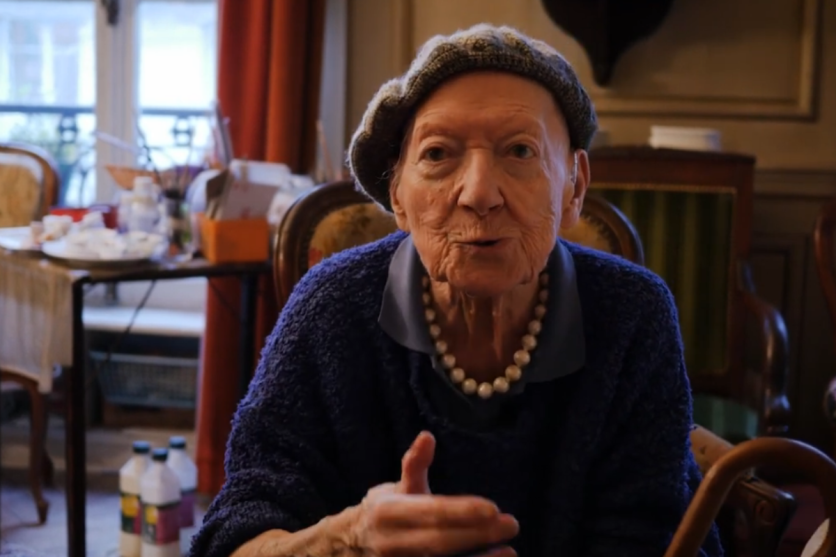
In 1958, French paediatrician Marthe Gautier helped produce the laboratory evidence linking Down's syndrome to an extra chromosome at the Armand-Trousseau children's hospital in Paris.
Her contribution became the subject of a long-running dispute after Jérôme Lejeune emerged as the best-known figure associated with the discovery, while a 2014 assessment by France's medical research institute stressed Gautier and department head Raymond Turpin's indispensable roles.
In 1956, researchers established that human cells normally contain 46 chromosomes, prompting Turpin to investigate a chromosomal cause for Down's syndrome.
Gautier had learned cell-culture techniques during a scholarship at Harvard in 1955 and brought that expertise back to Paris.
Marthe Gautier's Laboratory Work and the 47-Chromosome Finding
Gautier developed a method for growing cells from children with the condition, using rooster plasma and her own blood serum.
The preparations made it possible to examine chromosomes, although the laboratory lacked equipment to photograph the smallest structures clearly.
Who first counted 47 chromosomes remains contested. Gautier's 2009 account described her role in preparing and examining the cells, while Lejeune's laboratory notebook, cited by his foundation, records a 47-chromosome observation in a child with Down's syndrome on 22 May 1958. A second entry on 13 June referred to a different condition.
The female scientist who found down syndrome had her work stolen by a male colleague for decades pic.twitter.com/jlatZ6VprD
— TVP (@Theveripost) November 9, 2026
The foundation also points to a letter Turpin sent Lejeune on 27 October 1958, saying Gautier and another researcher, Mrs Massé, were still obtaining counts of 46.
Although the notebook evidence challenges the claim that Gautier alone made the first count, it does not diminish her role in developing the cell-culture method.
Lejeune presented the finding at McGill University in 1958, before the research was published in January 1959, listing him first, Gautier second and Turpin last, with Gautier's surname misspelled as 'Gauthier'; a second communication followed in March.
Inserm's Assessment Did Not End the Dispute
Lejeune received the 1962 Kennedy Prize and was appointed to the first chair in human genetics at the University of Paris in 1964.
Gautier returned to paediatric cardiology and worked on childhood liver disease. In 2009, she published her account, describing herself as a 'forgotten discoverer'.
The dispute reached a flashpoint in January 2014, when a presentation Gautier was due to give at a genetics conference in Bordeaux was cancelled.
Bailiffs had arrived with a court order obtained by the Jérôme Lejeune Foundation, which said it wanted to record the presentation because it feared damage to Lejeune's reputation. The organisers cancelled the talk. The order should not be described as a court ban on Gautier speaking.
Se llama marthe Gautier ella perfeccionó el cultivo celular y descubrió que las personas con síndrome de Down tenían 47 cromosomas en lugar de 46,como su laboratorio no tenía la tecnología para fotografiar el hallazgo le confió sus portaobjetos a su colega Jérôme Lejeune y el fue https://t.co/IROuIuaenV
— sotorix (@telofanx) November 10, 2026
In September 2014, Inserm's ethics committee examined concerns about Gautier's contribution, concluding that Lejeune's role was unlikely to have been predominant and describing the work of Gautier and Turpin as indispensable.
However, the assessment concerned scientific recognition and was not a court ruling that Lejeune had stolen research.
The Jérôme Lejeune Foundation rejected Inserm's interpretation, arguing that Lejeune had identified the extra chromosome first. Its position was supported by laboratory notebook entries and correspondence that it presented as evidence of his contribution.
The disagreement concerns not only who grew the cells, but how the observations, analysis and publication should be credited.
Gautier was made an Officer of France's Legion of Honour in 2014 and died on 30 April 2022, aged 96. In January 2026, her name appeared on a list of 72 women scientists proposed for inscription on the Eiffel Tower. The names require review by France's scientific academies, with additions planned for 2027.
Frequently Asked Questions
- Who was Marthe Gautier?Marthe Gautier was a French paediatrician who contributed to the discovery of the chromosomal cause of Down's syndrome.
- What was Marthe Gautier's contribution to genetics?She helped develop the laboratory evidence linking Down's syndrome to an extra chromosome.
- What was the controversy surrounding the discovery of the chromosomal cause of Down's syndrome?The controversy involved the recognition of contributions by Marthe Gautier, Jérôme Lejeune, and Raymond Turpin, with disputes over who first identified the extra chromosome.


