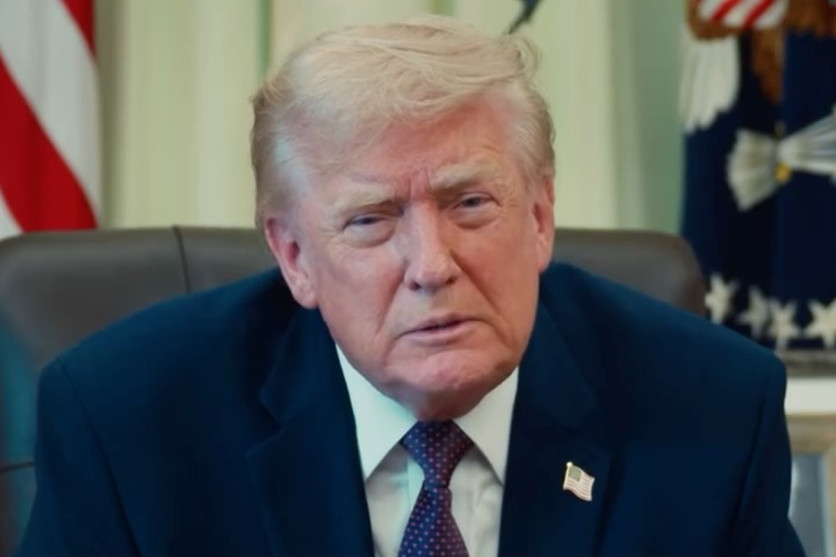
Donald Trump recently spoke out during a media discussion to defend the rapid growth of data centres. He claimed that advanced technology will soon generate vast numbers of new job opportunities across the country.
This perspective comes as leaders continue debating the rapid expansion needed to stay competitive.
Trump Says AI Will Create Millions of Jobs
Concerns that automated systems might wipe out livelihoods are misplaced, according to Donald Trump, who insists the technology will instead spark a massive hiring surge while driving up the physical footprint of digital networks.
Speaking exclusively to Bev Turner on GB News, Donald Trump faced questions about the future of artificial intelligence and whether adequate steps are being taken to safeguard workers from upcoming disruption. Rather than showing alarm, Trump adopted a positive outlook, maintaining that the development of the technology will create new career paths.
'I think it'll create millions of jobs because it's going to create business,' Trump said.
He highlighted the physical infrastructure needed to run the systems, including computers and hardware, noting that 'computers and things have to be created in some form and they're created by man.'
Trump went on to say, 'I think it actually will. And so far I'm right because it's creating millions and millions of jobs and these are construction jobs.'
These remarks come as officials and tech firms wrestle with a core dilemma sparked by the technology wave: whether efficiency boosts and emerging sectors will offset positions lost to automation.
Studies indicate that views regarding the economic impact of artificial intelligence remains deeply divided.
A Pew Research Center survey revealed that AI experts were significantly more optimistic than the general public about how the technology will shape employment and the broader economy over time.
Pew found that 73% of AI experts surveyed expected AI to have a positive impact on how people do their jobs over the next 20 years, compared with 23% of U.S. adults. Meanwhile, 64% of the public expected AI to lead to fewer jobs, compared with 39% of experts.
Trump Defends Rapid Data Centre Expansion
Trump also defended the rapid construction of data centres, which have become vital to the expansion of AI despite drawing rising pushback over power usage, building expenses and the strain placed on nearby neighbourhoods.
Asked whether artificial intelligence poses a threat to the workforce, Trump maintained his upbeat stance on the matter.
'AI is going to be positive,' he noted, while admitting that 'there's some negatives, but that'll be straighten down.'
He then shifted focus towards the large facilities being built to support these computing networks.
'And we're building plants, data centers,' Trump said. 'Data centers are actually fabulous. They create tremendous wealth.'
These statements highlight the financial argument the Trump administration has made for growing the country's AI infrastructure.
Data centres can generate construction activity and attract investment, but their wider economic impact has become a subject of growing debate. Critics have questioned whether the permanent jobs and economic benefits generated by the facilities are sufficient to offset the infrastructure and utility demands associated with them.
Data Centre Boom Sparks Backlash
Public pushback against massive computing facilities is growing in parts of the United States as Trump expresses his strong support.
Residents frequently voice worries over electricity and water consumption, noise and the broader impact on local communities. Recent polling in Texas found that 56% of respondents opposed building a data centre in their community, while 29% supported it.
More recent polling by the University of Texas/Texas Politics Project found that only 30% of Texas respondents supported having a data centre in their community, highlighting the growing political sensitivity around the issue.
Political scientist David Karol told Reuters that opposition to data centres had become a bipartisan concern, while the news agency reported that some Republican politicians in Texas were calling for tighter restrictions.
This dynamic places Trump's forecast of a technology-led employment surge at the heart of a broader national argument over who profits from the digital shift versus who carries the burden.
Yet Trump views the path ahead without hesitation, treating advanced technology as a powerful catalyst for building projects, funding and enterprise rather than a hazard to workers.
'So far I'm right,' he said, pointing to the jobs already being created around the expanding AI economy.


