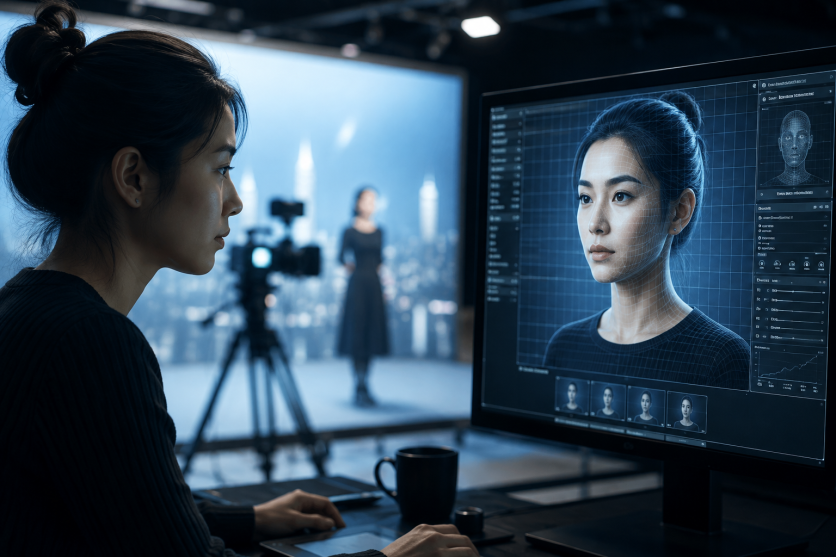
A bustling segment of China's gig economy faces a serious threat as low-cost, advanced artificial intelligence video tools emerge to challenge local performers and digital creators for work.
ByteDance and other tech firms have launched advanced video tools like Seedance 2.0, allowing digital performers to replace humans while enabling producers to create high-quality content more quickly.
Beijing-based actor and producer Greg Wollner noted that the digital takeover accelerated following the launch of Seedance 2.0 in February 2026, dropping his schedule from three productions a week to nothing. 'And after that, everything just went,' he stated, adding that many of his peers 'had to quit doing what they love and change to something else'.
AI Replaces Human Performers at Scale
Marketing data firm DataEye reported that artificial intelligence drove 89 out of the 100 most popular animated dramas on Douyin this May. Meanwhile, the China Netcasting Services Association found that roughly 128,000 short dramas hit the market during the first quarter of 2026 — more than three times the total number released during the whole of 2025 — with 95 per cent created using artificial intelligence.
Peking University's National School of Development indicated in a 2026 study that the financial impact could prove severe, noting that China's short-drama sector directly employed about 690,000 people in 2025.
Additionally, figures from the China Netcasting Services Association show that roughly 15 million individuals cite live streaming as their primary profession.
Chinese state media estimates show that artificial intelligence hosts can drive round-the-clock live-streaming commerce at roughly 10 per cent of the cost. Financial publication Yicai noted that by March, more than 70,000 merchants were utilising virtual anchors on the JD.com shopping platform.
Baidu reported that an artificial intelligence replica of famous streamer Luo Yonghao outperformed the real person across multiple product categories, generating RMB 55 million ($7.7 million / £5.71 million) in sales over a seven-hour window. Tsinghua University metaverse lab director Shen Yang noted that while a short video took a five-person team three months back in 2024, one worker now completes the task in one to two days.
Production costs plummeted to between RMB 600 and RMB 800 ($90 to $120 / £66.70 to £88.93) per minute, around one-tenth of the cost of human-led production, with Zeelin putting out roughly 8,000 one-minute episodes this May alone.
Workers Pressured to Create Their Own AI Replacements
Meanwhile, certain talent faces pressure to distil their images, voices, and performing styles into AI tools prior to getting laid off. 'I was pretty much pinned against a wall,' shared a well-known children's show host pressured this April to sign off on a virtual double or risk the company finding other actors who would.
Beyond the entertainment sector, worries are growing that workers across various industries face similar pressure to train their own artificial intelligence successors before being let go.
AI's Hollywood Ambitions Expand
While software tools transform the gig economy, artificial intelligence ambitions are simultaneously expanding into Hollywood as tech billionaire Elon Musk sets his sights on cinematic epics.
In July, Elon Musk announced plans for Grok Imagine to produce a feature-length adaptation of Homer's epic poem 'The Odyssey' before the end of 2026. The tech entrepreneur stated that the final product would remain 'historically accurate' and 'true to the art of Homer,' although the project remains a plan rather than a completed production.
The 55-year-old billionaire shared a three-minute sequence on X, saying it had been generated using the platform's Grok Imagine tool. 'Before this year ends, Grok Imagine will make a full-length movie of "The Odyssey" that is historically accurate and true to the art of Homer,' the owner of X stated online.
These remarks arrive amid criticism surrounding the casting in Christopher Nolan's cinematic adaptation of the classical masterpiece, particularly Lupita Nyong'o's role as Helen of Troy. Nolan's The Odyssey was released in July 2026.


