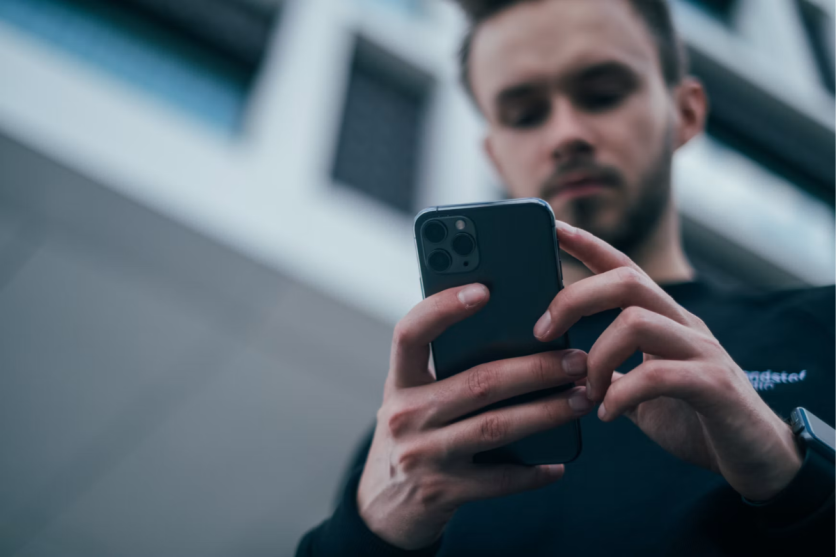
Apple's iPhone keyboard contains a hidden multilingual list of words and phrases that it generally avoids suggesting through predictive text, including 'Dictator Trump' and 'Sleepy Joe', independent researcher Derik Kauffman revealed on 6 November 2026.
His investigation identified approximately 100,000 entries, raising questions about how the technology decides which expressions should appear when users compose messages.
The restrictions do not stop users from typing these words manually or overriding suggestions. Some expressions may still be harder to enter through swipe-typing, which lets users slide their fingers between letters instead of tapping each key.
Apple's Hidden iPhone Grey List Extends Beyond Politics
Kauffman began investigating in September after noticing that his iPhone struggled to recognise certain phrases through swipe-typing. The feature allows users to enter words by sliding their fingers across the keyboard rather than tapping each letter individually.
He found the list within Apple's operating system and used AI tools to examine it, estimating it contained around 100,000 entries.
Most involved offensive language, drugs, sex or violence, but others covered political figures, territorial disputes and controversial movements.
English-language examples included 'Dictator Trump', 'Sleepy Joe', 'right wing conspiracy', 'Tibetan independence' and 'United Ireland'. Hindi entries included 'Modi braggart' and 'Rahul is Pappu', referring to Prime Minister Narendra Modi and opposition politician Rahul Gandhi.
NEW - Researcher finds undisclosed Apple "gray list" covering 100,000 words and phrases, such as "Sleepy Joe," "Dictator Trump," and "Auschwitz."https://t.co/t11Ede5Quu
— Disclose.tv (@disclosetv) November 6, 2026
The findings suggest that Apple's restrictions extend beyond conventional swear words and offensive expressions. Some entries concern political opinions and national issues, although their inclusion does not establish that Apple intended to suppress particular viewpoints or target specific individuals.
French speakers also encountered difficulties with 'immigration too high', while Hebrew-language restrictions included 'occupied territories'.
'Every major language has some version of this,' Kauffman said.
Testing showed that some phrases were difficult to enter through swipe-typing or missing from autocomplete suggestions. 'United Ireland' sometimes became 'United Iceland', while 'Sleepy Joe' was replaced with 'Sleepy hope'.
'Dictator Trump' could still be entered, but the keyboard displayed 'Trump' in lower case and suggested 'dictator trumps' instead. The restrictions also appeared inconsistent, as 'read smut' worked normally while 'read gay smut' produced an incorrect suggestion.
Apple Defends Its Predictive Text Restrictions
Apple did not explain why certain political phrases were included or confirm the list's estimated size. It said its keyboard was designed to avoid suggesting potentially offensive words, while allowing users to type them manually and override suggestions.
Kauffman described the practice as 'a very light-touch form of censorship', arguing that even limited restrictions could influence how people communicate.
Hundreds of millions of people worldwide use iPhones, so Apple’s choices about which words its keyboard suggests could quietly shape how they communicate. Apple has not publicly disclosed the list.https://t.co/aYHRued2hh
— Dawn.com (@dawn_com) November 6, 2026
Matt Suiche, an engineer at cybersecurity firm Tolmo, independently recovered the list and found a near-perfect match with Kauffman's findings.
David Greene, senior counsel at the Electronic Frontier Foundation, said filtering offensive suggestions could be justified, but users should know about the restrictions and have some control over them.
'This is something that should not be secret,' Greene said.
The latest findings also recall a separate controversy last year, when users reported that dictating 'racist' briefly caused 'Trump' to appear on their iPhone screens. Apple attributed the incident to a software error and said it had since been fixed, adding another chapter to questions surrounding its predictive-text technology.


