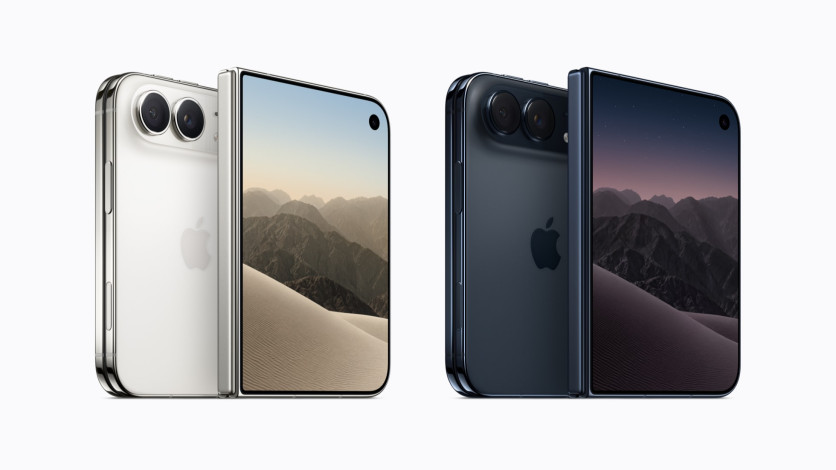
Apple just launched its first-ever foldable smartphone, challenging Samsung, Huawei, and Xiaomi. Dubbed iPhone Duo, the foldable starts at $1,999. Available in four storage options, the top-tier 2TB variant costs $3,199.
The iPhone Duo positions Apple as the latest entrant in a foldable smartphone segment that Samsung has dominated for years and that Chinese rivals Huawei and Xiaomi have aggressively contested in recent months.
'iPhone Duo is the most transformational change to iPhone since the original,' Apple said in a statement at the launch. 'With an entirely new design and intuitive experiences, it shows what's possible when hardware and software are engineered together and redefines what it means to use a foldable phone.'
But the biggest question arising from this new launch is whether the iPhone Duo justifies its $1,999-$3,199 price range. Let's take a deeper look at what's what.
iPhone Duo: Displays, Chip, and Storage Options
The iPhone Duo features a 5.4-inch outer display for use when folded and a 7.6-inch inner display when opened flat. Apple says the internal screen carries a minimal crease, a persistent criticism of rival foldable designs. The device runs on the Apple's latest A20 Pro chip and ships in two colour options: dark blue and white.
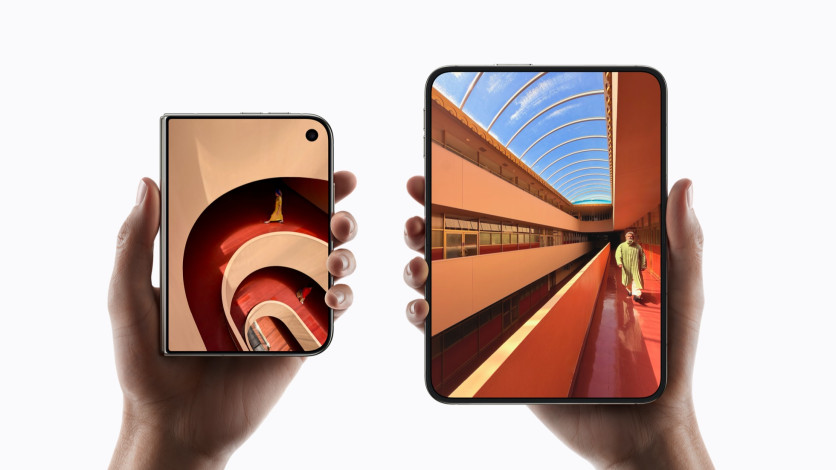
Storage configurations range from 256GB at the base level up to 2TB at the top tier. The phone folds open in a passport-style form factor, hinging along its longer axis to reveal a near-tablet-sized screen, similar to Samsung's Galaxy Z Fold8.
Pre-orders for the iPhone Duo open October 16, with the first units shipping October 23. The device launches initially in the United States, with staggered rollouts planned for Europe and Asia. Apple has confirmed availability in more than 70 countries.
The launch marks the first major product introduction under John Ternus, who became Apple's chief executive following Tim Cook's departure on 1 September. Ternus inherits a product strategy that spent years resisting the foldable category before committing to it at scale.
How Apple's $1,999 Price Tag Fits in the Foldable Market
The $1,999 entry price is the detail competitors will study most carefully. Samsung's Galaxy Z Fold8 is priced at $1,899 in the United States. Apple's price sits $100 above that but carries the weight of a brand that commands pricing power across every category it enters.
Before Apple's announcement, analyst forecasts for the device's price ranged from $2,000 to $2,500, with some outliers predicting as high as $2,500. Apple came in at the floor of those estimates, a choice that signals intent to compete on volume.
The International Data Corporation (IDC), a market research firm that tracks global technology shipments, estimates Apple's entry into the foldable segment will boost total foldable device sales by 13% this year. IDC separately forecasts that Apple could ship six million foldable iPhones in 2026, a projection that, if accurate, would make the company one of the largest foldable vendors in the world within its first full year of sales.
Huawei and Xiaomi have both launched new foldable devices ahead of Apple's announcement in a visible effort to defend their positions. Huawei's Mate XT2 is the third generation of its tri-fold phone design, a format that folds twice to produce three distinct screen panels. It is priced around $3,000.
Xiaomi's 18 Fold is a passport-sized device positioned similarly to Samsung's Galaxy Z Fold 8. Like the Huawei foldable, Xiaomi's smartphone is not widely available through US retail channels, which narrows the direct competitive pressure Apple faces in its home market.
What Apple has built with the iPhone Duo is a product that arrives later than rivals but at a price point designed to set the category's ceiling going forward. Every foldable vendor now prices against a $1,999 Apple entry. That is a different market than the one that existed before Wednesday's announcement.


