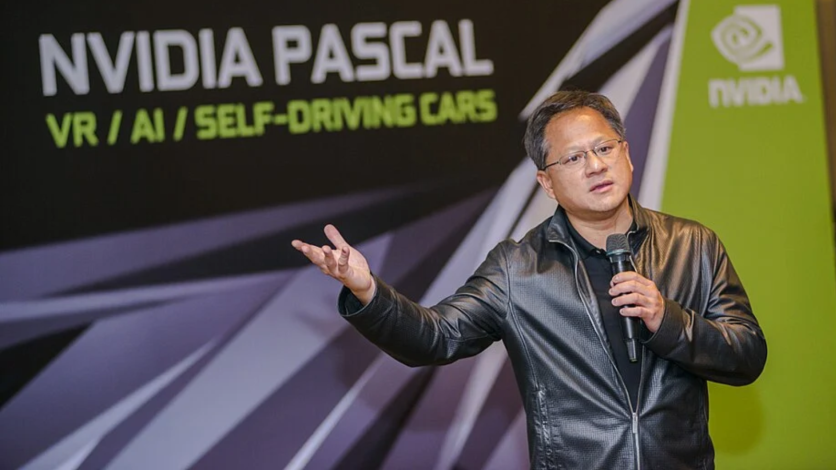
Nvidia CEO Jensen Huang, whose fortune was estimated at $180 billion (£134.3 billion) by Fortune, says he fears being poor despite his immense wealth. Yet the 63-year-old billionaire described the prospect of paying $8 billion (£5.97 billion) in California wealth taxes over five years as a 'privilege', even as other Silicon Valley executives oppose the proposal.
His remarks, highlighted in a Fortune report published on 20 October 2026, come ahead of California's 3 November vote on Proposition 40. The ballot measure would impose a one-time 5% tax on qualifying billionaires' wealth.
Unlike some prominent technology figures opposing the measure, Huang has expressed little concern about paying additional taxes. The Nvidia co-founder, who began his working life washing dishes at Denny's, credits much of his success to opportunities in the United States.
Why Jensen Huang Still Fears Being Poor Despite His Billions
Huang's journey from dishwasher to billionaire began decades before Nvidia became a leading company in artificial intelligence.
Born in Taiwan in 1963, he moved to the United States as a child. He later worked at Denny's, washing dishes and serving customers before pursuing a career in technology.
In 1993, Huang co-founded Nvidia with Chris Malachowsky and Curtis Priem. The company initially focused on computer graphics before becoming a major supplier of chips used in AI computing.
Much of Huang's fortune is tied to his Nvidia shares, meaning his estimated wealth fluctuates with the company's stock price. Fortune estimated his net worth at approximately $180 billion (£134.3 billion) in October.
CBS News, citing the Bloomberg Billionaires Index, reported a figure of $182 billion (£135.8 billion) in its September coverage. Despite his vast wealth, Huang acknowledged that the prospect of poverty still concerns him.
During an interview with CBS News, he said: 'I'm not afraid of paying taxes — I'm just afraid of being poor.' He did not explain the origins of that fear or directly connect it to his childhood.
Why Huang Calls an $8 Billion Tax a 'Privilege'
Huang discussed the proposed wealth tax during an interview featured in CBS News' coverage, published on 18 October.
Asked about the possibility of paying approximately $8 billion (£5.97 billion) over five years, he described the financial obligation as a privilege.
'The fact that I can afford to pay $8 billion in taxes over five years is a privilege,' Huang said.
He added that paying taxes was a responsibility and expressed support for the principle that higher earners should contribute more.
Huang credited America's educational opportunities, business environment and personal freedoms with helping him build Nvidia. Describing himself as the 'ultimate American dream', he said his achievements would not have been possible without the country and the people he encountered.
His remarks follow comments at Stanford Graduate School of Business in April 2026, when he encouraged people to move to California rather than leave.
Huang praised the state's technology talent and opportunities for innovation despite its high taxes. However, his willingness to pay more does not necessarily amount to an endorsement of every provision in Proposition 40.
California's Billionaire Tax Divides Silicon Valley
California voters will decide on Proposition 40 on 3 November 2026.
According to the California Legislative Analyst's Office, the measure would impose a one-time tax equal to 5% of qualifying billionaires' net worth.
It would apply to billionaires who were California residents on 1 January 2026. The tax would be due in 2027, although taxpayers could spread payments over five years at an additional cost.
Under the proposal, 90% of the revenue would fund healthcare services. The remaining 10% would support education, food assistance and tax administration.
The measure has divided prominent technology executives and political leaders.
Fortune reported opposition involving Google co-founder Sergey Brin and former Google chief executive Eric Schmidt. California Governor Gavin Newsom has also opposed the proposal, warning about its potential economic consequences.
Critics argue that taxing billionaire wealth could encourage wealthy residents to relocate, reducing future income tax revenue. Supporters contend that the money is needed to protect public services, particularly healthcare.
State legislative analysts estimate that the tax could generate tens of billions of dollars over several years. However, revenue would depend on asset valuations and how affected taxpayers respond.
Would Jensen Huang Actually Pay $8 Billion?
Despite the attention surrounding Huang's comments, the $8 billion (£5.97 billion) figure remains hypothetical.
It was raised during his CBS interview and is not an official tax assessment. Huang has not been ordered to pay that amount.
His actual liability would depend on whether Proposition 40 becomes law and how his taxable assets are valued. Real estate, pensions and retirement accounts would generally be excluded.
The proposal also faces potential complications involving Propositions 41 and 42. Both appear on the November ballot and contain provisions that could conflict with Proposition 40.
According to state legislative analysts, courts could prevent the billionaire tax from taking effect if either competing measure receives more affirmative votes than Proposition 40.
For now, Huang's position remains clear. He fears poverty but regards the ability to pay billions in taxes as a privilege. Whether he will face such a bill depends on California voters, the outcome of competing ballot measures and the final assessment of his taxable wealth.


