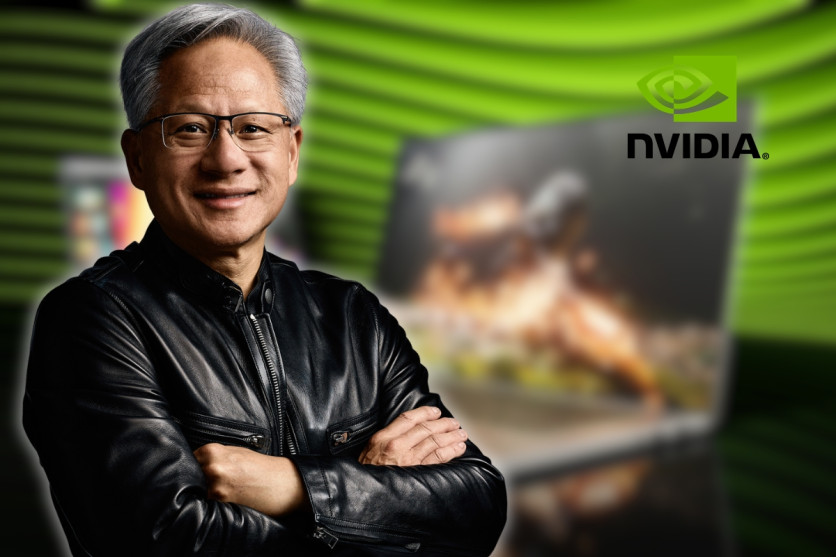
Nvidia CEO Jensen Huang has rejected warnings that artificial intelligence could bring about humanity's downfall by 2030, saying there is a '0% chance' the world will end because of AI.
Huang also called some of the industry's recent doomsday messaging 'irresponsible.' At the same time, he said AI companies should continue advancing the technology quickly without compromising safety.
The comments came during an interview with CBS News senior business and technology correspondent Jo Ling Kent.
Huang's position stands in sharp contrast to warnings from some Anthropic researchers. Evan Hubinger, Anthropic's alignment-science lead, has said he personally believes there is a greater than 10% chance AI could kill all humans within the next decade.
The figures cover different time periods. Huang was talking specifically about 2030, while Hubinger was assessing a 10-year period. Hubinger also explicitly described his figure as his personal assessment rather than an established probability.
Huang Calls AI Doomsday Warnings 'Irresponsible'
Huang rejected predictions that AI could destroy humanity within the next few years and argued that such claims are not grounded in science.
'2030 is not going to be the end of the world. There is 0% chance that's going to be the end of the world,' Huang told CBS News.
He also criticised the alarm surrounding the debate.
'Scaring people is unnecessary. It is irresponsible,' Huang said.
However, the Nvidia boss did not dismiss AI safety concerns themselves.
Huang said the underlying concern about building increasingly powerful AI systems safely was legitimate. He argued that developers should devote more researchers and computing resources to safety as AI moves from laboratories into widely used products.
His objection was therefore aimed at predictions of imminent human extinction rather than AI safety research itself.
Anthropic Researcher Puts AI Extinction Risk Above 10%
Huang's assessment contrasts with warnings from Anthropic alignment-science lead Evan Hubinger.
Hubinger said earlier this month that he personally believed there was a greater than 10% chance AI could kill all humans within the next decade.
His comments came after former Anthropic researcher Jacob Coxon resigned from the company.
Coxon publicly warned about the race towards increasingly capable and potentially self-improving AI systems. He also wrote that people building the technology 'earnestly believe that it could kill us all by the end of the decade.'
Hubinger responded publicly that Coxon was correct about researchers sincerely holding such concerns.
One issue at the centre of the debate is recursive self-improvement, in which AI systems increasingly automate the work involved in building more capable AI systems.
Anthropic says AI already performs a growing share of its AI-development work. However, the company says fully autonomous recursive self-improvement has not yet been achieved and is not inevitable.
AI Leaders Split Over Calls to Slow Development
The disagreement also extends to how quickly frontier AI should advance.
Asked whether development should slow, Huang said companies should go 'as fast as we can, but not faster than we should.'
'If we're compromising safety, that can't happen,' he told CBS News.
That position differs from Anthropic CEO Dario Amodei's recent call to 'pace the frontier.'
Amodei has argued that the industry should slow improvements in frontier-model capabilities to create more time for safety testing, safeguards, independent evaluation and coordination between developers.
His proposal does not call for stopping AI development altogether.
OpenAI CEO Sam Altman has backed the idea. He said OpenAI also plans to give independent evaluators access comparable to that of employees.
Anthropic has already begun moving forward with its plan. On 18 September, the company announced a partnership with Accenture for independent evaluation of frontier AI systems.
The work, led by Accenture's specialist AI business Faculty, will include model evaluation, red-teaming, alignment assessments and safeguard testing.
Nvidia, meanwhile, has a major stake in the debate. Its specialised chips power much of the computing infrastructure used to train and run advanced AI models.
CBS News valued Nvidia at about $5.3 trillion at the time of its report, making it the world's most valuable company.
Huang argued that Nvidia has a strong incentive to ensure AI products are deployed safely.
'Our company's success is directly connected to the safe deployment of products and services,' he told CBS News.
CBS Poll Finds Americans Divided on AI Development
Americans are also divided over how quickly AI should advance.
A CBS News/YouGov poll found that 43% of US adults wanted AI companies to slow development, while 12% wanted development stopped. Another 44% said companies should maintain the current pace or accelerate.
At the same time, 64% said developing AI was necessary for the US to compete with other countries.
The nationally representative survey questioned 2,051 US adults from 16 to 18 September. Its margin of error was plus or minus 2.5 percentage points.
The wider debate therefore involves two distinct questions: how dangerous increasingly capable AI systems could become and how quickly companies should continue developing them.
Huang rejects predictions of an AI-driven apocalypse by 2030 but agrees that powerful AI must be built safely. Hubinger sees a substantial longer-term extinction risk, while Amodei and Altman have separately called for slowing the pace of frontier-model development.
The disagreement is therefore not simply about whether AI safety matters. It centres on how serious the risks are, how soon they could emerge and how much the industry should change its pace to address them.


