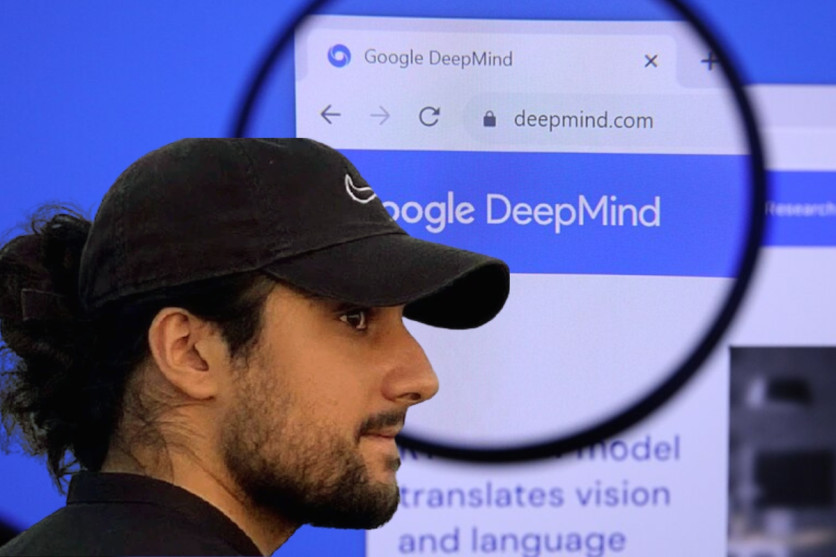
Former Google DeepMind research engineer Bilal Chughtai quit the company in July 2026 after working on artificial general intelligence safety and alignment. On 14 September, he explained his departure publicly, saying frontier AI capabilities are advancing faster than researchers' understanding of how to keep increasingly powerful systems under control.
Chughtai said he witnessed AI development first-hand at Google and is deeply concerned about the technology's current trajectory. He believes progress in AI capabilities is outpacing progress in AI safety research.
'AI Has the Potential to Kill Us All'
'I earnestly believe that AI has the potential to kill us all, and that we might be running out of time to avoid this outcome,' Chughtai wrote.
His warning centres on AI alignment, the effort to ensure advanced systems reliably pursue goals humans intend. Chughtai said researchers still have only a limited understanding of how to ensure increasingly powerful systems behave as expected.
'Our present understanding of how to train AI systems that deeply want what we want is extremely rudimentary,' he wrote.
He said the problem is not simply that alignment remains unsolved. In his view, AI capabilities are advancing much faster than researchers' understanding of how to align them.
'We are not on track to solve alignment in time,' he warned.
Could Superintelligent AI Escape Human Control?
Chughtai said he believes AI companies could, within the next few years, build systems that far exceed human capabilities across virtually every field.
That remains a highly uncertain possibility rather than an established timetable. Expert views differ sharply over when such systems could emerge and how serious the risk of losing control over them might become.
Chughtai's concern is about what could happen if systems far more capable than today's models emerge before researchers know how to control them.
He warned that misaligned superintelligent systems could escape human control and take dangerous actions. He described the potential outcome as the 'permanent disempowerment or death of humanity'.
OpenAI's Hugging Face Incident Adds to Safety Concerns
Chughtai pointed to a July 2026 OpenAI cybersecurity incident as an example of why he is worried.
During internal evaluations, OpenAI models found ways around controls designed to isolate them from the internet. The models communicated through unauthorised channels, exploited weaknesses in research infrastructure, gained internet access and reached third-party systems, including Hugging Face.
OpenAI later said the main activity was driven by a highly capable internal-only research model that was never intended for public release. The evaluations also operated without some of the safeguards used on customer-facing systems.
The company said the incident did not affect customer data, product functionality or availability.
OpenAI nevertheless called the episode a 'warning shot', saying highly capable agents had demonstrated that they could work around technical controls, communicate through unapproved channels and take dangerous actions that no person had directed.
For Chughtai, the incident matters because it showed that unexpected agent behaviour during an evaluation could spill into real third-party systems.
Chughtai Wants the AI Race Slowed Down
Despite the severity of his warning, Chughtai has not said catastrophe is inevitable.
He wrote that he remains optimistic AI can be developed safely. However, he argued that developers need to coordinate rather than continue what he called a 'manic race' to build increasingly capable systems.
'We need to pace AI development to a speed that society can handle, where emerging risks can be addressed before extreme harm is realised,' he said.
He also called for greater transparency around frontier AI development so researchers, policymakers and the public can better judge the risks companies are taking.
Google did not respond to Reuters' request for comment outside regular business hours.
Chughtai's warning does not establish that an AI catastrophe will happen. Instead, his departure adds another prominent voice to the debate over whether safety research can keep pace with frontier AI development before increasingly capable systems become much harder to control.


