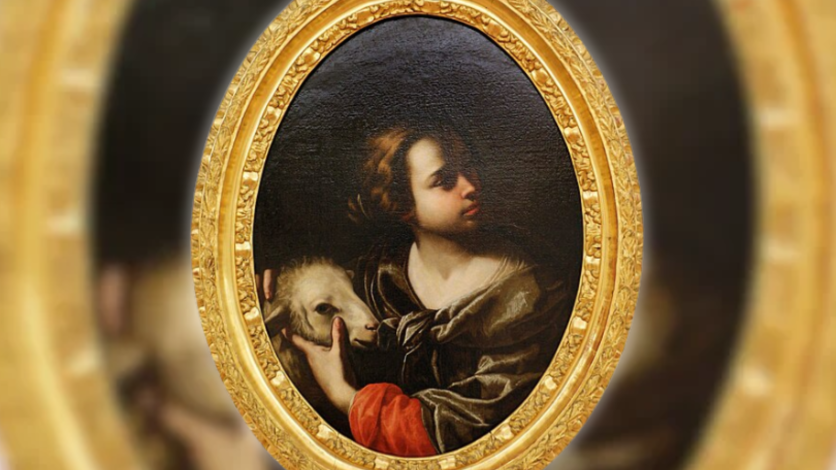
A stolen painting of Saint Agnes was discovered at an antiques fair in Parma, Italy, in October 2024, more than 20 years after it disappeared from a church in Sulmona.
Someone had painted over its religious features, replacing the saint's lamb with a scroll and removing her halo. But the disguise failed when an artificial intelligence system used by Italian police flagged similarities with the missing artwork.
Officers from Italy's Carabinieri Command for the Protection of Cultural Heritage identified the painting during an inspection at the Mercanteinfiera antiques fair. According to the BBC, their AI-assisted search linked the altered image to an artwork stolen on 11 August 2004.
The painting, which appeared to show an ordinary woman holding a scroll, was actually a centuries-old religious artwork that had been missing for two decades.
How a Stolen Saint Became an Unrecognisable Woman
Before the theft, the painting showed Saint Agnes wearing a green dress and red cloak. She was depicted stroking a lamb and holding a palm branch, both associated with her identity as a Christian martyr.
When the artwork resurfaced, those details had changed. The lamb had become a parchment scroll, while the halo and palm branch had disappeared beneath new paint. The alterations made the saint resemble a sibyl, a female prophetic figure from the ancient world.
The Diocese of Sulmona-Valva said the changes were intended to conceal the painting's identity and make it easier to sell on the antiques market. Investigators have not publicly identified who made those alterations.
The painting's precise dating remains uncertain.
The Carabinieri describe it as an 18th-century oil painting measuring 102cm by 78cm. The diocese identifies it as a 17th-century work measuring 103cm by 77cm. Art historian Tancredi Farina believes it could be a copy or workshop replica of a painting by Pier Francesco Cittadini, an artist active in Bologna during the 1600s.
How AI Identified the Painting Despite Its Disguise
The breakthrough came when officers photographed artworks displayed at the Parma antiques fair and uploaded the images to their police database.
According to the BBC, the software flagged the painting within hours.
Officers returned the following day and seized it for further examination. Although its religious symbols had changed, similarities in the colours, shadows and overall composition remained.
The BBC identified the technology as the Stolen Works of Art Detection System (Swoads). Developed by a team involving Lieutenant Colonel Salvatore Rapicavoli, the system compares images with stolen-art records rather than relying solely on written descriptions.
In their account of the recovery, the Carabinieri identified an AI image-comparison application called Swoapp. Both accounts describe technology that helped investigators recognise the painting despite its altered appearance.
Art specialists subsequently examined the artwork and confirmed that it had been modified. The Naples public prosecutor's office authorised its seizure following the investigation and technical examination.
The AI helped investigators identify a potential match, but human examination and legal procedures remained essential to confirming the discovery.
AI Has Helped Recover Art Worth More Than €203 Million
The Saint Agnes case shows how Italian authorities are using artificial intelligence to investigate art theft, particularly when stolen objects have been altered to avoid recognition.
According to figures Lieutenant Colonel Rapicavoli provided to the BBC, the technology has helped investigators recover more than 300 large paintings and sculptures since its introduction in November 2023. It has also assisted in recovering more than 165,000 smaller objects, including coins, manuscripts, medals and religious artefacts.
Together, those recoveries were valued at more than €203 million (£170 million), according to Rapicavoli. However, the figures do not mean AI independently recovered the objects or was solely responsible for identifying them.
In another case, Swoads helped investigators locate Riposo della Pastorella, a painting by Filippo Palizzi stolen from a gallery in 1972. The artwork was identified on an auction house website in 2026.
The technology still has limitations. It cannot reliably distinguish every original from a copy. Its effectiveness also depends on available records, image quality and subsequent police investigation.
Painting Returns Home, but the Thief Remains Unidentified
The Saint Agnes painting was returned to the Diocese of Sulmona-Valva on 30 May 2025, more than 20 years after its disappearance. The diocese confirmed the date in a statement published on 23 June 2025.
The artwork was subsequently displayed again at the Church of Madonna della Potenza, also known as Virgo Potens, in Sulmona. According to the Carabinieri, restoration could return the painting to its original appearance.
But recovering the painting did not establish who stole it or who later altered its appearance. The BBC reported that the original theft could no longer be prosecuted because the applicable limitation period had expired.
The antiques dealer who displayed the painting reportedly had limited information about its provenance. No evidence has been publicly established linking the dealer to the theft or alterations.
For the church, the recovery ended a disappearance that had lasted two decades. For investigators, it demonstrated how AI could help identify stolen artworks even after their appearance had been deliberately changed.
The lamb, halo and palm branch were gone. Yet enough of Saint Agnes remained for the software to flag a possible match with the painting stolen in 2004.


