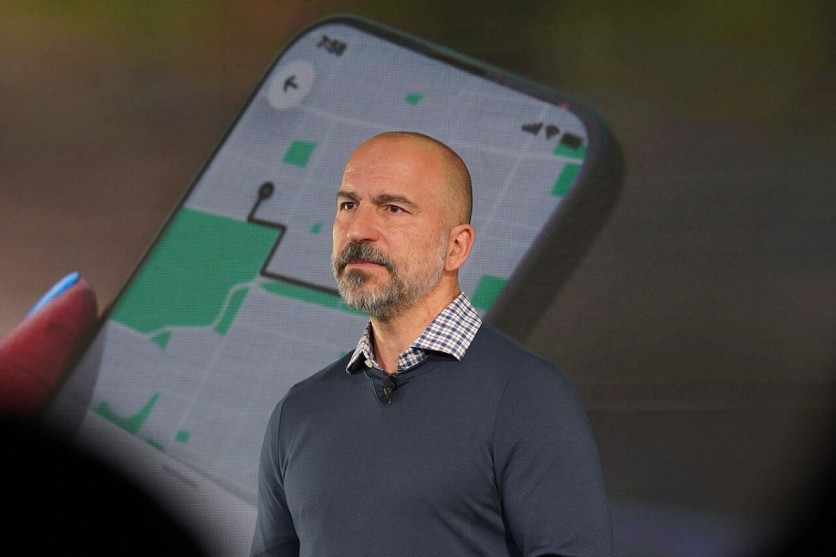
Uber is reducing its workforce by about 10% as part of a company-wide restructuring announced by CEO Dara Khosrowshahi. The move is expected to affect thousands of employees and comes alongside changes to how teams are organised, where employees work and how responsibilities are divided across the business.
Khosrowshahi told staff that Uber had become much larger after years of rapid expansion, creating a need to reassess the way the company operates. The CEO's message also outlined plans to redirect resources towards areas Uber considers important for its next phase, including its core businesses and autonomous technology.
Uber Restructuring Targets Management Layers and Team Structure
Uber had about 34,000 employees worldwide as of December 31, 2025, according to its annual report. Uber has described the reduction as 'about 10%', with reports putting the number of affected employees at roughly 3,300.
A central part of the restructuring is a reduction in management layers. Khosrowshahi said employee feedback had pointed to lengthy discussions, unclear decision-making responsibilities and excessive time spent coordinating between different teams.
Uber said it has reduced by 20% the number of employees positioned seven or more layers below the CEO. It has also reduced the number of 'micro-teams', defined in the memo as teams with only one or two direct reports, by nearly 50%.
The company is also changing how several parts of the business are grouped. Its three Delivery Operations teams covering Restaurants, Retail and Direct will be brought together under single-threaded teams at global, regional and country levels.
The change will bring the P&Ls for those operations under single owners, which Uber says will reduce overlap and clarify accountability.
A similar change is planned within technology. Core Services Engineering and Science teams are being combined, following a structure Uber already uses in its Mobility and Delivery organisations.
The company's location policy is also being revised. Uber plans to concentrate global teams in New York and San Francisco, while regional, country and technology employees will be grouped around designated hubs.
The company said the vast majority of remote employees will be asked to return to offices. Going forward, around 1% of Uber employees are expected to remain remote, while the existing hybrid policy requiring three days a week in the office will continue.
What Dara Khosrowshahi Told Uber Employees in His Memo
Khosrowshahi opened his message by telling staff that Uber was making 'a number of significant organisational changes' across the company. He said the plan involved 'removing layers, simplifying team structures, refining our global location strategy' and directing people and investment towards the opportunities Uber sees ahead.
Addressing employees whose positions were affected, he wrote: 'This wasn't a decision we made lightly, because it will have a real impact on our teammates and friends who have worked hard for Uber.'
He also sought to separate the restructuring from individual performance, telling staff, 'These changes are about how we're organised and what we're prioritising, not about anyone's contributions to Uber, which we will always value.'
Khosrowshahi then addressed the question of why the changes were happening despite Uber's performance. He wrote that the company had 'grown by orders of magnitude' over more than five years, with its 'top line nearly tripling'.
That expansion, he said, had involved new products, additional businesses, more consumers and more earners. However, he acknowledged that 'growth has also brought complexity', including 'more layers, more coordination, more fragmented ownership'.
He added that some structures had worked when Uber's businesses were smaller but 'no longer serve us well at our current scale'.
Looking ahead, Khosrowshahi said: 'Our opportunity from here is enormous.' He highlighted Uber's potential to reach 'hundreds of millions more people', increase investment in drivers, couriers and merchants, develop its existing operations and 'build the autonomous future'.
He said achieving those goals would require the company to make 'deliberate choices' about where it puts 'our people, our time, and our capital'.
Khosrowshahi described the purpose of the restructuring in direct terms: 'The changes we're making today are designed to do two things: make Uber simpler and faster, and create more capacity to invest in our future.'
He argued that a smaller organisation would bring 'clearer ownership, faster decisions, and more time spent building rather than coordinating'. The savings, he said, would be reinvested in 'growth, innovation, and the capabilities that will matter most over the coming years'.
The CEO also acknowledged the disruption caused by the announcement. 'I realise this is a lot of change,' he wrote, adding that Uber had decided 'it was better to make one big shift rather than multiple small ones.'
He closed by telling employees that the company had 'tremendous momentum' and 'opportunities in front of us that are larger than at any point since I joined the company'.
'The decisions we're making today are difficult,' Khosrowshahi wrote, 'but they will help us build an even stronger Uber for the years ahead.'
He then asked employees to read the follow-up information from their leaders, explaining what the changes would mean for their individual teams, ending the memo with 'Uber on, Dara.'


