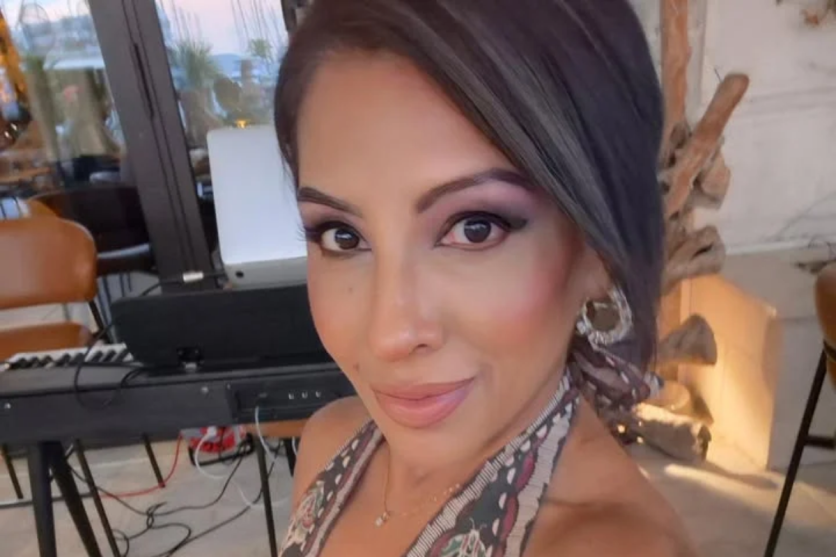
One weekday morning last November began like any other for British broadcaster and TV commentator Narinder Kaur, 54, until she opened X and discovered pornographic deepfakes of herself.
Since that first image appeared, Narinder has been tagged in messages containing at least 20 more deepfaked pictures and videos, despite reporting each one to police.
'I felt utterly degraded. Seeing what looked like my naked body exposed to the world, I thought I was actually going to vomit,' she says.
The Shocking Discovery
Narinder, who has nearly 80,000 followers on X, discovered that images of her face and body had been fabricated using standard photos from her Instagram feed and a so-called 'nudification' app.
The images were fake but convincing enough to potentially fool viewers scrolling through the platform.
'Shaking, I handed my phone to my husband. There had been other fake images and videos of me in the past, mocked up to make it look like I was being deported, and he'd seen all those. "Look what they've done to me now", I said.'
Her husband was horrified but tried to comfort her. Narinder then called her sister, sobbing so much she could barely speak.
'Like me, she was baffled as to why on earth anyone would want to create nude images of me, a married mother of two in my 50s, and then share them with thousands of people online.'
A Widespread Problem
Narinder's experience is part of a wider problem affecting women across age groups. While younger women and teenage girls are often targeted, middle-aged and older women are also facing AI-generated sexual abuse.
Earlier this month, police warned 69-year-old political commentator and former MP Nadine Dorries that explicit computer-generated videos of her were circulating online. Police later arrested a 36-year-old man and seized multiple electronic devices containing thousands of computer-generated explicit images and videos targeting at least three other female politicians and several high-profile celebrities.
Channel 4 newsreader Cathy Newman, 52, and former Cabinet minister Dame Penny Mordaunt, 53, have also spoken about their experiences with deepfake pornography.
The abuse is often under-reported because of the shame and stigma victims can experience. A recent UK police-commissioned survey found that 7 per cent of respondents had been depicted in a non-consensual sexual deepfake.
The Daily Mail report also cited figures stating that 96 per cent of artificially generated material online is sexually explicit, while 99 per cent depicts women.
The Toll on Narinder and Her Family
The motivation can be to shame and silence outspoken women such as Narinder, a regular TV commentator on immigration, poverty and crime. But women with no public profile are targeted too.
Last year, the End Violence Against Women Coalition and #NotYourPorn campaigned for changes to the Sexual Offences Act 2003.
Since February, Section 138 of the Data (Use and Access) Act 2025 has made it a criminal offence to intentionally create or request the creation of a purported intimate image of an adult without consent or reasonable belief in consent.
Those convicted can face up to six months in prison and/or an unlimited fine.
Yet identifying the perpetrators remains difficult. Narinder says abusers hide behind fake accounts and often delete them after being reported.
She has reported every image and had numerous visits from police, but none of the perpetrators has been identified.
Narinder says the abuse has also affected her family. She fears her teenage children could encounter the material and believes the more she has spoken out, the more of a target she has become.
'It's deeply upsetting to have your image exploited in these ways but when I'm at my lowest, and want to stop fighting back, I remember the words of Gisele Pelicot, whose husband allowed countless men to rape her while she slept, and who is now the poster woman for victims everywhere,' says Narinder.
Janaya Walker, interim director of the End Violence Against Women Coalition, is campaigning for greater regulation of online platforms, saying the Government 'needs to confront the business model of big tech, with a regulatory system which has the teeth to hold them to account'.
For Narinder, speaking out remains part of that fight, even as she believes it can make victims bigger targets.
'Shame must change sides. The burden and guilt for sexual abuse – whatever form it takes – belongs entirely with the perpetrators, not the survivors.'


