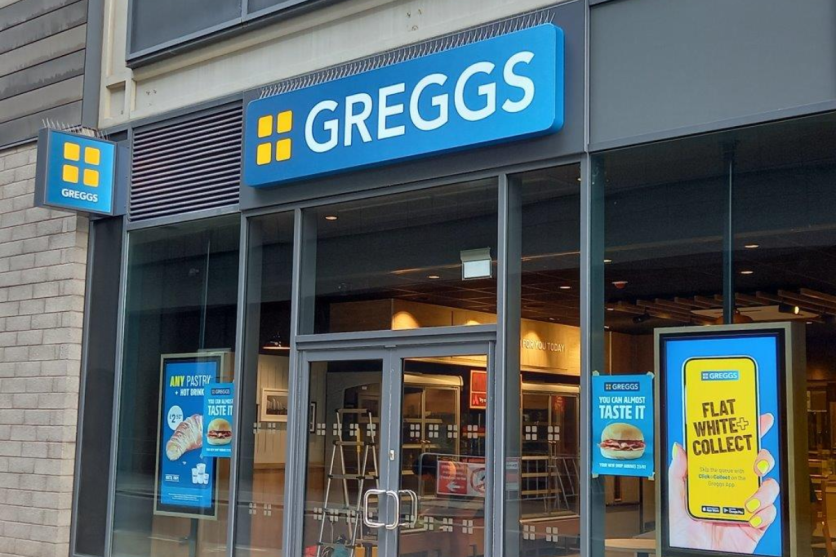
Greggs is putting up to 740 manufacturing jobs at risk as the bakery giant proposes closing four manufacturing sites while investing in new facilities featuring increased automation.
The overhaul comes as Greggs continues expanding its UK shop network, with its new manufacturing and logistics infrastructure designed to support at least 3,500 shops.
Greggs Puts 740 Jobs At Risk
Greggs has proposed consolidating parts of its manufacturing operations and relocating production to fewer sites, which could result in around 740 redundancies over the next two and a half years.
The plans would see four manufacturing sites in Enfield, North Lakes, Pettigrews and Seaham closed, subject to consultation. Greggs also plans to close manufacturing operations at Treforest, although the site would continue operating as a distribution centre.
The company said the changes are intended to make its manufacturing network more streamlined, resilient and efficient while ensuring it has enough capacity to support future growth.
Greggs has begun consultations with affected employees and trade union representatives, and no final decisions have yet been made.
Greggs said: 'Our immediate priority is to minimise the impact on our people where possible.'
Automation Reshapes Greggs' Factory Network
While workers at the proposed sites face an uncertain future, Greggs is investing heavily in new manufacturing and logistics infrastructure with increased automation.
Since the start of 2024, Greggs says it has invested more than £300 million in its manufacturing and logistics network, increasing capacity and building the infrastructure needed to support at least 3,500 shops across the UK.
The company is developing new facilities in Derby and Kettering as part of that investment. The Derby site will combine manufacturing with frozen storage and logistics, including fully automated robotic order picking and distribution.
Greggs expects frozen storage and picking activity at Derby to begin in the final quarter of 2026, alongside the commissioning of a new sweet product production line.
The Kettering facility, meanwhile, is expected to become operational in 2027 and will use increased automation for upstream picking of chilled and ambient goods.
The two facilities form part of Greggs' wider effort to increase manufacturing and logistics capacity as the bakery chain expands. The automation is being introduced as part of that broader supply chain investment, rather than being described by Greggs as a direct one-for-one replacement for the 740 roles at risk.
Greggs Expands As Factory Jobs Face Cuts
The restructuring comes at a time when Greggs is continuing to expand rather than shrink its physical presence.
The bakery chain had 2,796 shops at the end of September, after opening 95 new shops and closing 38 so far this year, resulting in 57 net new openings.
Greggs continues to expect around 100 to 110 net new shop openings in 2026, while its longer-term expansion plans are designed to support at least 3,500 shops across the UK.
Greggs also reported stronger recent trading. Total sales increased 7.7% in the 13 weeks to 26 September, while like-for-like sales at company-managed shops rose 3.4%.
The company said trading was helped by new product launches and more settled weather in August and September, with its iced drinks range and other menu innovations contributing to sales.
The stronger trading performance has led Greggs to expect a modestly improved outcome for 2026.
£60m Overhaul Targets £20m Annual Savings
The proposed manufacturing consolidation will come with a significant upfront cost.
Greggs expects the changes to cost around £60 million, including approximately £40 million in capital expenditure, alongside disruption costs and redundancy payments.
In return, the company expects the changes to deliver around £20 million in annual pre-tax operating cost savings, with the benefits expected to be realised across 2028 and 2029.
Greggs said the proposals are intended to ensure it can meet future capacity requirements for growth in the most cost-efficient manner.
The company has also warned of increasing inflationary pressure in 2027, adding to the cost challenges facing the business.
Greggs' Automation Supports A Bigger Network
The proposed factory closures therefore form part of a wider change to Greggs' supply chain rather than a retreat from expansion.
Greggs says its investment in additional manufacturing and logistics capacity will support further growth, while the new facilities will allow the company to handle greater volumes as its shop network expands.
The company has described its manufacturing and logistics network as a key strength of the business and said the proposed changes are intended to create a more streamlined, resilient and efficient network with the capacity required to support future growth, investment and innovation.
Greggs said its immediate priority is to minimise the impact of the proposed changes on employees as consultations continue.
The consultation will determine whether the proposed closures and other manufacturing changes go ahead and how many roles are ultimately affected. Meanwhile, Greggs is continuing to invest in automated infrastructure designed to support a much larger UK shop network.


