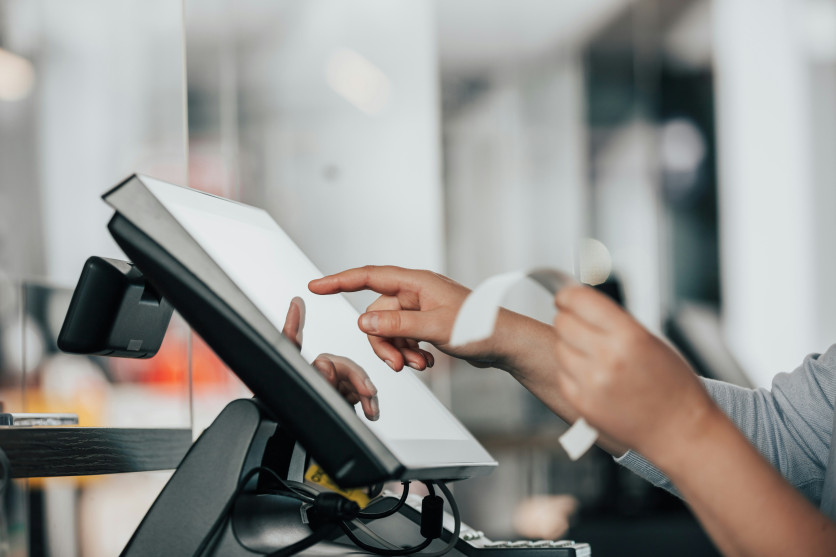
How good is good enough? For one supermarket cashier, 99.82 per cent was not. An AI monitoring system flagged an error rate of 0.18 per cent, about one mistake in every 533 scans, and she received a final written warning. Raising questions about how workplace surveillance is used to discipline employees.
The case was raised by the Shop, Distributive and Allied Employees Association and has now landed in front of a federal parliamentary inquiry into artificial intelligence.
On Tuesday, researchers from the University of Technology Sydney's Human Technology Institute (HTI) used it to argue that employers must prove surveillance is fair and reasonable before introducing it. They want the Fair Work Act rewritten to say so.
The institute presented its findings to a federal parliamentary inquiry into artificial intelligence on Tuesday, warning that monitoring technology is increasingly common while many employees remain unaware of how extensively they are being tracked.
One Mistake Could Have Serious Consequences
The supermarket cashier's case illustrates the potential gap between what monitoring software flags and what those findings mean for an employee's job.
According to evidence cited in the report, an AI monitoring system picked up too many scanning errors, and she was handed a final written warning. Her error rate? Just 0.18 per cent. That's roughly one slip for every 533 items.
What we don't know is whether she fought the warning, whether it was overturned, or whether she even got the chance to dispute the system's verdict.
And that's the real question: when software says you're falling short, how much say do you get before it hits your job?
It's not just a checkout problem. Automated monitoring can log where employees go, what they do and how they perform. That hands managers a detailed picture of their workforce, while workers may have no clear idea what's being collected or how it might be used.
At one big fast-food chain, researchers heard that young staff believed cameras had been put in the change rooms to stop them using their phones on shift. According to the report, some workers stopped using the change rooms altogether.
From Tracking Technology to Workplace Discipline
Surveillance isn't always a camera pointed at a checkout.
Card-swiping systems, keystroke logs, workplace messaging platforms and other digital tools can all log when employees arrive, where they work and what they do.
Microsoft Teams also features in the report. The institute highlighted a tool introduced earlier in 2026 that automatically marks a worker as in the office after they connect to workplace Wi-Fi.
Useful for managing operations? Possibly. But it also creates records, and those records may influence decisions about employees.
That's why the supermarket case matters. A system can flag an error. It can't automatically explain the circumstances, or decide whether a disciplinary response is proportionate.
The report doesn't say the technology got things wrong. The real questions are about how people read its results, and whether workers get a fair shot at pushing back when a decision is based on them.
Most Australians Are Unaware of Workplace Monitoring
Most Australians know workplace monitoring exists. Far fewer think it's happening to them.
A March 2026 poll commissioned by Minderoo found that 43 per cent of Australians knew some employers used technology, including AI, to monitor workers. Yet just 9 per cent knew it was being used in their own workplace.
HTI co-director Professor Edward Santow says simply telling people isn't enough. 'Transparency over workplace surveillance is necessary but far from sufficient,' he said. He wants the Fair Work Act to require monitoring to be fair and reasonable.
The institute is also asking the government to give the responsible minister the power to ban surveillance products that pose an unacceptable risk to workers' rights.
Smart glasses are one of the technologies raising red flags, because they could let employees be recorded without knowing it. 'Such concern is likely to be particularly strong in a workplace context, as smart glasses could be used to covertly surveil workers,' the report stated.
Labor senator Tony Sheldon, a member of the parliamentary committee, also warned that workplace surveillance is becoming a more serious concern.
'This report raises critical concerns about the impact of workplace surveillance on the privacy, health and dignity of working Australians, particularly when many employees don't even know they're being monitored,' he said.
Could Workers Challenge Decisions Based on AI?
What if workers had a say before the monitoring began, not after?
That's the aim of the proposed changes. Under the recommendations, employers would have to engage with staff about the surveillance they intended to use, with greater emphasis on obtaining meaningful consent. Simply burying a tick box in an induction pack would not satisfy the approach described in the report.
Workers would also gain access to a dedicated complaints scheme through the Fair Work Commission, allowing them to raise privacy concerns through a formal workplace dispute process.
The reason is simple: the current law leaves holes. Employee records and small businesses are exempt from many of its rules, so lots of workers are less protected than they think. The institute says it's time to fix that.
Will it happen? Not yet. The recommendations haven't become law, and until the government acts, the changes won't give employees a new way to challenge monitoring practices.
The parliamentary inquiry is hearing from unions and other organisations, including the eSafety commissioner, the CSIRO, the Australian Securities and Investments Commission, the Australian Medical Association and Atlassian.
For employers, the first job is simple: know what your monitoring systems are actually collecting, tell people how that data will be used, and make sure you can back up any disciplinary decision.
Because when one mistake in 533 scans can trigger a final warning, the real question is not just what the software sees — but whether the worker gets a fair chance to fight back.


