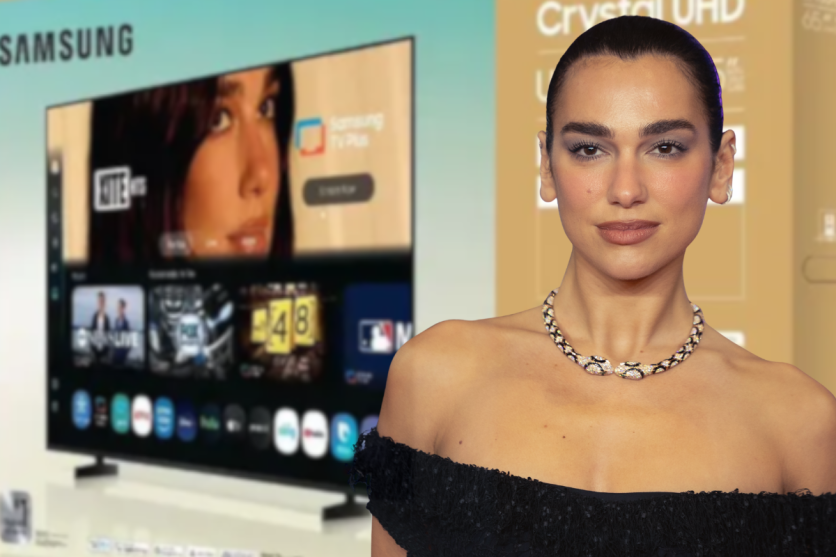
Samsung has asked a California federal judge to dismiss Dua Lipa's $15 million lawsuit over a photograph that appeared on television packaging, arguing in a 10 September filing that shoppers would not reasonably have viewed the image as an endorsement.
The move comes four months after the British pop star sued the electronics giant in California. She claims her photograph was used without permission to help market Samsung TVs across the United States.
The court has not ruled on Samsung's request. That leaves the dispute over the photograph, its licensing and what consumers may have understood from the packaging unresolved.
Samsung Says TV Packaging Did Not Suggest an Endorsement
Samsung's central argument is that Lipa's photograph appeared as part of a representation of the television's on-screen interface, rather than as a standalone celebrity endorsement. The image was connected to the Xite Hits music channel on Samsung TV Plus. It appeared alongside unrelated content tiles and logos, including MLB, Fox Sports and The First 48.
Samsung says that context matters.
'An interface depicting a music-video channel among several unrelated content icons conveys nothing suggesting plaintiff endorses the televisions,' the company's lawyers said in the filing.
They argued that the packaging simply illustrated Samsung's television interface and showed buyers examples of content available on the device.
Samsung is asking the court to dismiss the complaint in its entirety. It also argues that Lipa lacks trademark rights in her likeness and disputes her publicity-right claims.
On the latter, Samsung argues that because Lipa lives in England, English law should apply. The company says England does not recognise a standalone right of publicity equivalent to the protection available under California law.
Dua Lipa Says Buyers Saw Her Image as a Selling Point
Lipa's complaint gives a different account of how shoppers understood the packaging.
Filed on 8 May in the US District Court for the Central District of California, the lawsuit centres on a photograph titled Dua Lipa - Backstage at Austin City Limits, 2024.
Lipa says she owns the copyright to the photograph and never gave Samsung permission to place it on television boxes. Her lawyers allege that the photograph appeared on a 'significant portion' of Samsung televisions sold in the US and encouraged buyers to associate the singer with the products.
The complaint also cites social media comments from consumers.
One user allegedly said seeing Lipa on the box persuaded them to buy a television even though they had not planned to purchase one. Another said they would buy the TV simply because Lipa appeared on the packaging.
Those posts are evidence cited by Lipa's lawyers, not a judicial finding that consumers were misled. They nevertheless form part of her response to Samsung's argument that the packaging would not reasonably make shoppers believe she was associated with the televisions.
Samsung Says a Content Partner Assured the Photograph Was Cleared
Samsung has acknowledged that Lipa's photograph appeared on its packaging. It disputes allegations that it intentionally used the image without authorisation.
When the lawsuit became public in May, Samsung said the photograph had been supplied by a third-party content partner for Samsung TV Plus. The company said it received 'explicit assurance' that the necessary permission had been secured, including permission to use the photograph on retail boxes.
Samsung therefore denied allegations of intentional misuse.
Lipa's complaint describes what happened differently after she discovered the packaging. She says she became aware of the disputed use around June 2025 and demanded that Samsung stop using her photograph. Her lawyers allege that the company continued selling products bearing the image despite her objections.
What Happens Next in Dua Lipa's Samsung Lawsuit?
Lipa is seeking at least $15 million in actual damages. She is also asking for Samsung profits attributable to the disputed use, punitive damages, legal fees and costs, interest and a permanent injunction.
Her claims include copyright infringement, false endorsement and trademark-related allegations, as well as statutory and common-law publicity-right claims.
Samsung's motion to dismiss does not mean those claims have been rejected. The company is asking the judge to find that the complaint is legally insufficient before the case moves further into discovery and later stages of litigation.
The central disagreement therefore remains unresolved.
Samsung says shoppers saw an example of entertainment available through its television interface. Lipa argues that prominently placing her photograph on retail packaging created an unauthorised commercial association with the product.
Whether her allegations are legally sufficient for the case to continue is now for the court to decide.


