Procter & Gamble (P&G), the consumer goods giant behind household brands such as Pampers, Tide and Gillette, plans to reduce its product-supply workforce by 20% to 30% by 2030, including contractors.
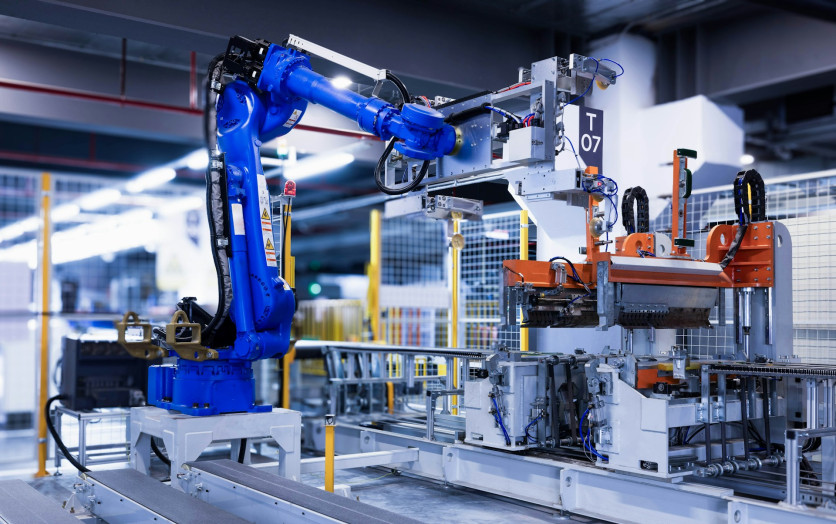
The target comes as the company expands robotics, automation and digital technologies across its supply chain. More than 15 sites are already operating under its unattended operations programme, with further expansion planned in fiscal 2027.
P&G's Factory Automation Push
Speaking at the company's investor day on 19 November, Chief Product Supply Officer Luc Reynaert outlined how P&G intends to use robotics, automation and digital technologies to transform its supply chain.
'We're now running at more than 15 sites with plans to further scale in FY 2027,' Reynaert said.
P&G says its unattended operations programme uses robotics, automation and digitisation to reduce manual processes and improve safety, quality and reliability. The company believes the approach has the potential to deliver productivity improvements of up to 20% by 2030, while freeing employees to focus on higher-value work.
AI is also being used separately to support manufacturing teams. P&G has deployed an AI-enabled platform developed at its Mechelen site in Europe and now broadly used across its sites. The technology helps teams analyse production data as they set priorities for upcoming shifts.
Reynaert said a process that once took hours of data gathering and analysis could now be completed in five minutes.
P&G has described these initiatives as part of its Supply 3.0 strategy, which combines digitalisation, automation, workforce development and sustainability to create a more efficient supply network.
P&G Targets $10 Billion in Productivity Savings
The workforce reduction forms part of a broader financial strategy. P&G aims to generate up to $10 billion (£7.6 billion) in productivity savings between fiscal 2027 and 2030, including up to $1.8 billion (£1.37 billion) in annual savings from cost of goods sold.
Chief Financial Officer Andre Schulten said the company was accelerating productivity improvements amid persistent cost pressures, including higher raw-material, energy and freight expenses.
The savings programme extends beyond factory automation, covering improvements across P&G's wider operations. The company intends to use the gains primarily to reinvest in its business and support growth. Schulten said the broader plan assumes roughly flat overall headcount and media spending as P&G returns to growth.
What P&G's Automation Push Means for Workers
P&G has not specified how many individual positions the 20% to 30% target represents or how the reduction will be achieved, including the respective roles of redundancies, natural attrition and other workforce measures. The target applies specifically to the product-supply workforce, including contractors, rather than the company's entire global workforce.
P&G has presented automation as an opportunity to redirect employees towards higher-value responsibilities. Reynaert said the programme could help with this transition, 'freeing up our employees for higher-value work'.
The product-supply target is separate from a restructuring programme announced in June 2025, under which P&G is reducing up to 7,000 non-manufacturing roles by the end of fiscal 2027. The company said the separate reduction remained on track at its investor day.
P&G has also said it is investing in the critical and digital skills employees will need to operate its future supply chain.
The company's longer-term ambition extends beyond automating individual factory processes. Its Supply 3.0 strategy envisages an increasingly connected and autonomous supply chain, using real-time consumer and retail data to optimise production, inventory and distribution.
As Reynaert put it: 'Supply 3.0 is not a destination. It is the foundation that will evolve us into the supply chain of the future.'


