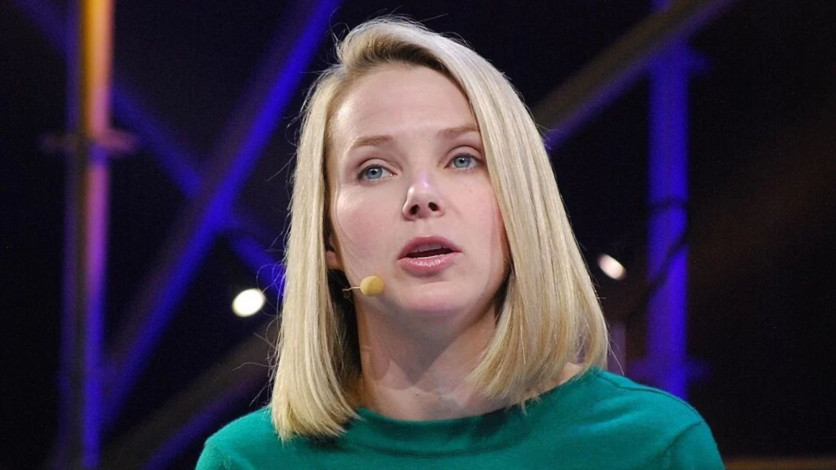
Marissa Mayer once ran Yahoo. But ask her to name three things that make her 10-year-old daughter special, and she got stuck at one. So she called in an AI.
The tech executive asked her AI assistant to help with a school assignment that required her to list three qualities that made her daughter, Marielle, unique. The tool came back with three answers: empathetic, creative and an animal lover.
Mayer's story raises a question that more and more people are asking: at what point does a helpful digital assistant begin to take over the human moments that matter most?
'AI Taking Another Job': Readers Question Marissa Mayer Outsourcing Motherhood to a Chatbot
The internet had thoughts. Is parenting the next thing we'll hand over to the machines? One commenter drew a hard line: 'This is exactly the kind of emotionally involved thing that I would never want to hand off to an AI.'
Others were less surprised, with one saying: 'Sadly, it sounds like she outsources everything.'
Another summed up the wider concern in three words: 'AI taking another job.'
Parenting is the latest part of life to get the copilot treatment, with one commenter saying: 'Even parenting is getting the copilot treatment now.'
From Outsourcing Social Interactions To Letting AI Handle Motherhood
From drafting awkward texts to planning dates and settling arguments, AI is quietly becoming the go-between in our relationships. Now parenting is getting the same treatment. For Mayer, AI is more than a handy way to organise her day.
Her latest venture, Dazzle, a start-up offering personal AI assistants that can analyse a user's camera roll to answer questions and make suggestions. The company has reportedly been valued at $35 million (£26 million).
The idea is to turn the thousands of photographs people take into a kind of personal database, allowing AI to identify their preferences, interests and personality. Instead of simply responding to typed questions, the assistant can draw on visual information to make its recommendations feel more tailored.
Mayer believes this approach could be particularly useful for women, although she acknowledged that this view reflects her own bias.
'Women, this is my own bias, tend to take more photos and are more visual, and so being able to work with AI in a visual medium is fun,' she told.
'It essentially understands your personality, your likes, your dislikes, because it knows what you think looks good.'
For Mayer, the appeal extends well beyond organising photographs or recommending activities. She says she has used Dazzle to plan sleepovers and arrange birthday parties for her children.
But the technology's most striking assignment was not organising a party or finding ways to keep the children entertained. It was helping their mother work out what makes one of them special.
When her 10-year-old daughter, Marielle, was given a school assignment asking her mother to list three things that made her unique, Mayer found herself overwhelmed by the possibilities.
Rather than reflecting on the qualities she had come to know over a decade of motherhood, she turned to Dazzle for answers.
'It came back and was like, your daughter is empathetic, creative and an animal lover,' Mayer told The New York Times.
Few tasks are more personal to outsource. An AI assistant can scan thousands of photographs, detect patterns and produce a tidy list of personality traits. But understanding what makes your own child special is not an administrative problem most parents would give to a machine.
The irony is clear. Mayer built a tool to understand people through their photographs, yet used it to express something a parent would be expected to know simply by being present.
Dazzle may be able to identify that Marielle loves animals. Whether it can explain what makes her irreplaceable to her mother is another question entirely.
When AI Becomes a Parenting Assistant
Mayer's reliance on AI is not limited to schoolwork. She describes Dazzle as 'one of my babies', highlighting how closely the project is tied to her personal life.
The technology has also helped her plan celebrations for her children, including a birthday party for her 14-year-old son, Macallister.
In that case, Dazzle recommended a glow-in-the-dark theme, complete with glowing pool toys and phosphorescent corn hole — a lawn game in which players throw bags towards a raised board with a hole.
The idea apparently went a little too far for the birthday boy.
'He was like, "Mom, I don't want to hit the theme that hard,"' Mayer recalled.
It was a telling moment: an AI assistant designed to make planning easier had produced a suggestion that needed a teenager's intervention to bring it back down to earth.
Mayer's response was characteristically enthusiastic.
'I just can't help myself.'
The Bigger Question Is What Happens When Convenience Replaces Connection
AI assistants are increasingly built to manage personal tasks, from planning holidays and organising schedules to recommending purchases and supporting decisions. Dazzle takes this further by using personal photographs to tailor its suggestions.
The appeal is clear. Parents balancing work, school and family activities may welcome any tool that saves time and eases the mental load.
But asking AI to arrange a birthday party is not the same as asking it to explain what makes a child special. The first is a logistical problem. The second depends on personal knowledge, affection and the small details that build a relationship over time.
An AI tool might find patterns in thousands of photographs and suggest plausible personality traits. That does not mean it understands a child as a parent does, or that it captures the qualities that matter most.
Privacy is another concern. When personal photographs and family information are used by AI services, the way a tool handles and retains that data matters, particularly where children are involved.
Mayer's experience shows both the promise and the tension in personalised AI: the more it can do for us, the more carefully we must decide which tasks we want it to do.
An assistant can help organise a child's birthday party. Whether it should explain why that child is special is another matter.
Mayer's own explanation for her reliance on the technology may be the most telling part.
'I just can't help myself.'


