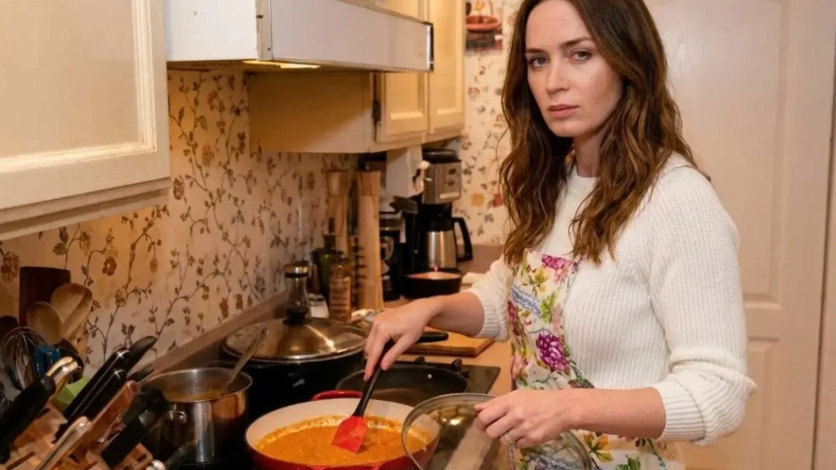
An investigation has linked more than 2,100 advertising-related domains to a wider ecosystem of suspicious websites, including a baking site using what researchers believe are AI-generated images of British actress Emily Blunt.
The sites raise concerns about deceptive author profiles, the reliability of recipes and how visitors' data may be shared through online advertising systems.
Massive Network of Suspicious Recipe Websites
A report published by advertising supply-chain research company DecryptAds on October 18, 2026, identified more than 2,100 'made-for-advertising' (MFA) domains after investigators began with an initial group of around 400 suspicious AI recipe websites.
The researchers used technical fingerprints, advertising data and manual reviews to identify websites that appeared to share connections with other publishers.
DecryptAds said a website was counted as a confirmed AI recipe site for the purposes of its research when it displayed both AI-generated author photographs and indicators of AI-written text, with at least three pages manually reviewed. The wider group of more than 2,100 domains should not, however, be treated as 2,100 individually confirmed AI recipe sites or proven scams.
The report found that many of the websites appeared to use fabricated author profiles, AI-generated photographs and elaborate personal backstories to make their content look as though it came from genuine chefs and home cooks.
'It's also become common knowledge that publishers in certain niches are being openly deceptive about their owners and authors, using AI photos and fake back stories on their sites,' the DecryptAds report said.
The researchers also found that some of the websites promoted their content aggressively on social media platforms, including Pinterest, in an apparent effort to attract visitors and generate advertising revenue.
Security expert and DecryptAds researcher Zach Edwards told Futurism that he initially identified around 400 suspicious websites that appeared to publish AI-generated recipes under the names of fictitious chefs. By using technical fingerprints to identify additional sites associated with those domains, he expanded the tally to roughly 2,100.
'We really approach this expecting these operators to try and hide their websites,' Edwards said. 'These folks they don't want people to know all of the websites they own.'
AI Scammers Use Fake Emily Blunt
One of the websites highlighted in the investigation is AddCakes, a baking site that presents its author as a baker named Elena.
The website describes Elena as 'a busy mom who wanted to connect with my roots through baking, but got overwhelmed by complicated cake recipes and the pressure to make them look perfect'.
However, images used on the website and its associated social media profiles appear to depict AI-generated or AI-manipulated versions of Emily Blunt, the British actress known for films including The Devil Wears Prada and A Quiet Place.
DecryptAds said AddCakes appeared to use five distinct images of Blunt in its author photographs and social media content. The researchers said the images appeared to show the actress in settings associated with the fictional baker, including cooking and spending time with a family.
The report described a family-dinner photograph linked to the account as likely AI-generated. Neither the images nor the website's biography establish that Blunt is involved in running the site or has endorsed its recipes.
AddCakes' own website presents Elena as a real person and says she tests her recipes. That self-description does not independently establish the author's identity or confirm that the recipes have been tested.
According to Futurism, the X account associated with the operation displayed a location in Morocco. DecryptAds also reported that the account's location information indicated a Moroccan connection.
The location information is not conclusive evidence of who operates the website. DecryptAds cautioned that location disclosures on X and Facebook are inferred rather than verified and may be affected by VPN use, travel or changes in account ownership.
Privacy Risks and Questions Over Stolen Content
The investigation also raised concerns about the advertising systems used to monetise the websites.
DecryptAds found that some sites appeared to authorise advertising technology companies associated with Russia, China and other jurisdictions it classifies as carrying geographical risk. The report said publishers often outsource advertising management to third-party companies, which may in turn work with numerous advertising partners.
As a result, a website owner may not necessarily know every advertising system connected to their site.
When a visitor loads a website that uses programmatic advertising, information such as their IP address, browser and device details, and the page they are viewing may be shared with advertising systems.
DecryptAds noted that tracing every recipient can be difficult because many data transfers take place behind the scenes. Edwards warned that these arrangements could create privacy risks for visitors.
'This report is about publishers who are being deceptive. Their audiences could be impacted, advertisers are wasting money,' he told Futurism. 'But the underlying fact is also that if you load this website and you don't block ads, your data is going to, basically, authoritarian countries.'
The warning reflects Edwards' assessment of the risks associated with the advertising supply chain; it does not establish that every visitor's data was accessed by a government or that every website in the investigation transmitted data to Russian or Chinese entities.
The report also raised questions about whether the recipes published by these sites had been tested and whether some operators were drawing on ideas from genuine food bloggers and creators.
Edwards said many sites presented elaborate author biographies that suggested their recipes had been developed and tested by experienced professionals.
'Most of these AI recipe websites, when you look at those "about" pages, the fake backstories that they're putting together... this lady was a Michelin star chef and she worked at this fancy hotel or this place, and they're basically saying that this expert not only wrote these recipes, but tested themselves. And it's giving this air of, "Wow, you're about to get a recipe from an expert. This has all been carefully vetted,"' he said.
'But none of these recipes have probably been cooked — zero of them by the actual owners or authors, and to me that's the scary part.'
These comments are the researcher's assessment, rather than proof that every recipe on the sites is untested.
Edwards also suggested that some operators were likely taking inspiration or content ideas from established food bloggers and creators who had invested time in testing, photographing and publishing their recipes.
'These people are clearly not cooking their own recipes. They're putting out sometimes dozens of recipes a day. It's an automated publishing pipeline,' he said.
'It's all a lie... and I think that the reason why we need to be holding AI publishers accountable is because they don't care about their audience.'
The findings highlight concerns about the use of fabricated identities to give AI-generated content the appearance of human expertise. However, the investigation does not establish that every site in the wider group engaged in copyright infringement, nor does it prove that all the recipes published across the domains were inaccurate or unsafe.


