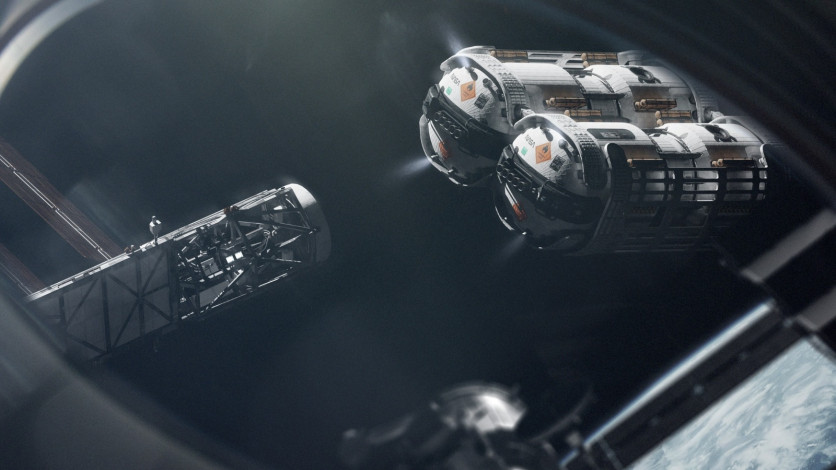
Google has generated an artificial intelligence (AI)-written poem aboard an experimental satellite in orbit, demonstrating the ability of its Gemma 4 model to process prompts and return responses using computing hardware operating beyond Earth's atmosphere.
The demonstration, announced on 30 October 2026, was conducted under Project Suncatcher, Google's research initiative exploring space-based AI computing. The company plans to test two interconnected satellites in 2027 as part of its efforts to examine how orbital systems could support AI processing operations.
Google AI Model Generates Poem Aboard Satellite
The experiment forms part of Project Suncatcher, Google's research initiative investigating the possibility of operating AI computing infrastructure in space. The company launched its prototype satellite on 1 October to test whether its specialised processors could perform computing tasks beyond Earth's atmosphere.
Google said engineers spent several weeks conducting initial system checks, activating the onboard computer and Tensor Processing Unit (TPU) hardware, and performing preliminary machine learning tests. The team then sent a prompt to the satellite's onboard Gemma 4 open model, requesting a haiku about space.
The satellite generated a three-line poem describing Earth as a blue marble and referring to data processing and starlight. According to Google, the system received the prompt, processed the request and transmitted the generated response to a ground station as the satellite passed over Svalbard, Norway.
Project Suncatcher Tests AI Computing Beyond Earth
In addition to generating poetry, Google tested the satellite's onboard AI model using space-themed limericks and prompts requesting telemetry information about the spacecraft's technical condition. These tests were conducted to assess the system's ability to process different types of requests while operating in orbit.
The experiment also allowed researchers to observe how the onboard hardware handled AI processing tasks under orbital conditions. The findings will inform subsequent tests involving processor performance and the operation of multiple satellites.
Moreover, operating computing hardware in space involves environmental conditions that differ from those encountered by terrestrial data centres. Electronic components must withstand radiation exposure and temperature fluctuations, which can affect hardware performance and reliability.
Google said its next phase of testing would examine how its TPUs perform under thermal stress and radiation conditions in orbit. The assessments will focus on the processors' ability to execute machine learning workloads under these conditions.
Google Plans Two Interconnected Satellites in 2027
Google plans to continue Project Suncatcher with a test involving two interconnected satellites in 2027. The experiment will examine how spacecraft can communicate and coordinate computing operations while in orbit.
The proposed system is intended to allow multiple satellites to work together rather than operate as independent computing units. Google is investigating how this configuration could support the distribution of AI workloads across space-based infrastructure.
Furthermore, the initiative also involves examining the use of solar energy to power computing systems in orbit. Other technical considerations include cooling, hardware maintenance, communication systems and launch costs.
Project Suncatcher remains an experimental research programme, and the demonstration has not established a commercially operational space-based data centre. Google said further testing would assess the performance and reliability of its processors in orbit and the feasibility of connecting multiple satellites for AI computing operations.


