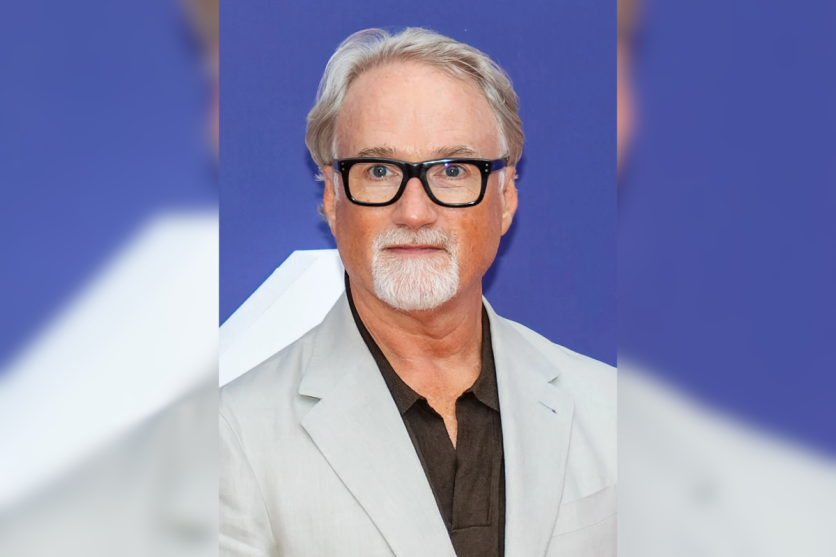
The backlash over suspected artificial intelligence (AI) use in David Fincher's new Brad Pitt film has escalated, with some viewers threatening to boycott the Netflix production over its visuals.
Fincher has defended the technology in interviews, calling the wider dispute a culture war and acknowledging that AI was used during the film's post-production. The film, The Further Mis-Adventures of Cliff Booth, brings Pitt back as the stuntman he played in Quentin Tarantino's Once Upon a Time in Hollywood. Tarantino wrote the follow-up and Fincher directed it.
Why Are Viewers Threatening to Boycott David Fincher's Film?
The immediate controversy centres on footage that viewers believe contains AI-generated imagery. One widely discussed trailer image shows people sitting backwards on a horse-drawn cart, apparently facing away from the horse and reins.
The image prompted AI questions, although a visual error alone does not prove how the shot was created. Filmmaker and film commentator Patrick Tomasso was among those who criticised the production.
David Fincher says he used AI to replace dialogue and adjust actors’ lip movements in post-production on ‘THE FURTHER MIS-ADVENTURES OF CLIFF BOOTH’.
— DiscussingFilm (@DiscussingFilm) November 25, 2026
The actors spent 4-5 days re-recording dialogue, with only 5% of dialogue replacement done conventionally and the rest “all AI.”… pic.twitter.com/3ewwfNSLFD
He described himself as 'completely gutted' and said what could have been a strong sequel was overshadowed by what he called 'some of the most blatant and egregious AI use' he had seen in a studio film.
Other viewers have made their objections personal. One social media user said they had cancelled their Friday tickets and hoped the film would flop.
Another said they had been looking forward to the release but no longer wanted to support it. Some see buying a ticket as endorsing the technology.
The scale of any boycott remains unclear. Individual posts do not establish an organised campaign, and no verified figures show an effect on ticket sales. Fincher and Netflix have not publicly confirmed that the disputed cart image or other specific visuals criticised online were generated using AI.
What Has David Fincher Said About AI?
Fincher has defended new filmmaking tools. In an interview with the Los Angeles Times, he said, 'I'm not a Luddite, so I don't fear the unknown', before asking why filmmakers should avoid technology simply because it exists.
He went further in an interview with Spanish newspaper El País published on 25 November. Asked about using AI to recreate 1977 Los Angeles and television footage in the film, he said, 'The debate over AI masks a culture war; it has nothing to do with movies.'
He argued that his priority was telling a story within the available budget and production requirements.
any movie that uses even a sliver of AI should be immediately disqualified from awards consideration. disgusting. https://t.co/f1y42nOtNf
— ⃟⃟⃟ (@upperupland) November 26, 2026
In an interview published by Variety on 26 November, Fincher acknowledged using AI in post-production to synchronise actors' dialogue with their filmed performances and adjust lip movements without requiring another recording.
He said actors spent four or five days re-recording dialogue, while conventional automated dialogue replacement accounted for just 5% of the process.
The podcast interview was recorded before the specific allegations about the film's visuals emerged.
Its host therefore did not ask whether AI had been used to create the disputed cart image or other questioned backgrounds. Fincher's admission confirms AI-assisted dialogue work, not the separate visual allegations.
As of 27 November 2026, the film is playing in a limited IMAX cinema engagement that began on 25 November. The controversy now involves two distinct issues: Fincher's acknowledged use of AI in post-production and viewers' unconfirmed claims about what they believe they saw on screen.


