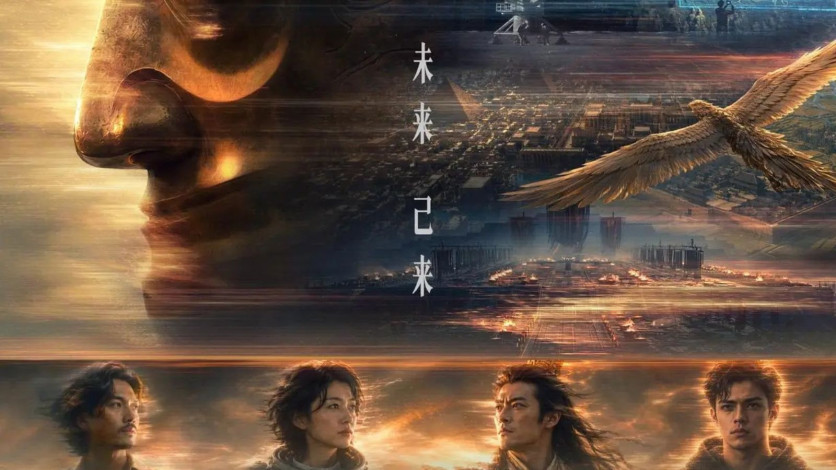
China's first fully AI-generated feature film has taken just $181,000 (£136,199) at the box office after a $1.5 million (£1.1 million) spend, while a homemade animated movie reportedly made for about $200 (£150) has surged to nearly $10 million (£7.5 million) in ticket sales.
Sanxingdui: Future Past, backed by major studio Bona Film Group and touted as a milestone for Chinese cinema, received a wide theatrical release but has struggled to attract audiences. In stark contrast, Niu Lai, a rough-edged animated film by a mother-and-son team, has gone viral online and turned into a surprise commercial success.
Side by side, the gulf is striking. One relied on serious financing, a crew of nearly 100 and more than two years of work, using AI for characters, voices and scenery. The other reportedly used pocket change, wobbly animation and amateur actors, and yet became an internet favourite.
The films followed very different paths to release, but for those betting on an AI filmmaking revolution, the same question looms: if audiences are buying tickets for the scrappy underdog instead, how much does technical polish really matter?
The $1.5M (£1.1M) AI Film Struggling to Attract Audiences
Sanxingdui: Future Past opened in Chinese cinemas on 23 October, with more than 10,000 screens scheduled to show it on its first day.
Despite that scale of release, the film reportedly brought in just $181,000 (£136,199) by 26 October, a fraction of its production budget of more than $1.5 million (£1.1 million).
Being first is notable. Making your money back is crucial. So far, the film has earned less than one-eighth of its budget, with marketing and distribution costs still to be accounted for.
Bona Film Group says nearly 100 people worked on it for more than two years, with AI handling the characters, voices and backgrounds. It was presented as a milestone for Chinese cinema, but the early box office suggests that status alone is no guarantee of success.
Chief executive Jiang Defu did not sugarcoat it after weak presales. 'We are the first to try it, the first to get a theatrical release permit and the first to be tested by the audience,' he told Yuli, according to AFP. 'I think that is not easy at all.'
New technology needs audiences willing to take a chance, and a cinema release is an expensive way to test that appetite. So far, it seems viewers want more than a technical first before they will pay for a ticket.
The $200 (£150) Sleeper Hit That Went Viral
Then there is Niu Lai, directed by Xin Yumeng and his mother Sun Lifang, which makes the AI film's story more pointed.
A mother and son reportedly made it for around $200 (£150). The animation was clunky, the performances were far from polished, and none of that mattered. The rough edges were the charm. It felt like something made by people just trying to bring their ideas to life, and audiences took its oddities to heart. It became an internet meme, then a box-office surprise at nearly $10 million (£7.5 million).
It is an example of how a film can gain traction if people find it funny, memorable or distinctive enough to share. Sanxingdui: Future Past had a budget thousands of times larger, yet its slick AI visuals have not stirred the same excitement.
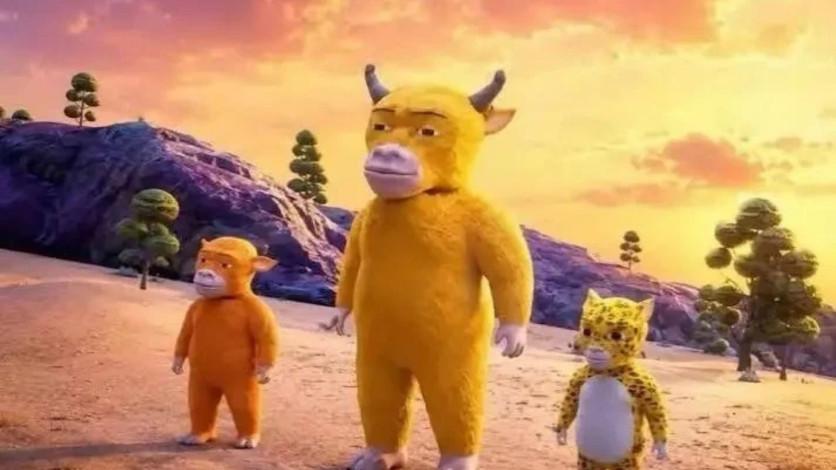
The comparison is not a direct measure of profitability. The release paths differed, and gross figures do not reveal what creators ultimately kept. Still, the contrast between the reported budgets and earnings is difficult to ignore.
When Spectacle Loses Out to Story
The issue for AI filmmaking may be that generating convincing images is only one part of making a successful movie.
Audiences also need a reason to care about the characters, follow the story and recommend the experience to someone else.
A film can look visually impressive and still fall flat if nobody connects with the narrative. Meanwhile, a modest production can find its audience because it is funny, full of personality or simply unusual enough to stand out.
That seems to be where Niu Lai found an advantage. Its rough presentation became part of its identity, while its viral appeal helped turn online curiosity into ticket sales.
AI-generated films, meanwhile, face a different challenge: persuading audiences that they offer more than a demonstration of what the technology can produce.
That does not mean AI has no future in cinema. The technology could help filmmakers develop ideas, reduce certain production costs and experiment with techniques that might otherwise be out of reach.
But Sanxingdui: Future Past serves as an early warning for studios hoping to turn those capabilities into box-office success.
What AI Filmmakers Can Learn From a $200 Hit
The most expensive-looking film is not automatically the most engaging, and the most technologically advanced production is not necessarily the one audiences will remember.
At this stage, the picture is stark. A reported $1.5 million (£1.1 million) AI film is struggling to recoup its costs, while a $200 (£150) homemade production has taken millions.
Studios in Hollywood and China experimenting with AI may need to consider that audiences are still prioritising originality, emotion and character over cutting-edge visuals alone.


