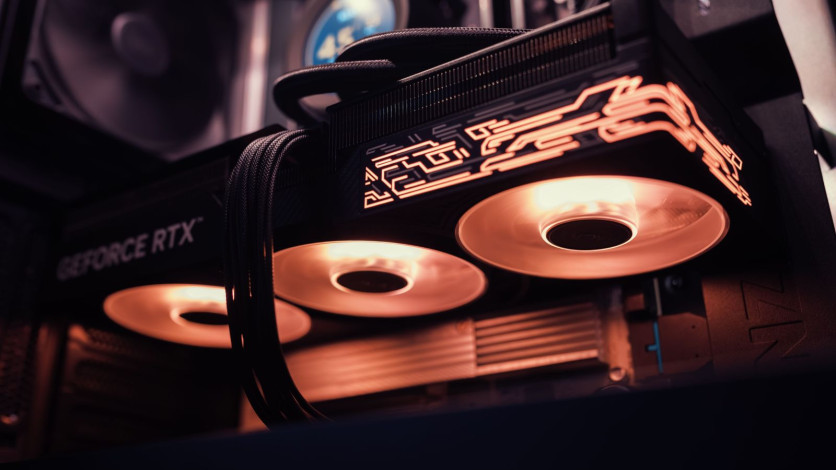
Brand-new Nvidia GeForce RTX 5090 graphics cards are reportedly being dismantled inside Chinese facilities, where workers are removing key components and rebuilding them into smaller graphics accelerators designed for artificial intelligence (AI) servers.
Footage shared by Hong Kong hardware publication HKEPC appears to show an organised operation handling cards from several manufacturers, including Nvidia's own Founders Edition models.
The development comes as enthusiasts struggle to find Nvidia's flagship gaming GPU at anything close to its recommended price. AI companies need powerful processors and large amounts of memory, creating another market for hardware originally sold to PC builders.
The footage offers a glimpse of how consumer technology can be redirected into commercial computing. However, it does not establish the scale of the operation or how many cards are being diverted from the retail market.
【太精彩了吧 😱】近日,社交媒體 X 上流出多段顯示卡改裝工場內部影片,可以看到大量 GeForce RTX 5090 頂級遊戲顯示卡並未流向一般消費級零售市場,而是被整批運往大型改裝工廠。廠內工人在具備完整流水線的作業環境下,進行大規模拆解與改裝,將原本針對電競設計的三風扇散熱架構全數替換為 Dual… pic.twitter.com/hA08DM25B6
— HKEPC (@hkepcmedia) October 23, 2026
How RTX 5090 Graphics Cards Are Rebuilt for AI Servers
According to Tom's Hardware, technicians desolder the graphics processors and GDDR7 memory chips from the original cards and transfer them to specially designed circuit boards. The modified units are then fitted with compact, dual-slot blower coolers.
The redesigned cooling system is intended for server enclosures, where several accelerators must operate close together.
Unlike the bulky cooling assemblies found on many gaming cards, blower-style designs direct hot air towards the rear of the chassis, helping manage heat in densely packed systems.
The RTX 5090 contains 32GB of GDDR7 memory, which can be useful for running AI models locally. Reusing its most valuable components allows specialist manufacturers to build hardware for particular computing requirements rather than retain the original consumer design.
Reports have described the operation as industrial-scale, but claims that thousands of units are converted daily should not be treated as independently verified figures. The available footage does not establish the facility's identity or the destinations of the finished products.
RTX 5090 Prices Surge as Gamers Struggle to Find Stock
Nvidia launched the RTX 5090 with a recommended price of $1,999 (approximately £1,500), but recent US listings reported by Tom's Hardware have put the card at around $8,500 (approximately £6,400) through third-party sellers.
That is more than four times its original recommended price. Such listings reflect the asking prices of individual sellers rather than an official increase by Nvidia, and do not necessarily represent what buyers are paying in completed transactions.
The supply situation is complicated by uncertainty over the card's future.
On 16 October, Nvidia senior vice president Jeff Fisher reportedly told Taiwanese media that the RTX 5090 had not been discontinued and would continue shipping. He acknowledged that supply-chain capacity was constrained, according to PC Gamer.
Yet Nvidia's US marketplace no longer lists the card, while some retailers have also struggled to offer stock. A separate Notebookcheck report, published on 26 October, said an unnamed board partner had been unable to order new GPU and memory kits.
That account points to additional supply problems, although it does not establish that production has ended across the industry.
The footage also raises questions about the supply routes for these cards. The full RTX 5090 is subject to US export restrictions affecting China, where Nvidia offers the lower-performance RTX 5090D variant.
The appearance of full-specification cards in the reported footage does not establish how they reached the facility or whether any laws were broken.
For gamers, the gap between the recommended price and current resale listings highlights the difficulty of obtaining Nvidia's flagship gaming card at its intended price. The footage illustrates one possible use for the hardware, but it does not prove that these conversions are the main cause of the shortage.
Until supply improves, buyers may continue to face inflated resale prices and limited choices.


