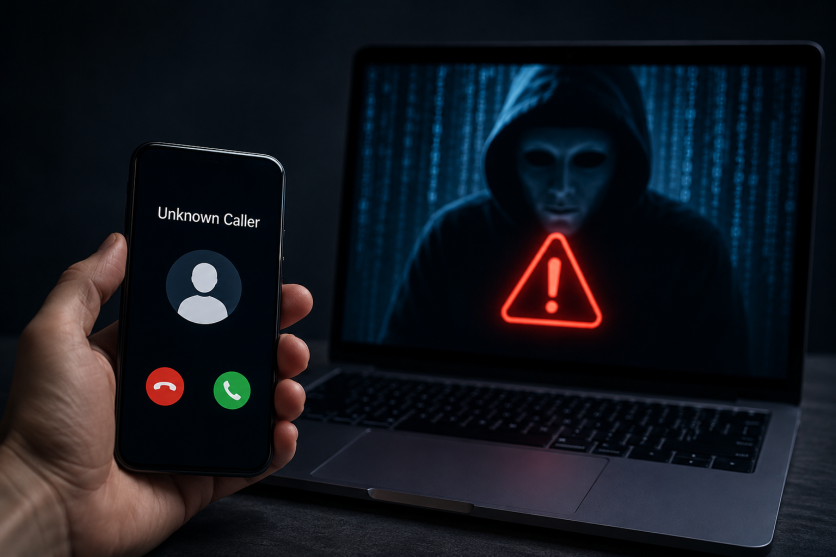
From drafting messages and editing images to handling customer service, artificial intelligence is helping to streamline everyday tasks. Regrettably, fraudsters are using these same advancements to trick people more efficiently than ever.
Modern fraudsters can replicate a relative's voice, produce realistic deepfake videos, pose as bank staff and craft tailored phishing emails almost instantly. These capabilities have sparked a fresh wave of fraud that appears far more credible than the poorly drafted scams of the past.
Consumer watchdogs around the world warn that AI is accelerating existing scam methods rather than introducing entirely new forms of deceit. Instead of replacing human trickery, AI is helping criminals carry out impersonations faster, more cheaply and far more convincingly.
Recent guidance from the US Federal Trade Commission (FTC), California's Department of Financial Protection and Innovation (DFPI), the Identity Theft Resource Center (ITRC) and banking institutions points to a single conclusion: learning to identify the red flags is your best defence.
Knowing these 10 major warning signs could stop you from becoming a fraudster's next target.
1. Someone Creates Extreme Urgency
Almost every successful scam relies on panic.
Whether fraudsters claim a family member is in trouble, a tax bill is overdue, or a bank account has been compromised, their main goal is to get victims to react before they have time to think. AI enables criminals to create convincing phone calls, emails and text messages in seconds, turning fake crises into credible threats.
If anyone demands immediate payment under the threat of severe consequences, pause. Reputable organisations rarely insist on instant transfers without giving you time to verify the request.
2. A Family Member's Voice Suddenly Calls Asking for Money
Few AI-driven scams are as unsettling as voice cloning.
With only a brief clip of audio scraped from social media, an interview or a voice message, fraudsters can synthesise a near-perfect replica of a person's voice. A victim might receive an unexpected call from someone who sounds identical to their child or grandchild, claiming they have been arrested, kidnapped or injured and desperately need money.
According to FTC guidance, sound alone should never be trusted. The safest approach is to hang up immediately and call the relative back using a trusted, verified phone number.
3. Videos Look Real, but Something Feels Slightly Off
Deepfake technology is advancing rapidly and, while many altered clips pass the initial eye test, small telltale signs usually give them away.
Keep an eye out for:
- Lip movements falling out of sync with the audio.
- Odd or absent blinking.
- Stiff, unnatural facial expressions.
- Visual glitches around the mouth or eyes.
- Inconsistent or shifting lighting.
Fraudsters routinely use these altered videos to impersonate corporate executives, public figures and celebrities when promoting bogus investments or fake endorsements.
4. The Voice Sounds Almost Perfect—But Not Quite
Even the best cloned audio tends to leave subtle clues behind.
Be alert for:
- Awkward, ill-timed pauses.
- A flat, emotionless delivery.
- Faint robotic undertones.
- Oddly pronounced words.
- Unnatural changes in speaking pace.
Despite rapid advances, voice-cloning software still struggles to replicate authentic breathing patterns, emotional expression and natural speech cadence. If a caller's voice sounds unusual, confirm their identity through a separate, trusted channel.
5. Guaranteed AI Investment Profits
Few buzzwords carry as much weight in finance right now as artificial intelligence, making it prime bait for fraudsters.
Scammers frequently promote:
- AI-driven trading bots.
- AI cryptocurrency trading platforms.
- AI-powered stock market prediction software.
- Exclusive AI investment opportunities.
These schemes often promise risk-free profits, guaranteed returns or claim their algorithm 'never misses'. In reality, legitimate investments never guarantee extraordinary returns. If a pitch sounds impossibly lucrative, it is almost certainly a scam. Regulators continue to warn consumers about fake investment platforms cashing in on the excitement surrounding AI.
6. They Insist on Cryptocurrency, Gift Cards or Wire Transfers
The payment method itself is often the clearest sign that you are dealing with a fraudster.
Scammers favour untraceable or irreversible payment methods that make recovering lost funds almost impossible, including:
- Cryptocurrency.
- Direct wire transfers.
- Gift cards.
- Payment apps without built-in consumer protection.
No genuine government body, financial institution or legitimate business will ever require payment by gift card or cryptocurrency to resolve an urgent issue. If someone insists on these methods, treat it as an immediate red flag.
7. The Conversation Keeps Jumping Between Platforms
AI-driven fraud rarely stays confined to a single communication channel. A scam might begin with one method before quickly moving to another:
- An email.
- A text message.
- A WhatsApp chat.
- A phone call.
- A video call.
Rapidly switching between platforms is a deliberate tactic designed to confuse victims and make it harder to verify identities. If someone keeps changing communication channels during an urgent conversation, stop and reassess before taking any further action.
8. You Are Told to Ignore Normal Security Checks
Fraudsters routinely try to convince victims that standard security procedures do not apply.
Common excuses include:
- 'Don't call the bank.'
- 'This matter is strictly confidential.'
- 'Don't tell anyone.'
- 'Our systems are currently offline.'
- 'Take my word for it — I work here.'
These claims are designed to isolate you from independent advice. Legitimate organisations encourage customers to verify identities through official channels rather than bypassing them.
9. Website Addresses Look Genuine—But Are Not
AI now allows criminals to build convincing fake websites in a matter of minutes.
Many fraudulent sites closely resemble legitimate web pages, differing by only a single character or symbol, such as:
- Minor misspellings in the web address.
- Unexpected hyphens in the URL.
- Alternative country domain extensions.
- Numbers replacing similar-looking letters.
Always check a website address carefully before entering login credentials or banking details. Typing the address manually into your browser instead of clicking unsolicited links remains one of the safest ways to protect yourself.
10. Your Perfect Online Romance Quickly Becomes a Financial Adviser
Romance fraud is nothing new, but AI allows scammers to create far more convincing personas.
Fraudsters can now generate realistic profile pictures, hold natural conversations and even stage convincing video calls using AI tools. Warning signs include someone who:
- Declares their love unusually quickly.
- Repeatedly avoids meeting in person.
- Suffers a constant stream of financial emergencies.
- Encourages cryptocurrency investments.
- Promotes exclusive AI trading opportunities.
The emotional relationship is being used as a tactic to gain your trust before asking for money. Consumer watchdogs warn that combining romance scams with fake investment advice often results in devastating financial losses.
How to Protect Yourself From AI Scams
Although AI-powered fraud is becoming increasingly sophisticated, basic security habits remain highly effective.
- Pause before acting: Fraudsters rely on emotional reactions. Taking a moment to think could save you from making a costly mistake.
- Verify independently: Contact individuals or organisations using a trusted phone number or official website rather than replying to the original message.
- Create a family code word: Sharing a secret passphrase with close relatives provides a simple way to expose voice-cloning scams during an apparent emergency.
- Avoid unexpected links: Do not click links or download attachments sent through unsolicited text messages, emails or social media posts.
- Limit your public digital footprint: Reducing the amount of publicly available audio and video makes it harder for fraudsters to gather material for voice cloning.
- Enable multi-factor authentication: Additional security checks can keep your accounts safe even if a criminal obtains your password.
- Trust your instincts: If something feels wrong, no matter how convincing the audio or video appears, pause and verify before transferring money or sharing sensitive information.
Artificial intelligence will continue to transform the way we communicate, work and shop online, but it is also reshaping the landscape of digital fraud. Recognising these warning signs will not eliminate every threat, but it can significantly reduce your chances of falling victim to increasingly sophisticated scams.
Frequently Asked Questions
- What are common signs of AI-driven scams?Common signs include creating extreme urgency, voice cloning, deepfake videos, guaranteed investment profits, and insisting on untraceable payment methods.
- How can I verify a suspicious call or message?Contact the person or organization using a trusted phone number or official website rather than replying to the original message.
- Why should I avoid clicking on unexpected links?Unexpected links can lead to phishing sites or download malware onto your device.
- What is the benefit of enabling multi-factor authentication?Multi-factor authentication adds an extra layer of security, making it harder for criminals to access your accounts even if they have your password.


