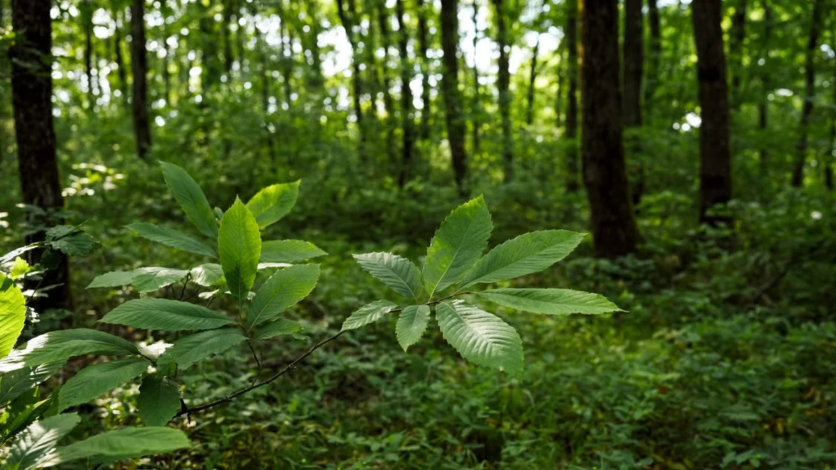
A plan to save historic American chestnut trees near an AI data centre development in West Virginia could threaten their survival, conservation specialists have warned.
The dispute centres on UK-based Nscale's Monarch Compute Campus in Mason County, where officials propose relocating mature trees despite warnings that transplantation could prove fatal.
West Virginia Governor Patrick Morrisey announced the preservation plan on 10 October 2026. However, conservation experts question whether trees that have survived decades of disease could withstand being uprooted.
Nscale maintains that it never intended to bulldoze the orchard and has agreed to fund preservation efforts. The controversy gained renewed attention following a 404 Media investigation published on 21 October.
The wider development has also faced enforcement action over stormwater violations.
A Preservation Plan That Could Kill the Trees
The disputed orchard stands at the former Clements State Tree Nursery near the Ohio River. It contains American chestnut trees that have survived repeated infections of chestnut blight, a fungal disease that devastated the species across eastern North America.
Mark Double, a former president of The American Chestnut Foundation's West Virginia chapter, told 404 Media that many trees had survived multiple infections over 35 years.
The orchard has supplied nuts for conservation work for more than a decade. The foundation describes it as a planted, managed orchard valuable for research and restoration, rather than a wild population.
Under the governor's proposal, the trees would be moved elsewhere on the property in late 2027, during their dormant season. Professional arborists would supervise the relocation, with Nscale covering the costs.
Amy Metheny, a forest pathologist with the foundation's West Virginia chapter, told WCHS-TV that she believed the trees would die within two to five years if moved.
In a statement updated on 16 October, the foundation called for an independent evaluation, saying it knew of no documented successful relocation of mature American chestnuts.
Nscale Denies Plans to Bulldoze Historic Grove
Nscale has rejected suggestions that it planned to destroy the orchard.
In comments reported by 404 Media, the company said it had never intended to bulldoze the nursery or cut down its American chestnut trees. The company said it does not currently own the former nursery but has a purchase agreement relating to the property.
The American Chestnut Foundation confirmed that Nscale was negotiating with the state to acquire the land. The orchard is not part of Project Tamarack, a separate data centre development nearby.
Nscale cited an arborist assessment that it said identified blight and other health problems affecting the trees. The company maintains that it has always intended to incorporate the chestnuts into the Monarch Compute Campus and plans to consult conservation specialists as development progresses.
Governor Morrisey's office also defended the proposal.
Citing a state agriculture assessment, officials told 404 Media that the trees were expected to deteriorate under existing conditions. They suggested that relocating chestnut clumps with proper care might improve their health, although some losses were anticipated.
Conservation specialists remain concerned about the risks.
Flooding Complaints Raise Environmental Concerns
The preservation dispute comes amid separate complaints about flooding near the Monarch construction site.
On 14 July, the West Virginia Department of Environmental Protection issued an enforcement order against Monarch Cloud Campus LLC. Inspectors identified stormwater permit violations that contributed to flooding and sediment impacts on neighbouring properties.
Heavy rainfall on 11 July overwhelmed erosion controls, allowing sediment-laden water to reach residential properties.
Regulators ordered repairs and additional safeguards. They also halted land-disturbing work in a separate drainage area until the necessary protections were installed and compliance verified.
Further complaints emerged in September.
WSAZ reported on 10 September that a neighbouring family said its garden had flooded again, leaving mud and debris. Nscale acknowledged that water from its site reached the property during extreme rainfall but said none entered the house.
The company said it had inspected the property with the homeowners and determined that no clean-up was necessary.
Environmental Permits Face Further Scrutiny
The Monarch development also faces regulatory scrutiny over its proposed effects on air quality, streams and wetlands.
According to state environmental records, Monarch Cloud Campus LLC has applied for an air quality permit covering an off-grid electricity generation facility. Two separate state waters permit applications address proposed construction affecting wetlands and waterways.
Regulators have preliminarily determined that the proposed power facility could meet applicable air quality requirements. However, a final permit decision remains pending.
A public meeting on the state waters applications is scheduled for 26 October, followed by a virtual air quality hearing on 29 October. Meanwhile, The American Chestnut Foundation continues to seek an independent assessment of the relocation proposal.
Nscale and state officials maintain that preservation is their objective. Whether moving the mature trees would improve their prospects or accelerate their decline remains unresolved.


