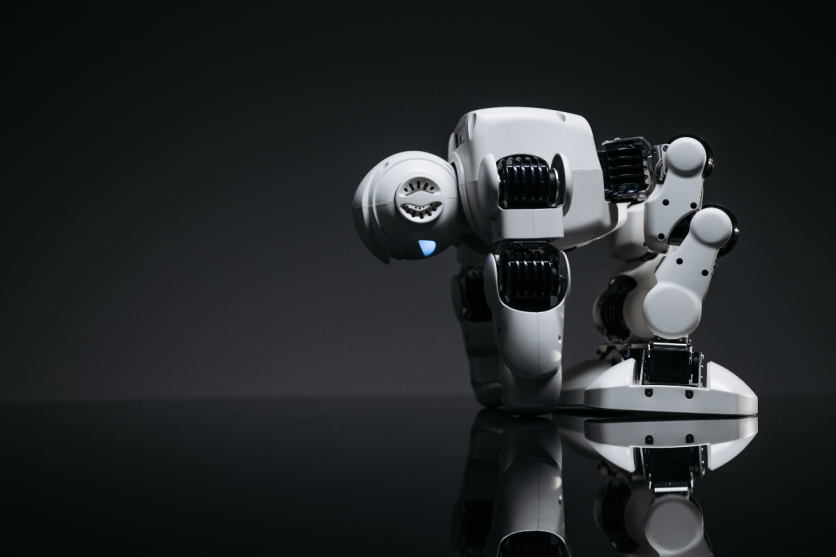
On 2 November, a Unitree G1 humanoid robot overheated during a climb of Mount Tai in eastern China and left on a stretcher. Its operator withdrew it for safety reasons before staff carried it down, Science and Technology Daily reported, as relayed by the Global Times.
The machine entered the inaugural CMG World Robot Mount Tai Competition in Tai'an, Shandong. The report describes it as a development version of the G1, the model seen at China's Spring Festival Gala.
Footage of the scene spread online, but the G1's setback was not the whole story of Unitree's performance at the event: robot dogs entered by its subsidiary won their race.
The Humanoid Race Followed a Shorter Route
The event used different routes for different machines. Reporting published on the Shandong provincial government website puts the humanoid speed race's official segment at approximately 1.6 kilometres, with more than 600 steps.
The longer route from Hongmen Square to Zhongtianmen covered approximately 3.9 kilometres and more than 3,100 steps. That was the legged-robot speed course, not the humanoid race's official segment.
The reports do not establish how far the G1 travelled before stopping. Nearly 90 teams competed across four formal events and an additional challenge, testing different machines rather than ranking them all against one course.
The newspaper's account explains the overheating as internal heat building faster than the machine could shed it, rather than simply high outdoor temperatures. An unnamed industry expert describes the challenge as turning short bursts of mobility into sustained operation.
Unitree's Robot Dogs Won a Separate Contest
Unitree said the G1 may have entered the competition without tuning, according to the newspaper. That response does not establish who prepared the machine or whether its configuration caused the withdrawal.
Beijing Lingyi Technology, a wholly owned Unitree subsidiary, won the legged-robot speed race. National Business Daily, citing Jiemian News, identifies its winning robot as a Unitree A2, with an official time of 43 minutes and 41 seconds, including a two-minute penalty.
The same report, citing Unitree, credits Shanghai Gaoyi Technology with second place in both the speed and weight-carrying events. That team used Unitree A2 and B2 robots, respectively.
Those results complicate a company-wide verdict based on the stretcher footage. They do not explain the G1's failure: different machines competed in separate categories, and the reports provide no controlled comparison of their endurance.
Outdoor Tests Bring Reliability Into Focus
Some online users saw the withdrawal as a warning that polished demonstrations do not guarantee reliable performance. Others argued that failures supply useful data for improving endurance, heat management and control systems.
The provincial report describes irregular mountain steps as a test of balance, terrain recognition, endurance and adaptability. These present conditions that standard laboratory courses cannot fully reproduce.
Unitree is increasing research spending, although its reported priorities do not establish a connection to this incident. Seoul Economic Daily reports third-quarter R&D costs rose 249.58% to 127 million yuan (around £14.2 million), or 19% of revenue, with investment focused on embodied models and computing power.
The climb adds a separate engineering demand: keeping a moving machine operating long enough to finish its assigned route.


