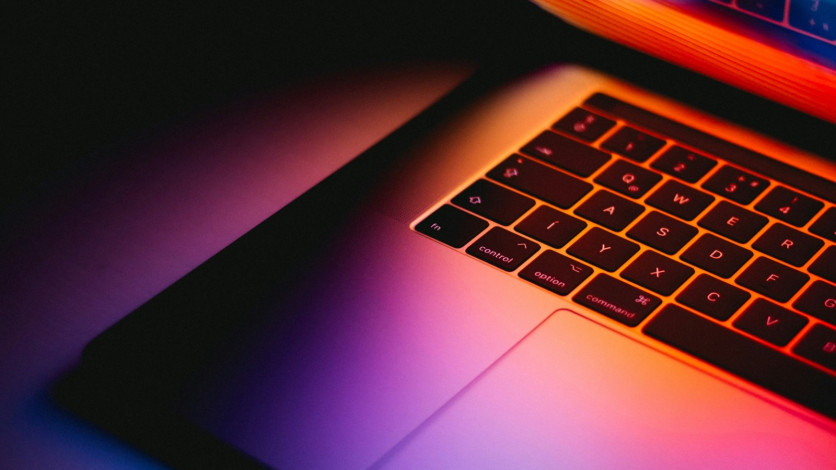
Apple has introduced its first touchscreen MacBook Pro, ending a 16-year wait since Steve Jobs rejected the idea on ergonomic grounds, as the company brings touch controls and OLED displays to its premium laptops.
Announced on 28 October 2026, the new 14-inch and 16-inch models combine touch-enabled OLED displays with M5 Pro and M5 Max chips, Dynamic Island and enhanced on-device artificial intelligence (AI). The laptops will start at $2,899 (£2,175.92) in the US and become available on 6 November, marking a major change in Apple's long-standing approach to MacBook interaction.
Apple Reverses Steve Jobs' Touchscreen Stance
In October 2010, Jobs explained why Apple had no plans to introduce touchscreens on its MacBooks. After years of testing the concept, Apple concluded that reaching towards a vertical display caused arm fatigue and made prolonged use uncomfortable.
The company's position remained a defining part of its laptop design philosophy, favouring keyboards and trackpads for traditional computer tasks. However, the new MacBook Pro introduces touch as an additional input method rather than abandoning those familiar controls.
Apple's announcement signals a shift in how users can interact with macOS. Instead of relying exclusively on a trackpad or mouse, customers can directly manipulate content on the display while retaining access to keyboard shortcuts and established gestures.
OLED Displays Bring Touch to Creative Workflows
The new MacBook Pro features Apple's PROLED XDR display, which uses tandem OLED technology. According to Apple, the screen delivers peak brightness of up to 2,000 nits, a contrast ratio of 10,000,000:1 and a variable refresh rate of up to 120Hz.
Furthermore, users can swipe to scroll, pinch to zoom, drag presentation slides and tap windows to resize them. Creative professionals can also draw directly on the screen, adjust photographs and videos, and interact with three-dimensional models using touch controls.
Apple has redesigned the laptop's hinge to improve screen stability during touch interactions. The company says the display's integrated touch sensor reduces latency, while macOS translates touches into clicks to support many existing applications without requiring developers to rebuild them.
Dynamic Island and M5 Chips Expand MacBook Features
The MacBook Pro also introduces Dynamic Island to the Mac for the first time. The feature provides access to Spotlight search, Live Activities and Siri AI, allowing users to check updates, search their computers and interact with the assistant from one area of the display.
Moreover, Apple's M5 Pro and M5 Max chips power the new laptops, targeting demanding workloads such as software development, video editing and artificial intelligence. The company says the M5 Max can support large language models with hundreds of billions of parameters running entirely on the device.
Pre-orders opened on 28 October, with availability beginning on 6 November. In the US, the 14-inch model starts at $2,899 with M5 Pro, while the 16-inch version starts at $3,399 (£2,551.20). Higher-end configurations with M5 Max start at $4,499 and $4,799 (£3,376.84 and £3,602.01), respectively.
Sixteen years after Jobs questioned the comfort of touchscreen laptops, Apple has brought the technology to its flagship MacBook Pro. The launch puts the company's original ergonomic concerns against a new approach that combines direct screen interaction with traditional laptop controls.


