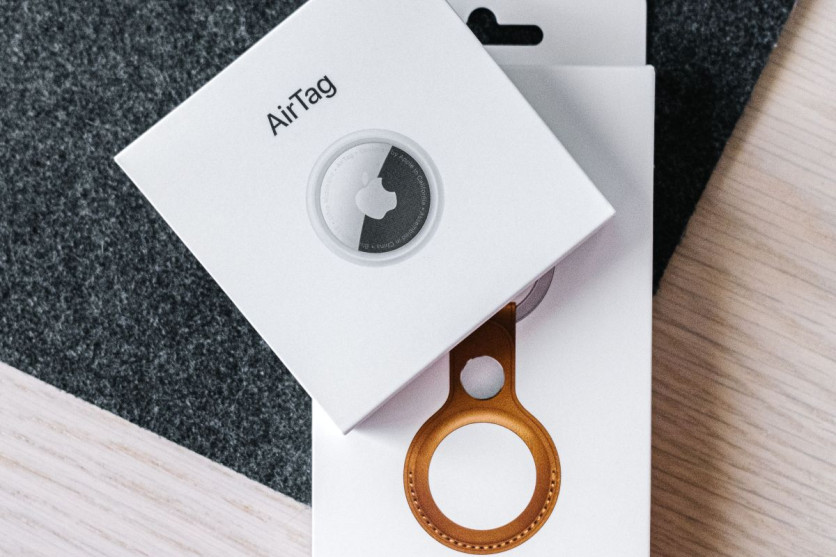
Apple AirTags are designed to help people find lost keys, bags, wallets and other belongings. Yet the same small device can become a tool for stalking when someone secretly places it in another person's bag, coat, vehicle or other possessions. Police forces and stalking organisations in the UK have warned that this misuse is not simply a theoretical risk.
The Metropolitan Police says Bluetooth trackers can be hidden in bags, pockets or cars to stalk people, while Durham Constabulary has also warned that trackers can be used to monitor someone without their consent.
The technology has prompted Apple and Google to introduce protections designed to warn people when an unknown tracker appears to be travelling with them. However, stalking charities and cybersecurity specialists say victims still need to understand what those warnings mean, how to preserve evidence and when disabling a tracker could affect their personal safety.
How AirTags Can Be Misused for Stalking
An AirTag does not contain a traditional GPS receiver that continuously broadcasts its own position. Instead, it uses Bluetooth and Apple's Find My network. Nearby Apple devices can detect the tag and anonymously relay its location to the network, allowing the person who owns the AirTag to see where it has been detected.
That design makes the device useful for recovering lost property. It also means an AirTag hidden in a vehicle or personal belongings can provide information about where those belongings, and potentially their owner, are travelling.
Researchers have demonstrated that location trackers can provide useful information about a person's movements even though they are not designed as live surveillance devices. A 2023 study examining AirTags and Samsung SmartTags found that exact real-time stalking was difficult, but movements could still be reconstructed with delays that researchers described as potentially dangerous.
The concern is not limited to academic research. UK police forces now specifically warn about physical trackers as part of their stalking guidance.
The Metropolitan Police says AirTags and other Bluetooth trackers can be placed in a bag, pocket or car and used to stalk people. Its advice is to photograph a tracker if it is safe to do so and report it if it appears to form part of a pattern of stalking or harassment.
South Wales Police gives similar advice, noting that trackers can be hidden in bags, purses, coat pockets and vehicles.
Durham Constabulary went further in a December 2025 warning, telling people that AirTags can be used by stalkers to track someone without their consent. It advises people who believe their safety is at risk to contact police and says they should not try to locate a tracker themselves.
There is also evidence from police records that physical trackers are appearing in stalking investigations, although individual forces do not always record AirTags separately from other GPS and tracking devices. Northamptonshire Police's 2025 Freedom of Information response recorded cases involving trackers, GPS devices and AirTags in both stalking and controlling or coercive behaviour investigations.
Stalking charities have raised concerns about the effect on victims. The Suzy Lamplugh Trust has previously warned about the use of AirTags by stalkers. Violet Alvarez, who worked with the charity, said that the devices were an issue because they were 'so small, it's unnoticeable and very user-friendly' and required no technical expertise.
The issue is also part of a wider pattern of technology-facilitated stalking. The Stalking Prevention, Awareness & Resource Center says technology is used by stalkers to monitor, contact, control, threaten and frighten victims. Its fact sheet says 14% of technology-facilitated stalking victims in the cited research had been tracked with a device or app.
That context matters because an AirTag alert should not automatically be treated as an isolated technical problem. For someone experiencing repeated unwanted contact, appearances by an ex-partner or other stalking behaviour, discovering an unknown tracker could be another part of an existing pattern.
What Apple and Google Built To Protect Users
Apple has added several layers of protection since AirTags launched in 2021. The first is an unwanted tracking alert. If an AirTag has been separated from its owner and is detected travelling with another person over time, an iPhone can display a notification telling the user that an AirTag has been found moving with them. Apple says compatible Android devices can also provide unwanted tracker alerts.
The system was expanded through an industry specification developed jointly by Apple and Google. The aim is to allow iOS and Android devices to identify compatible Bluetooth trackers even when the tracker belongs to someone else.
AirTags also have an audible protection. When an AirTag has been separated from its owner for a period of time and is moved, it can emit a sound intended to alert people nearby. A person who hears an unexpected electronic chirping should therefore consider whether a tracker could be concealed among their belongings.
iPhone users who receive an alert can open it and use Apple's Find My system to play a sound from the unknown AirTag. On compatible iPhones, Precision Finding can also help locate the device by showing its distance and direction.
Android users have protections too. Devices running Android 6.0 or later can automatically notify users about an unknown AirTag or other compatible tracker travelling with them, while Android also provides a manual scan option for checking for unwanted trackers.
However, cybersecurity research suggests that these protections are not flawless.
Researchers presenting work at the 2025 USENIX Security Symposium tested unwanted tracking notifications on both iOS and Android. They found that alerts were more reliable and arrived sooner on iOS than Android in their study.
They also found that some participants struggled to understand or respond appropriately to tracking warnings, while the Find My interface could make locating a hidden tracker harder than necessary.
That is an important distinction. The existence of an alert does not mean every victim will immediately recognise what is happening or find the physical device.
Cybersecurity professionals have also warned that victims should consider their own safety before taking action. Eva Galperin, director of cybersecurity at the Electronic Frontier Foundation, told Consumer Reports that her advice depends on what the target knows about the person tracking them and how that person might react if tracking suddenly stops.
That concern is echoed by The Cyber Helpline. Charlotte Hopper has warned that removing a tracker or cutting off an abuser's access to technology can sometimes be followed by more physical behaviour. She has also criticised a lack of awareness about the potential seriousness of tracking devices.
For that reason, finding an AirTag does not necessarily mean the safest response is immediately to throw it away.
If an unknown AirTag is discovered, Apple advises people to record identifying information. Holding an NFC-capable phone near the AirTag can open a page containing its serial number and, in some circumstances, the last four digits of the registered owner's telephone number. Apple says screenshots can be useful for documenting that information.
The device can then be disabled, which stops its owner from receiving further location updates. However, anyone who believes they are being stalked should consider documenting the device and speaking to police or a specialist support organisation before taking action if doing so is safe.
Apple also says law enforcement can request information from the company in connection with an investigation and that investigators may need the AirTag and its serial number. The central point for victims is therefore simple: an AirTag can be misused for stalking, but an unexpected alert does not automatically mean someone is following you.
It could belong to a borrowed item, a family member's possession or something else that has travelled with you. The warning is there to prompt investigation, not to establish who is responsible.
If the alert appears alongside other stalking behaviour, however, it should not be dismissed. Police guidance, stalking charities and cybersecurity specialists all point towards taking the situation seriously, preserving evidence and making safety decisions based on the individual circumstances rather than treating the tracker as just another lost gadget.
Frequently Asked Questions
- What is an Apple AirTag?An Apple AirTag is a small device designed to help locate lost items using Bluetooth and Apple's Find My network.
- How can AirTags be misused?AirTags can be misused for stalking by secretly placing them in someone's belongings to track their movements.
- What should I do if I find an unknown AirTag with me?Document the AirTag's information, consider your safety, and contact law enforcement or a support organization if necessary.
- What protections do Apple and Google offer against unwanted tracking?Apple and Google provide alerts for unknown trackers, sound alerts from AirTags, and options to locate and disable them.


