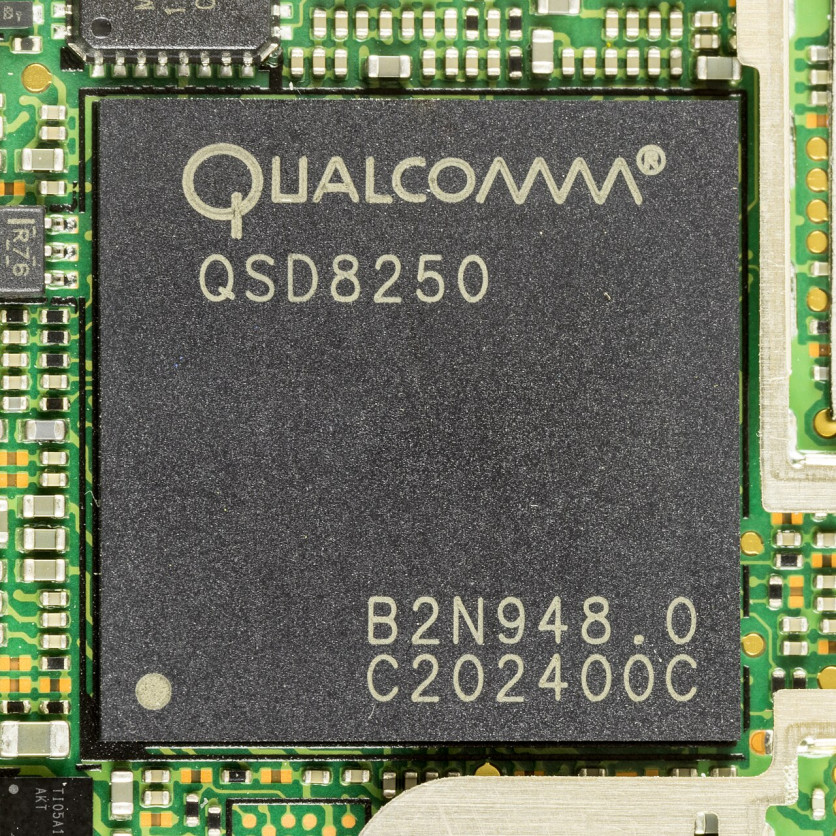
A Delaware jury found Arm Holdings breached its licensing agreement with Qualcomm and intentionally interfered with Qualcomm's business relationship with Meta Platforms.
On Tuesday, 13 October 2026, the jury returned its verdict after five days of trial — and awarded nominal damages of just $2 (approximately £1.50). Both companies claimed victory. The verdict resolves nothing and everything: specific liability is now established on two claims; the financial consequences remain entirely undecided.
The jury found Arm liable on two counts. On the first, Arm had failed to provide software patches and testing tools its licensing agreement required Qualcomm to receive. On the second, the jury found Arm had intentionally interfered with Qualcomm's business relationship with Meta Platforms.
On the remaining four breach allegations, the jury sided with Arm. The $2 (approximately £1.50) award reflects the jury's assessment of damages at this phase — not a ruling on the overall value of the dispute. The real contest lies ahead.
Unresolved Disputes: The Judge's Pending Decisions
US Federal Judge Maryellen Noreika must now resolve at least two significant outstanding questions the jury did not fully settle.
The most consequential: whether Arm's licensing agreement permits Qualcomm to suspend its royalty payments for up to five years — a royalty relief potentially worth up to $1.5 billion (approximately £1.1 billion), according to pre-trial reporting by Reuters.
Arm argues that clause is unenforceable under contract law. Qualcomm argues it is a direct remedy for breach. The judge's ruling will shape not just this dispute, but how instruction-set licensing works globally.
A separate bench trial is set to determine whether Arm negotiated in good faith when seeking, according to Qualcomm chief executive Cristiano Amon's trial testimony, an 18,500% increase in royalty rates between its version 9 and version 10 architecture.
Qualcomm's contract, set in 2013 for smartphone chips with five processor cores, is now applied — the company contends — to data-centre chips with up to 288 cores. Under that agreement, Qualcomm argues it pays $1.88 (approximately £1.41) per chip regardless of core count.
By Arm's reading, that cap has become catastrophically underpriced as processor designs have scaled from five cores to hundreds. By Qualcomm's reading, Arm is attempting to rewrite the contract retroactively.
What the Competing Narratives Reveal
Both companies issued statements claiming vindication. Each firm cited only the findings that supported its position: Qualcomm highlighted the breach and interference findings; Arm highlighted the jury's rejection of the four other counts, suggesting the bulk of Qualcomm's case had failed.
Neither statement acknowledged the other's wins — nor that a liability finding paired with a $2 (approximately £1.50) damages award creates a paradox that many readers find genuinely disorienting.
Reddit discussions in technology communities show the pattern clearly.
Users describe the outcome as 'a 60/40 ruling' attempting to tally which side won more counts. Others question whether Arm's public framing is primarily aimed at reassuring shareholders that the verdict poses no existential threat; though that interpretation is the author's inference from reader discussion, not an established shareholder communication.
Comment
by u/camel-cdr- from discussion
in hardware
These interpretations are not equivalent to market reality. The social reaction, however, reveals a genuine hazard: the $2 figure is so striking that it masks the liability finding, and the competing statements amplify the ambiguity rather than resolving it.
Architecture, Royalties, and Global Implications
At the structural level, the dispute arguably exposes a design-licensing framework that has become outdated.
A 2013 licensing cap was rational when smartphone chips were modest in core count. In 2026, data-centre processors dominate licensing revenue, and a per-chip royalty structure becomes perverse when chip design scales from five cores to hundreds.
The disputed legal rights (over what the 2013 contract permits and what the judge may order as remedy) appear unlikely to be resolved without Judge Noreika's rulings on the outstanding questions. Neither party has indicated any intention to renegotiate voluntarily.
The jury's verdict confirms Arm's liability on the two specific counts it lost. It does not resolve whether Arm's pricing demands were commercially unreasonable, or whether a 2013 contract can govern 2026 processor architectures.
That gap — between liability finding and financial remedy — is where Judge Noreika's next decisions will land.


