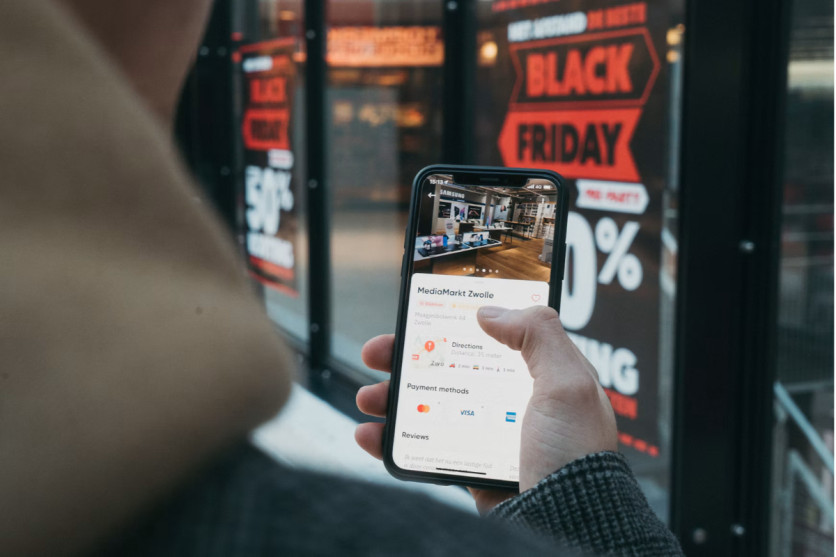
Shoppers using AI agents to find deals and make purchases are being warned about potential scams ahead of Black Friday on Friday, as retailers also turn to artificial intelligence to personalise marketing and compete for consumers' attention.
The Australian Retail Council and Roy Morgan forecast shoppers will spend A$7.2 billion (£3.7 billion) across the four days from Black Friday to Cyber Monday, 30 November.
The estimate covers expected retail spending, not money specifically exposed to cybercrime, and is forecast to rise 5.5% from last year.
For years, shoppers have used search engines and comparison sites to hunt for discounts. AI agents are taking that process further by allowing users to delegate tasks, including browsing products, comparing prices and, in some cases, completing purchases.
AI Shopping Agents Raise New Black Friday Concerns
TrendLife consumer education head Lynette Owens told the Australian Associated Press that Black Friday has long been a favourite period for cybercriminals, but the use of AI is changing how some attacks may be carried out.
'We are just at the beginning stage of seeing how cyber criminals will try to exploit the increasing use of AI agents in people's everyday lives,' she said.
TrendLife data supplied to AAP was reported as showing that 33% of Australians had used agentic AI tools. However, the survey's full methodology and Australian sample details were not provided in the article.
A syndicated AAP report described the underlying research as a global survey that had not yet been released, so the figure should not be treated as a confirmed representative measure of national adoption.
A chatbot may recommend products or compare prices, while an agent can be given permission to act on a shopper's behalf. That may involve connecting accounts or using a payment method, depending on the tool and the permissions granted.
Owens said the level of confidence some younger users showed in the technology surprised her.
'And maybe we haven't really seen that big hack or vulnerability impacting millions of people yet,' she told AAP.
How AI Agents Could Be Manipulated by Fake Websites
One risk is prompt injection, in which malicious instructions are embedded in content an AI agent reads, such as a webpage or document.
If the agent follows those instructions, it could be manipulated into acting outside the user's original request, potentially disclosing information or misusing connected tools.
The danger is not that every fake website can automatically take control of an AI agent. The outcome depends on the agent's design, what it can access and the safeguards that restrict its actions.
Owens warned that shoppers may not know how information shared during a purchase could be used by a fraudulent seller.
'It truly is a war of AI versus AI,' she said.
Scamwatch recorded A$17.2 million (£8.7 million) in reported losses to buying-and-selling scams between January and September 2026. That figure covers reported scams during the period and does not establish how many involved AI agents.
Retailers Use AI to Compete for Shoppers' Attention
The technology is also changing how retailers try to reach prospective customers. A Digiday report published on 25 November described marketers shifting advertising budgets as consumers increasingly turn to AI tools for product research before Black Friday.
Retailers are also preparing for shopping agents to influence which products consumers discover. Boston Consulting Group's October 2026 analysis describes strategies including personalised shopping experiences, retailers' own AI agents and sponsored visibility on external AI platforms.
That creates a new competition for attention. Shoppers may rely on an agent to narrow down their choices, while retailers use AI-powered marketing and product recommendations to make sure their brands appear in that shortlist.
Keep Human Approval Before Checkout
For shoppers, the safest approach is to let an agent research products and compare prices without giving it unrestricted authority to buy.
Users should limit access to the accounts and information needed for the task, avoid sharing banking passwords or one-time passcodes, and require approval before payment or other high-impact actions.
A digital wallet or payment token is not automatically unsafe, but shoppers should still check the seller, final price, delivery details and checkout page themselves. Transaction alerts can also help users spot unexpected activity.
AI may make bargain hunting faster, but the decision to hand over personal information or authorise a payment should remain with the person making the purchase.


