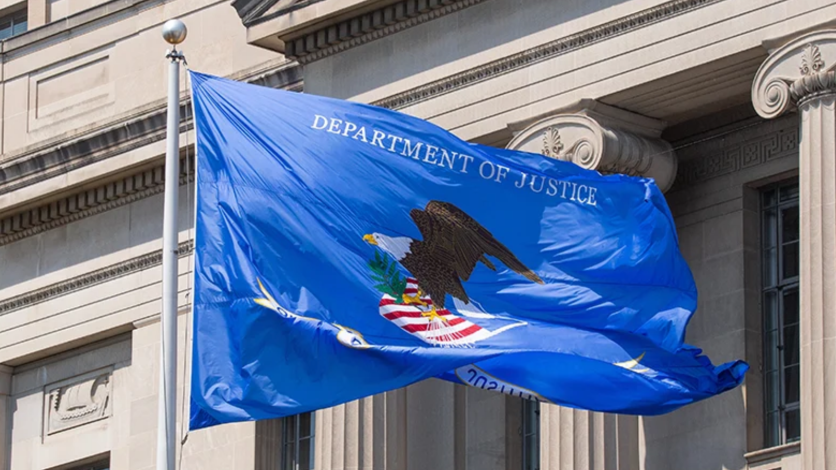
A US man has pleaded guilty to a fraud scheme that used stolen personal information to compromise servicemembers' bank accounts and veterans' benefits accounts, the US Department of Justice (DOJ) said on 20 October.
Robert Wayne Boling Jr., 45, a US citizen who previously lived in the Philippines, pleaded guilty to one count of conspiracy to commit wire fraud and one count of conspiracy to commit money laundering.
The plea is the latest development in a scheme publicly detailed by the DOJ in 2019, in which a former Army medical records administrator supplied personal information that was later used to target thousands of people in the US military community.
According to the DOJ, Boling operated from the Philippines and exploited stolen personally identifiable information to compromise bank accounts and steal money and veterans' benefits. He was deported to the US in May 2026 to face charges.
'Those who courageously served our nation deserve our gratitude and protection — not to become targets for criminals seeking to profit from their sacrifice,' Assistant Attorney General A. Tysen Duva of the DOJ's Criminal Division said.
Boling is due to be sentenced on 14 January 2027. Each of the two conspiracy charges carries a maximum penalty of 20 years in prison, although the sentence will be determined by a federal judge after considering the relevant sentencing guidelines and statutory factors.
Army Medical Records Insider Supplied Stolen Data
The case centres on Fredrick Brown, a former civilian medical records administrator for the US Army in South Korea. Brown worked at the Army's 65th Medical Brigade at Yongsan Garrison.
According to an earlier DOJ announcement, Brown admitted that between July 2014 and September 2015 he stole the personal identifying information of thousands of military members. He captured the information by taking digital photographs of his computer screen while logged into a military electronic health records database.
Veterans benefits fraud: Boling pleaded guilty after an Army insider exposed military records. Two suspects remain at large. Mandatory prison for offenders? YES or NO?#VeteransBenefitsFraud #MilitaryIdentityTheft pic.twitter.com/KQjh57fNCG
— Dr. Hill (@drhilllaw42) October 21, 2026
The information included names, Social Security numbers, Department of Defense identification numbers, dates of birth and contact details.
Brown admitted supplying the stolen data to Boling, who used it with other co-conspirators to access Department of Defense (DoD) and Department of Veterans Affairs (VA) benefits websites and target accounts belonging to servicemembers and veterans.
The distinction between the two men's roles is important: Brown admitted stealing and supplying the information, while Boling has now pleaded guilty to his own role in the wider fraud and money-laundering conspiracy. The DOJ's announcement does not say that Boling personally took the photographs.
How Stolen Military Data Enabled Fraud
The scheme involved more than the theft of personal information. According to the DOJ, Boling and his co-conspirators used the data to compromise bank accounts and online government-affiliated benefits accounts.
The DOJ's earlier case summary said the stolen information was used to access a DoD portal that allowed military members to view benefits information. The defendants then allegedly exploited that access to steal or attempt to steal money from bank accounts. The scheme also involved the theft of veterans' benefit payments.
The information photographed from the computer screen therefore became a means of targeting financial and benefits accounts. The case illustrates how sensitive information held in legitimate systems can be misused when someone with authorised access steals it.
The operation also relied on a network of money mules in the US. These individuals provided bank accounts into which stolen funds could be deposited and helped move money through international remittance services. The DOJ says a portion of the stolen funds was remitted to the Philippines.
Thousands of Servicemembers and Veterans Targeted
The DOJ says the scheme victimised thousands of US servicemembers and veterans. An earlier indictment described a wider group of military-affiliated individuals that also included dependants and civilians employed by the DoD.
The financial scale was set out in an earlier DOJ announcement in October 2021, when Brown was sentenced. It said the scheme targeted more than 3,300 members of the military community and resulted in $1.5 million (£1.12 million) in losses. The court ordered Brown to pay more than $2.3 million (£1.72 million) in restitution.
The figures relate to the wider scheme and Brown's case; they should not be read as a new loss estimate announced with Boling's guilty plea. The DOJ's 20 October announcement did not provide a new total for financial losses.
Other Defendants Have Already Been Sentenced
Boling is the third defendant to plead guilty in connection with the scheme, according to the DOJ.
Brown pleaded guilty in October 2019 to conspiracy to commit wire fraud and conspiracy to launder monetary instruments. He was sentenced to 151 months in prison in 2021. Trorice Crawford, another co-conspirator, was sentenced to 46 months in prison after pleading guilty to conspiracy to commit money laundering.
The DOJ says two other co-conspirators, Jongmin Seok and Allan Albert Kerr, remain fugitives. Those earlier pleas and sentences are separate developments in the same case. Boling's guilty plea is the new event announced on 20 October 2026; his sentence remains pending.
How Can Veterans Protect Their Accounts?
The VA advises veterans to use strong, unique passwords and secure sign-in accounts that support multi-factor authentication. It also recommends monitoring bank accounts, benefit payments and notifications about changes to personal information or direct-deposit details.
Veterans should be cautious about unexpected emails and text messages concerning benefits, particularly those that ask for personal information, contain suspicious links or create pressure to act immediately. The VA advises people to verify communications through contact details on its official website rather than relying on a number or link supplied in a message.
Anyone who suspects their VA benefits have been targeted can call the VSAFE Fraud Hotline on 1-833-38V-SAFE (1-833-388-7233). The VA also advises people who have shared financial information to contact their bank or card provider promptly.
If personal information such as a Social Security number may have been stolen, victims can report identity theft and obtain a recovery plan through the Federal Trade Commission's IdentityTheft.gov website. The VA also provides guidance on protecting identity and benefits from scammers.
The case highlights a risk that passwords and multi-factor authentication alone cannot eliminate: the misuse of sensitive records by someone who already has legitimate access to them. Protecting military and medical information, monitoring financial and benefits accounts, and providing clear routes for reporting suspected fraud remain important parts of protecting servicemembers, veterans and their families.


